The sun rises over the bustling coastal city of Mombasa, casting long shadows across the newly laid tarmac roads that now weave through its informal settlements.
For decades, these pathways were little more than muddy tracks during the rainy season, impassable and treacherous. Today, they symbolise a profound transformation sweeping across Kenya’s coastal communities and beyond, driven by the Kenya Informal Settlements Improvement Project (KISIP) and the National Youth Opportunities Towards Advancement (NYOTA) programme.

At the heart of this change is not just the concrete and asphalt but the people whose lives are being reshaped by opportunity and empowerment.
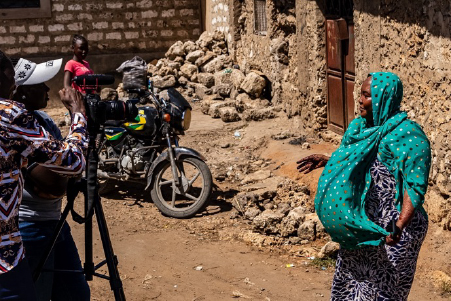
Hamza Said, a young woman from Mombasa, stands on one of these new roads, a testament to the change she helped build. Employed on a local road improvement project funded by KISIP, Hamza represents a new generation of youth who are no longer just beneficiaries of development but active participants in it. Her journey, however, goes beyond physical labour.
As part of her engagement, Hamza underwent comprehensive Socio-Emotional Skills Training (SEST). This training was implemented under Component 2 of KISIP, which focuses on socio-economic inclusion, through a strategic collaboration with the NYOTA programme. The intervention profoundly shifted her perspective on her role in society and the economy.
“Training was very important,” Hamza reflects, her voice carrying the confidence of someone who has found their footing. “The knowledge is driving my goals at work on the road project and as a business person. I learnt how to avoid illnesses including sexually transmitted diseases. Change is not about other people, it is about starting where I am.”
Hamza’s story is echoed across the coastal towns of Mombasa, Kilifi and Malindi, as well as in the sprawling settlements of Nairobi, such as Kayole. The KISIP initiative, a Government of Kenya project supported by the World Bank, has been instrumental in upgrading infrastructure in these areas. The project’s mandate is to improve living conditions and provide security of tenure to residents who have long been marginalised. To date, KISIP and the Government have reached over 1.3 million beneficiaries, constructed 98 kilometres of roads, and laid 120 kilometres of footpaths across 15 urban centres. More than 700 people in Mombasa have been given title deeds for their plots of land, allowing them to build permanent homes and use them as collateral if they require credit to start businesses.
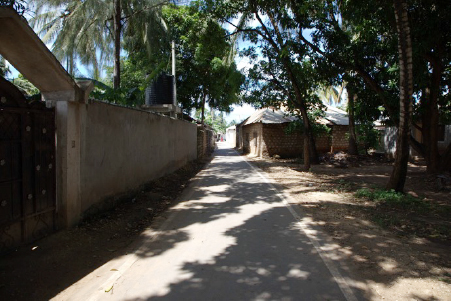
The impact of these infrastructure improvements is immediate and tangible. In Malindi, Kilifi and Mombasa, the construction of all-weather roads means that residents no longer have to navigate knee-deep mud to get to work or school. Pavements and tarred roads have replaced dirt tracks, drastically improving mobility and accessibility. Furthermore, the installation of high-mast street lighting and floodlights has transformed the security landscape of these settlements. Areas that were once dangerous to traverse after dark are now vibrant hubs of evening activity, allowing small businesses to operate longer hours and ensuring residents can walk home safely.
Yet, perhaps one of the most significant, though often understated, contributions of the KISIP programme is the focus on sanitation. For many families in these informal settlements, access to a private toilet was an unattainable luxury. The construction of individual household toilets has restored dignity to thousands of residents.
Christine Deche, a resident of one such settlement, captures the profound relief these facilities have brought. “For me, toilets are the biggest contribution by the KISIP programme,
“she explains. “Do you imagine trekking two to three kilometres whenever you need a toilet? Looking for a nearby school or suffering the indignity of village community toilets with long queues and no proper cleaning.”
The provision of these facilities means that families no longer have to risk disease from unsanitary communal latrines or face the embarrassment of seeking out school toilets during the day.
While KISIP lays the physical foundation for a better life, its socio-economic inclusion component builds the human capital necessary to sustain it. Recognising that infrastructure alone cannot break the cycle of poverty, KISIP partnered with the NYOTA programme, an initiative designed to tackle youth unemployment, to equip young people with the skills and resources to thrive in a changing economy.
A cornerstone of this collaboration is the Socio-Emotional Skills Training (SEST). KISIP led this initiative, providing the technical, financial and logistical support throughout its implementation. NYOTA contributed vital technical expertise by developing the working framework and training manuals and provided technical oversight during the training-of-trainers phase in collaboration with KISIP. As the programme rolled out, KISIP demonstrated adaptability by mobilising additional resources including engaging trainers from the Kenya Youth Employment and Opportunities Project (KYEOP), and allocating funding to support youth certification, to ensure the training reached its targets. Beyond direct beneficiaries, the initiative has created employment opportunities for Trainers of Trainers, trainers, and assistant trainers across 23 counties, multiplying the socioeconomic impact and building a sustainable cadre of skilled facilitators.
This 45-day training programme is designed to cultivate critical competencies such as effective communication, problem-solving, resilience, and emotional management. In environments where young people face immense daily pressures, from economic hardship to social challenges, SEST provides a crucial buffer. It is growing a new cadre of confident young people who are better equipped to navigate the complexities of life and work.
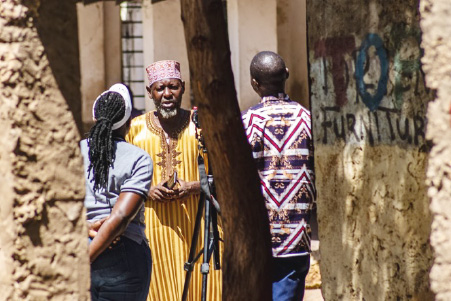
Zacharia Mbugua, a community leader from Malindi, emphasises the vital role of this collaborative training. “NYOTA was about bringing change to society at large, acknowledging that young people can drive impact,” he notes. “SEST is critical on whether the youth survive and building on their small businesses.” By addressing the holistic needs of the youth, including health awareness and emotional well-being, the partnership ensures that they are not just economically active, but also socially responsible and resilient.
The integration of KISIP and NYOTA demonstrates a comprehensive approach to urban development grounded in multi-stakeholder collaboration. By employing local youth on infrastructure projects, the initiatives create immediate economic opportunities while simultaneously upgrading the community’s physical environment. The skills acquired on the job, coupled with the SEST and entrepreneurship training, empower these young people to transition into sustainable livelihoods long after the construction dust has settled.
Looking ahead, the next phase will focus on on-the-job training and certification of select participants, institutionalising skills development and creating pathways for continued advancement.
Whether in the bustling lanes of Nairobi’s Kayole or the coastal settlements of Malindi, Kilifi and Mombasa, the evidence of change is undeniable. Pavements and tarred roads are replacing mud tracks, bright lights are pushing back the shadows, and practical actions are demonstrably improving the quality of life for hundreds of thousands of Kenyans.
For women like Hamza Said, these interventions represent far more than just new roads or training certificates. They are the critical first steps out of marginalisation. Through the combined efforts of KISIP and NYOTA, a foundation is being laid not just of concrete but of human potential. These initiatives demonstrate the transformative power of multi-stakeholder partnerships in advancing skills development and employment outcomes, particularly in underserved regions.
As Kenya continues to grapple with youth unemployment and urban poverty, the KISIP-NYOTA model offers a replicable blueprint for integrated development. Policymakers, development partners and communities should prioritise similar collaborative approaches that combine infrastructure upgrading with human capital development, ensuring that economic growth reaches those who need it most.
When communities are provided with the right infrastructure and their youth are empowered with the right skills, they can build their own pathways to prosperity and a better life.