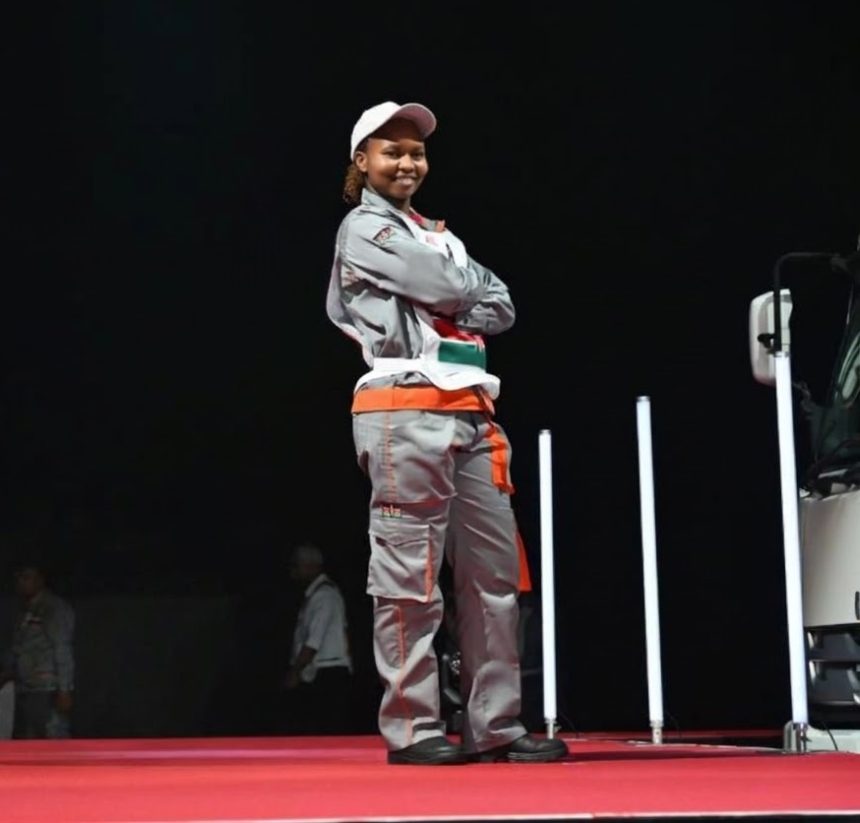
Automotive engineering was not part of her childhood dreams. Today, she is making history as a woman technician representing Isuzu East Africa on the global stage, proving that skill, determination and opportunity can break barriers in traditionally male-dominated professions.
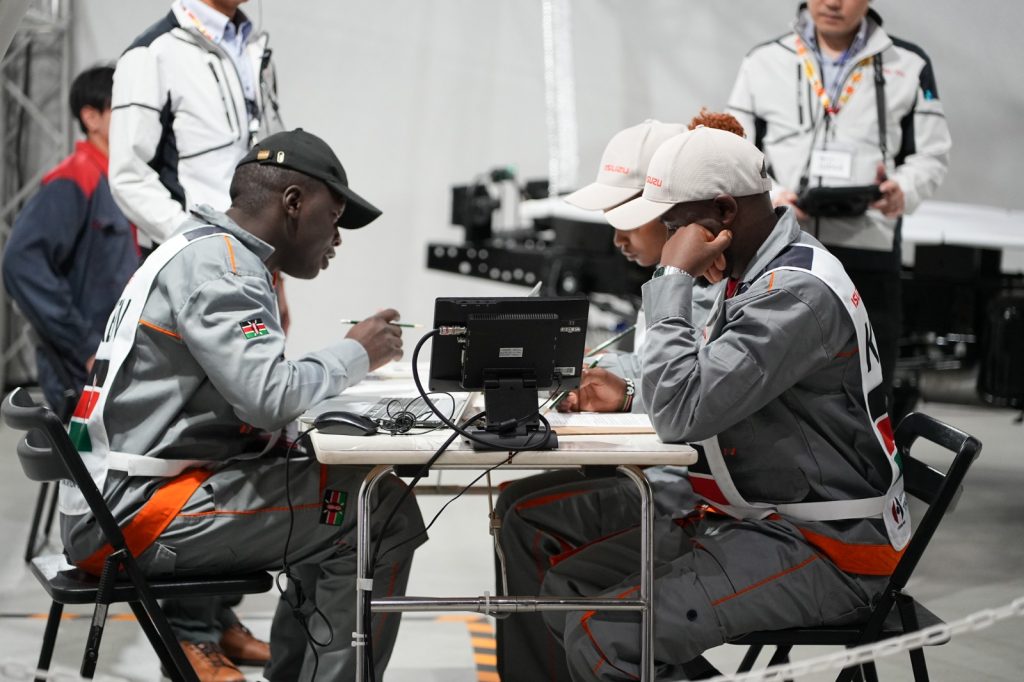
A Service Technician at Isuzu West Africa, Njeri recently earned an opportunity to represent the company at the Isuzu Grand Prix technical competition in Japan, bringing together technicians from approximately 34 countries to showcase their expertise.

Her journey into the automotive industry began in 2014 when she decided to pursue mechanical engineering at Kabete National Polytechnic. Her interest was inspired by two family members: a cousin fascinated by vehicle wiring and an uncle who had studied mechanical engineering and worked in the field.
After graduating in 2018, she embarked on a journey that involved several industrial attachments, including placements at Ruaka Auto Garage and Farmer’s Choice, where she gained practical experience before securing employment.
Her career took a significant turn in October 2021 when she joined Isuzu East Africa’s Indentured Learners Programme, a one-year initiative designed to bridge the skills gap between technical training institutions and the automotive industry.
Following the programme, she worked as a production technician in Isuzu East Africa’s assembly division for two years before transitioning into after-sales service as a technician.
Her breakthrough came through the Isuzu Grand Prix, where she emerged third overall among approximately 12 contestants in her category and the best female participant. The achievement secured her an opportunity to represent Isuzu East Africa in Japan, alongside the best male contestant.
Initially, the selection came as a surprise.
“When I was called by Human Resources, it was a shock. The shock took me three weeks. I was nervous and did not know what to expect,” she recalls.
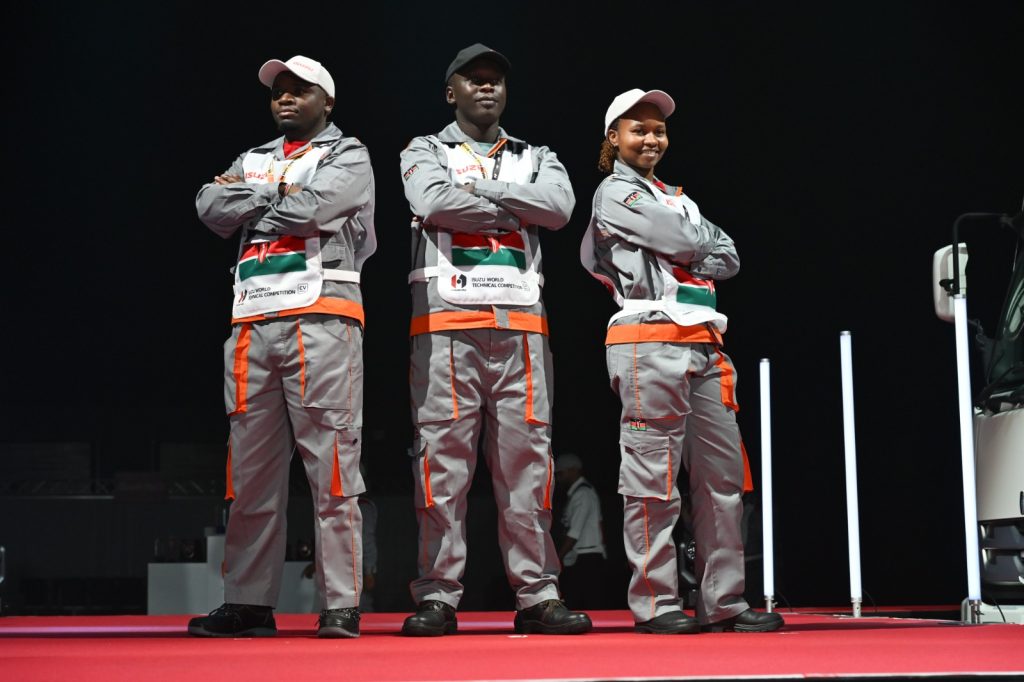
However, with the support of her trainers, supervisors and colleagues, including Paul Mwangi and Martin Mwangi, she gradually gained confidence and prepared for the international challenge.
The competition tested more than mechanical knowledge. Participants were assessed on technical knowledge, virtual failure diagnosis and practical vehicle maintenance. One of the major challenges involved diagnosing a vehicle that could not start within a 40-minute practical examination.
The task required the contestants to identify faults through systematic diagnosis rather than trial and error, demonstrating their ability to work with increasingly sophisticated automotive technologies.
For Njeri, teamwork, attention to detail and confidence in technical decision-making were essential to the experience.
Her achievement also carries significance beyond the competition. Working in an industry traditionally dominated by men, she acknowledges that her early experiences were not always easy, particularly when it came to handling equipment and understanding workplace safety practices.
However, she says the supportive environment at Isuzu, coupled with safety training, access to personal protective equipment and the company’s continuous improvement philosophy, has made it easier for women to thrive.
She credits her male colleagues for embracing her abilities and fostering a culture where teamwork matters more than gender.
“At Isuzu, you cannot see the difference between a man and a woman working in the field. Whatever is difficult for one person, we come together as a team and work on it,” she says.
Looking ahead, Njeri hopes her achievement will inspire more women to explore technical careers without being intimidated by stereotypes.
She also hopes to become a coach, helping prepare the next generation of technicians for international competitions.
Her message to young women considering the automotive industry is simple: take the opportunity and discover your potential.
“Men are ready to encourage us and embrace us in this field. They should not think about what other people have been saying, but come in and experience what is actually on the ground,” she says.
For Njeri, the international competition is not the destination but another milestone in a journey defined by continuous growth.
As she puts it, success is not an event; it is progress.