When women are empowered with wealth, power and autonomy, they drive measurable economic growth, create positive change in their communities, and enable real contributions to Gross Domestic Product (GDP) growth.
Gender equality is not merely a social aspiration. It is an economic imperative. According to the World Bank, women-owned businesses account for nearly half of all micro, small and medium enterprises in Sub-Saharan Africa. Yet women entrepreneurs continue to face a disproportionately large financing gap estimated at over 42 billion dollars across the region. This gap is not about a lack of ambition. It is about a lack of access.
From financial inclusion to financial empowerment
For years, conversations around women in finance have focused on inclusion by opening bank accounts and increasing access to credit. While this progress matters, inclusion alone is not enough. True transformation comes from empowerment. It requires equipping women with tailored financial solutions, capacity building, networks, and opportunities that recognize their unique realities. When a woman accesses affordable credit to expand her business, she hires more staff. When she receives financial literacy training, she manages cash flows more effectively. When she joins a network of like-minded entrepreneurs, she gains mentorship, markets, and confidence.
Access, knowledge, trust, and choice lead to economic empowerment.
The multiplier effect of investing in women
Each of these investments multiplies in impact. According to a UN analysis, women reinvest up to 90 per cent of their income back into their families and communities, compared to 30 to 40 per cent for men. This means that every shilling invested in a woman entrepreneur supports school fees, healthcare, nutrition, and local economic activity.
In Kenya, where women make up nearly half of the labour force and a significant share of micro and small business owners, women-centred banking is not a niche offering. It is a growth strategy for the country. The theme Give to Gain calls for intentional and collective action. For the financial sector, this means moving beyond symbolic gestures. It means designing gender-responsive credit scoring models, offering flexible repayment structures aligned to cash-flow cycles, and bundling financing with training, digital literacy, and market linkages. It also means ensuring that women are represented not only as customers but as leaders within financial institutions.
Closing the unbanked gap
Even as Kenya is recognised globally for its advances in mobile money and digital finance, many Kenyan women remain excluded from the formal financial system. UN Women reports that women make up a disproportionate share of the world’s unbanked population, and in Sub-Saharan Africa, only 52 per cent of women have financial accounts compared to 64 per cent of men.
Being unbanked limits the ability to save, build credit, access insurance, and accumulate assets. Kenya has made progress through mobile money, agent banking, and regulatory reforms, but gaps persist for women in rural areas, informal sectors, and low-income communities.
The next phase must focus not just on access but on deepening usage, improving financial literacy, and designing products that meet women’s economic realities. Expanding meaningful financial access must remain a national and industry priority.
Beyond just accounts
However, deepening access requires us to confront a more subtle challenge. While progress has been made in expanding account ownership, many women remain excluded from higher-value financial products.
Experts refer to this as “shallow inclusion,” where women hold basic accounts but lack access to long-term credit, asset financing, investment opportunities, and insurance. Without access to these instruments, women can transact, but not necessarily to accumulate wealth, manage risk, or scale enterprises sustainably. Deepening inclusion, therefore, requires financial systems to move beyond entry-level products and intentionally design pathways that support asset building and long-term economic security for women.
Women and economic resilience
Building on the need for meaningful access, women-centred banking also strengthens economic resilience. According to research by Mastercard, 93 per cent of women in Kenya consider starting or running their own business, signalling an enormous entrepreneurial and economic potential within the country. But this potential is facing numerous risks as women-led enterprises in Kenya, from smallholder farming to retail and manufacturing, face shocks such as climate events, health crises, and rising costs, often with limited financial buffers.
Financial institutions can help by providing savings options, insurance, flexible repayments, and tailored support. For example, in 2025, Family Bank’s Queen Banking unit trained over 10,400 women, equipping them with financial literacy, business skills, and access to finance. Many have since expanded their enterprises, showing how targeted support builds resilience. In doing so, women-centred finance moves beyond enabling growth to building more shock-resistant households, businesses, and economies.
The future of Kenya’s economy will not be built by excluding half its population. It will be built by recognizing women not as beneficiaries of development, but as co-architects of it. This International Women’s Day, let us commit to investing boldly in women because when women rise, we all gain.
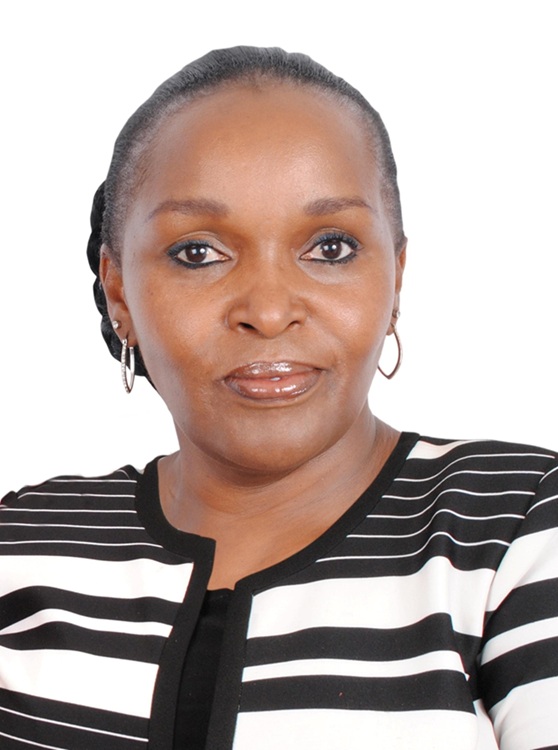
Rose Kamene is the Head of Women Banking at Family Bank Limited