Kenya has unveiled plans to make sickle cell screening mandatory in routine maternal and child health visits, a bold step aimed at ensuring no child is left behind.
Speaking at a high-level event on sickle cell disease during the 80th United Nations General Assembly in New York, Medical Services Principal Secretary Dr Ouma Oluga decried the neglect of sickle cell disease, noting that millions of Africans continue to suffer in silence and that many die painful, preventable deaths.

The PS who was representing President William Ruto highlighted the heavy toll in Kenya, where an estimated 14,000 children are born with the condition annually and up to 90 per cent die before the age of five.
He pointed to progress already made, including Kenya’s first National Guidelines for the Prevention and Management of Sickle Cell Disease (2021) and the Policy Guidelines for Infant Screening (2023).
Dr. Oluga said these measures had institutionalised early detection and lifesaving interventions.

To address financial barriers, Dr Oluga outlined the government’s creation of three new health funds the Primary Healthcare Fund, the Social Health Insurance Fund, and the Emergency, Chronic and Critical Illness Fund designed to guarantee routine care for sickle cell patients without the burden of out-of-pocket costs.
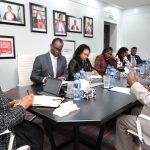
The meeting, organised by Africa CDC, brought together ministers, policymakers and global health leaders committed to tackling sickle cell disease across the continent.