A new a new KSh12.95 billion (US$100 million) global fund aimed at ending Female Genital Mutilation/Cutting (FGM/C) will be launched in Kenya next week as activists, survivors, funders and policymakers push for greater investment in the fight against harmful practices affecting girls worldwide.
The fund will be unveiled in Naivasha during a three-day Justice for Girls global convening which kicks off on September 2nd bringing together about 150 global leaders , including survivors from 36 countries.

Seeded by the Wallace Global Fund, a US foundation that has supported efforts to end FGM/C for more than 40 years, the new pooled fund will focus particularly on frontline and survivor-led organisations that campaign against the practice but have historically struggled to secure adequate funding.
Survivors and activists will have a role in determining the fund’s strategic direction and grant-making decisions.
“A growing global movement is determined to end FGM/C and advance justice for girls. Unfortunately, funding is not keeping pace with the movement’s tenacity, creativity, and resilience,” said Susan Gibbs, Wallace Global Fund’s senior adviser on women’s rights and FGM.
“Wallace Global Fund will be announcing the launch of an unprecedented, pooled fund in Naivasha that will back movement-led strategies and solutions. By following the lead of survivors and frontline leaders, we can drive toward a tipping point of ridding the world of FGM/C and we can prevent more girls from being harmed.”
The funding push comes at a difficult time for organisations working on gender equality and girls’ rights, with international development assistance declining in several major donor countries.
The organisers say US foreign aid disbursements fell from US$72 billion to US$47 billion a year after the dismantling of the US Agency for International Development (USAID), while the Organisation for Economic Co-operation and Development (OECD) has reported cuts to gender-equality funding among donor countries.
The funding gap is being felt most sharply by grassroots organisations working directly with affected communities.
“One of the biggest hurdles we face is funding, without which our ability to carry out community-based programmes is severely limited,” said Aarefa Johari, co-founder of Sahiyo.
“When it comes to women’s and children’s rights, global funding structures have been lopsided for far too long, with survivor-led grassroots organisations in communities of colour getting the very short end of the stick. This is precisely the problem the Justice for Girls movement aims to address.”
The Naivasha meeting will also launch a five-year roadmap, Unstoppable: Our Movement-led Collective Vision for Ending FGM/C, developed by survivors, grassroots organisations, funders and policymakers.
The roadmap links FGM/C and child marriage and sets priorities around survivor leadership, changing harmful narratives and strengthening collaboration between movements.
For survivors attending the gathering, the push is about shifting them from being treated as beneficiaries or witnesses to becoming decision-makers in the global campaign.
“For too long, the conversations about ending FGM/C and child marriage have happened in rooms where the people most affected are rarely in the center,” said Mariya Taher, co-founder and executive director of Sahiyo.
“In Naivasha, we are changing that. This convening isn’t just about resource mobilization; it’s about finally creating a space where we don’t have to explain our pain or justify our expertise. We are coming together to heal, to connect, and to rewrite the future of this movement on our own terms, with our own stories, and with the collective power of those who have lived this reality.”
Fatou Baldeh, CEO and founder of Women In Liberation and Leadership, said survivors already have evidence of what works at community level but need resources to sustain and expand those efforts.
“For those of us who survived FGM/C and child marriage, this work is rooted in lived experience, memories, resilience, and the determination to ensure no girl endures what we did,” she said.
“And because we have lived this reality, we also carry the knowledge of what truly drives change. We have seen mothers shift their beliefs, elders rethink traditions, and entire communities choose protection over harm.”
She added: “Survivor-led movements are holding the line with limited resources, yet still delivering impact. Imagine what we could accelerate with the support needed to match the scale of our commitment.”
The Justice for Girls programme begins in Nairobi on August 30 with Fashion for Change, a survivor- and African Queen-led event using fashion and storytelling to challenge social norms that sustain FGM/C and child marriage.
A high-level policy meeting will follow in Nairobi on September 1, bringing together government officials, diplomats, multilateral organisations, funders, survivor leaders and civil society groups.
The discussions will then move to Naivasha from September 2 to 4 for the global convening and festival, where participants will focus on advocacy, movement building, storytelling, collaboration and survivor-led solutions.
Gloriah Kagwe, a member of the Girls Not Brides Kenya Youth Advisory Panel, said young people must be treated as current leaders in the movement.
“Young people are not the leaders of tomorrow; we are leading today,” she said.
“Ending child marriage and FGM/C requires more than commitments; it requires meaningful investment in survivor and youth-led solutions.”
Saza Faradilla, co-founder of End FGC Singapore, said survivors should be recognised for the expertise they bring to the movement.
“Survivors should be recognized as experts, not simply pitied as victims or invited only to share painful stories,” she said.
“Many survivors are organisers, researchers, healthcare workers, lawyers, artists, religious leaders, and community educators. Their knowledge should shape movement priorities, funding decisions, research agendas, and policy conversations.”
The organisers hope the fund and the five-year roadmap will provide more than new commitments, instead creating a sustained financing and collaboration structure capable of accelerating efforts to end FGM/C and child marriage within a generation.
“Ultimately, I want this convening to be remembered as a turning point that accelerates collective action, shifts power to those most affected, and brings us closer to a world where every girl can live free from violence, discrimination, and harmful practices,” said Isatou Jeng, a survivor expert leader.
FACTS
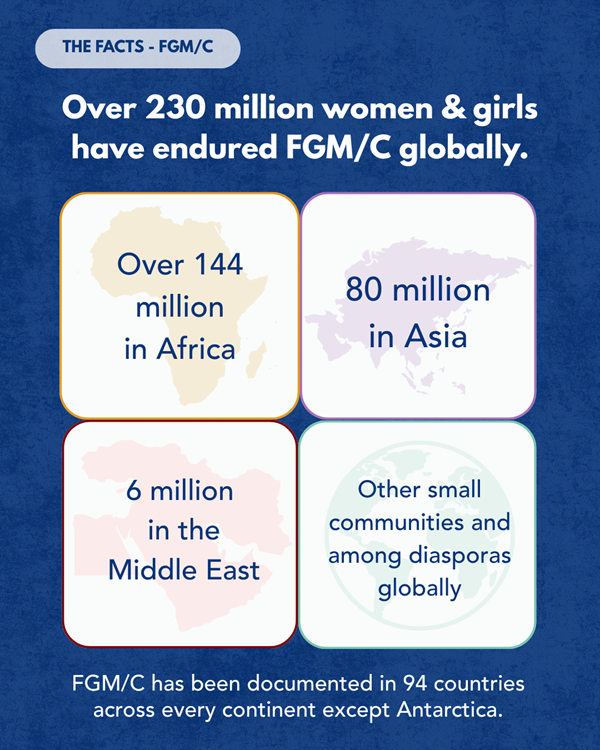
- According to the United Nations, “an estimated 230 million girls and women alive today have undergone female genital mutilation.
- Each year, over “two million girls experience female genital mutilation.
- Girls often undergo FGM/C between the ages of 1 and 5
- FGM/C is not limited to any one country, race, ethnicity, or religion.
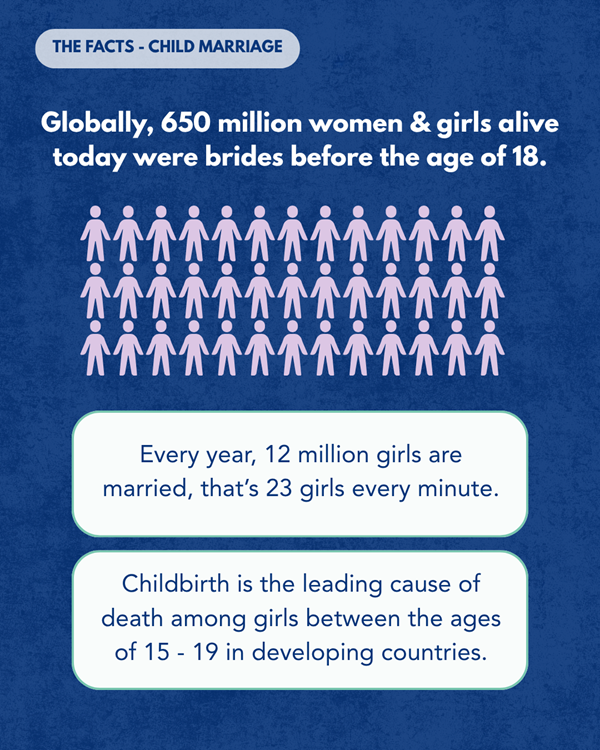
- According to UNICEF, globally, 650 million women and girls alive today were brides before the age of 18.
- Approximately 12 million girls are married before the age of 18 each year. Every three seconds an adolescent girl gets married.
- Complications during pregnancy and childbirth are among the leading causes of death for girls aged 15–19 globally.