Health experts have called for urgent nationwide adoption of Obstetric Point of Care Ultrasound (OPOCUS) as a critical intervention to reduce preventable maternal deaths in Kenya.
Speaking during a high-level side event at the International Maternal Newborn Health Conference 2026 in Nairobi, policymakers, regulators, and health practitioners emphasized that thousands of Kenyan women continue to die each year from pregnancy-related complications that could be detected early with timely screening.
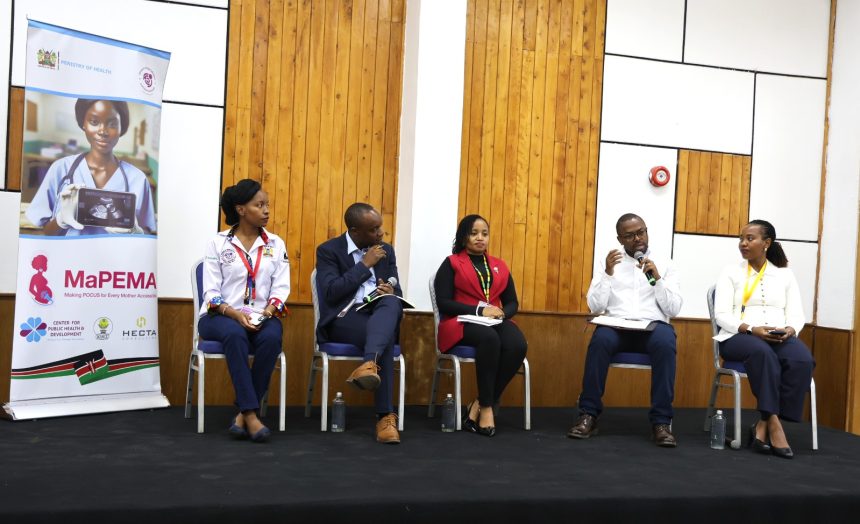
The session, convened by PATH and the Center for Public Health and Development, focused on how portable ultrasound technology can transform maternal healthcare, particularly at the primary healthcare level where access to diagnostic services remains limited.
According to discussions at the forum, Kenya records an estimated 5,000 maternal deaths annually, with the majority attributed to delays in identifying high-risk pregnancies.
Experts noted that OPOCUS offers a practical and scalable solution by enabling early detection of complications at the point of care.
Dr. Clive Ogallo, who moderated the session, underscored the need to shift from small-scale pilot projects to national implementation.
He noted that while evidence supporting OPOCUS is already available, progress has been slowed by policy, financing, and regulatory gaps.
Dr. Janette Karimi from the Ministry of Health highlighted ongoing efforts to strengthen maternal health services but acknowledged the need for faster policy alignment to support widespread use of point-of-care ultrasound.
She stressed the importance of ensuring equitable access, particularly for women in underserved and rural areas.
Panelists agreed that one of the most significant opportunities lies in task-sharing.
Dr. Emily Njuguna of PATH noted that with the right training, nurses, midwives, and primary healthcare providers can effectively use portable ultrasound devices, expanding access beyond specialized facilities.
The discussion also pointed to financing as a major barrier to scale.
Dr. Matiko Riro of Savannah Global Health Institute called for the integration of OPOCUS into national health financing frameworks, including efforts to reduce out-of-pocket costs for pregnant women and ensure sustainability through public and private sector collaboration.
On the regulatory front, Dr. Pauline Wairimu from the Pharmacy and Poisons Board highlighted the need to accelerate approval processes for new and emerging technologies, particularly those incorporating artificial intelligence. She noted that streamlining regulatory pathways would be key to ensuring timely access to safe and effective devices.
Dr. Bernard Olayo of the Center for Public Health and Development emphasized that continued reliance on pilot programs risks delaying impact, calling for a coordinated national approach that prioritizes scale and sustainability.
The panel concluded with a strong call to action for government, partners, and stakeholders to institutionalize OPOCUS within primary healthcare, invest in workforce training, strengthen financing mechanisms, and fast-track regulatory processes.
Experts agreed that while OPOCUS does not replace conventional ultrasound services, it plays a vital role in early risk detection and timely referral, ultimately improving outcomes for mothers and newborns.
The meeting also proposed the establishment of a national community of practice to support knowledge sharing, evidence generation, and coordinated scale-up efforts.
As Kenya continues to pursue universal health coverage, stakeholders at the forum emphasized that adopting practical, high-impact innovations like OPOCUS could significantly accelerate progress toward reducing maternal mortality.
The message from the conference was clear: the tools to save lives already exist, and the priority now is to ensure they reach every woman who needs them.