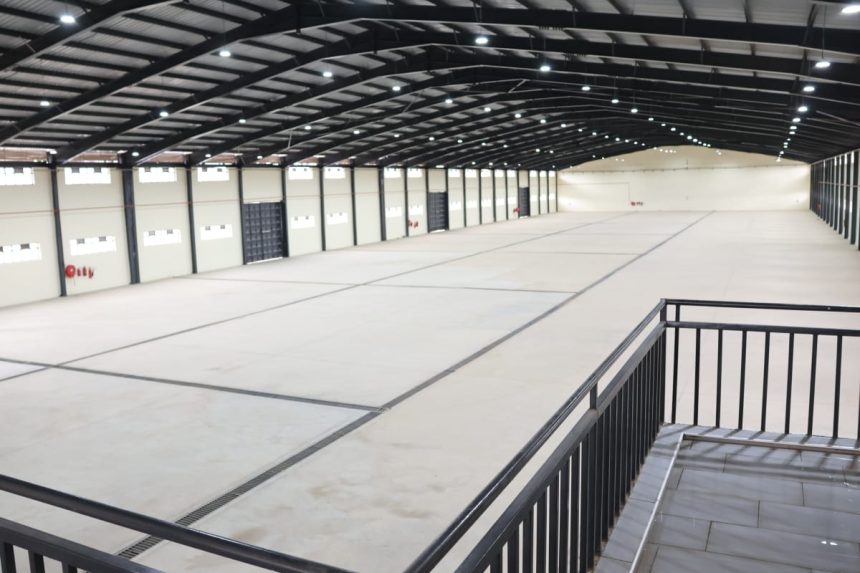
Kenya is set to make its leather industry globally competitive following the establishment of a Ksh 5 billion state‑of‑the‑art leather testing laboratory at the Kenanie Leather Industrial Park.
The lab signals a renewed government push to accelerate Kenya’s long‑delayed leather industry ambitions.

Speaking after leading investors on a tour of the park, Industrialization Principal Secretary Dr Juma Mukhwana said the facility funded by the Italian government will be equipped to accredit leather products to international standards, enabling Kenyan manufacturers to access markets in the EU, US, China, India, and the wider East African Community (EAC).
“We want to create a glass lab to international standards, so that it’s able to test and approve leather products for global markets,” said Mukhwana, adding that investors will no longer need to build their own testing facilities.
Dr Mukhwana criticized years of stagnation since the park’s inception in 2016, urging the Kenya Leather Development Council (KLDC) to deliver visible results. He challenged the agency to attract more investors, scale up leather production, and craft policies that support private sector participation.
He noted that Kenya’s leather sector remains vibrant but disorganized, with small manufacturers forced to import leather despite the country’s large livestock base. He emphasized that production at Kenanie would serve not only Kenya but eight regional markets, including Uganda, Tanzania, South Sudan, Somalia, Burundi, and the DRC.
The government has already invested in infrastructure upgrades at the park, including roads, electricity, water, and security installations. Plans are also underway for affordable housing, schools, hospitals, shopping centers, and recreational facilities to support workers and residents.
Mukhwana cited Egypt’s rapid progress in leather industrialization with more than 200 tanneries established within a decade as a benchmark Kenya must strive to match.
“Ten years of potential is too long. We must move from talking about possibilities to actual investments,” he said.
The announcement positions the Kenanie Leather Industrial Park as a potential hub for regional and global leather trade, with the new laboratory expected to be a cornerstone in ensuring quality, compliance, and competitiveness.
Shun Qiang Cui an investor from Hong Kong says for more than twenty years they have partnered with Kenya in the Leather industry and trusts this is a good opportunity to contribute to the growth of Kenya’s Leather industry
Kennedy Waiyaki Director ReaLeather Limited urged the government to reinforce friendly business policies like favourable taxation for private investors in the country