Kenya’s agricultural transformation is increasingly being felt at the farm level as the Government moves to lower the cost of inputs, raise productivity and improve returns to farmers.
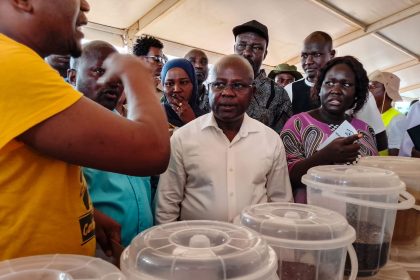
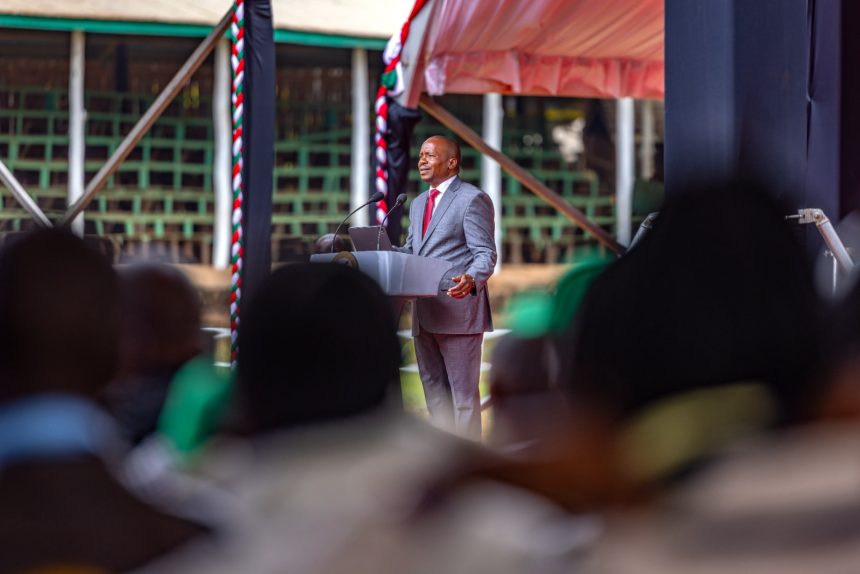
Speaking at the opening of the Agricultural and Food Security Transformation Summit at the Jamhuri Park ASK Showground in Nairobi on Wednesday, Deputy President Kithure Kindiki said reducing the cost of farming had been a central component of the Government’s agricultural agenda over the past four years.

He said the Government’s decision to place agriculture at the centre of the Bottom-Up Economic Transformation Agenda was informed by the sector’s importance to household incomes, food security, employment, industrial production and exports.
“When agriculture works, Kenya works,” the Deputy President said, describing agriculture as one of the most direct pathways through which economic growth reaches ordinary households.
Among the measures highlighted was the reduction in the price of fertiliser from KSh7,000 per bag in 2022 to KSh2,000.
The Government has also reduced the price of certified maize seed by 50 per cent, from KSh300 to KSh150 per kilogram.
For livestock farmers, the cost of sexed semen for artificial insemination of dairy cows has fallen from KSh8,000 to KSh1,400 a dose.
The Deputy President said these interventions were intended to make production more affordable while enabling farmers to increase output.
The results, he said, were already evident in several agricultural value chains.
Maize production has risen from 34 million bags to 75 million bags, while milk production has increased from 4.6 billion litres to 5.2 billion litres.
Milk prices have also improved, rising from between KSh35 and KSh37 per litre in 2022 to about KSh50 currently, with the Government seeking further improvements.
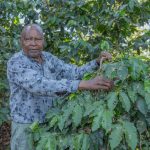
Coffee farmers, who received between KSh50 and KSh60 per kilogram in 2022, are now receiving between KSh120 and KSh150 depending on quality.
The Deputy President, however, said the transformation remained a work in progress, pointing to continued challenges in rice and wheat production.
Kenya still imports a large portion of its wheat requirements, he said, making increased domestic production an important part of the next phase of agricultural transformation.
The Government will therefore continue working to lower the cost of inputs, including livestock feed, while increasing productivity across agricultural value chains.
Beyond individual interventions, the Government is seeking to move farmers from subsistence production towards commercially viable enterprises.
The broader objective, the Deputy President said, is to build an agricultural economy that is productive, competitive and resilient, while ensuring that farmers earn more from their work.
The ultimate measure of success, he said, should be whether farmers earn more, Kenyan families have access to affordable food, young people find jobs and enterprises in agriculture, industries obtain locally produced raw materials and Kenya earns more from what it produces.
Millions of Kenyans who depend on farming and livestock keeping say the transformation agenda therefore begins with a simple economic equation: lower the cost of production, increase productivity and ensure that a greater share of the value created reaches the farmer.