For decades, falling ill in Kenya has brought two fears: the illness itself and the cost of treatment.
Families have depleted their savings, sold property, borrowed money and organised fundraisers simply to keep a loved one in hospital.

For too many households, access to healthcare has depended not only on how urgently treatment is needed, but also on how much money can be raised.
Kenya’s health reforms are designed to change this reality.
At their heart is a simple but consequential principle: no Kenyan should be denied necessary healthcare because of where they work, what they earn or whether their family can afford a hospital bill.
The previous health insurance model could not deliver that protection at the scale the country required. Only about one in four Kenyans was covered.
Because contributions were closely tied to formal employment, millions of farmers, traders, casual workers and other Kenyans outside the formal economy remained inadequately protected.
Many had little choice but to pay directly for treatment.
The consequences were felt in households across the country. Kenyans were spending approximately USD 1.2 billion out of pocket on healthcare every year.
Behind that figure were families diverting school fees to settle hospital bills, borrowing to buy medicines, postponing treatment because money was unavailable, or turning to friends, relatives and communities for help.
The transition to the Social Health Authority (SHA) must therefore be understood in this context. It is not simply the replacement of one institution with another. It is a fundamental change in how Kenya finances healthcare: a move away from a system that left large sections of the population without meaningful financial protection towards one founded on solidarity and access according to health need.
The scale of progress already made demonstrates why the reform matters. More than 32.3 million Kenyans over half the population have registered with SHA.
This has brought millions more people into the national health financing system and established a foundation for progressively extending financial protection to every household.
The National Government’s decision to finance primary healthcare is equally important. More than USD 210 million has been committed to primary healthcare, supporting over 20 million outpatient visits by approximately 15 million people.
This changes where the health system places its emphasis. Instead of waiting until people become seriously ill and require expensive hospital treatment, Kenya is investing in care closer to communities, where disease can be prevented, detected and treated earlier.
The impact is also becoming visible in the services that matter most to families. More than 1.2 million deliveries and 500,000 surgical procedures have been facilitated under the reforms. More than 50,000 cancer patients and nearly 21,000 people requiring dialysis have received support through the Emergency, Chronic and Critical Illness Fund.
These figures represent real lives. A mother receiving maternity care without her family having to raise the entire cost is not merely a statistic.
Neither is a cancer patient able to continue treatment, nor a person with kidney disease able to access dialysis. Each reflects the central purpose of health financing reform: ensuring that the need for treatment does not automatically become a financial crisis.
Registration, however, is only the beginning. The true measure of universal health coverage is what happens when a Kenyan needs care. A registered person must be able to enter an accredited health facility, understand the benefits available and receive the appropriate service without facing costs that place treatment beyond reach.
The next phase of implementation must therefore turn progress in registration into a better, more predictable experience at the point of care.
Legitimate claims must be processed and paid promptly so that health facilities can remain functional, medicines can stay available and services can remain accessible. Public confidence in the new system will ultimately be earned through the experience of Kenyans whenever they seek treatment.
Technology is supporting this transition by connecting different parts of the health system and improving how services are accessed and managed. Its value lies not in digitisation for its own sake, but in making healthcare simpler, more transparent and more accountable to the people who depend on it.
The health workforce is just as important. Buildings, equipment and technology cannot treat patients on their own. Doctors, nurses, clinical officers, pharmacists, laboratory personnel and other health workers turn these investments into care. Continued investment in the people who deliver healthcare must therefore remain central to the reforms.
Taken together, these changes mark an important shift in Kenya’s health system. Millions more Kenyans are now included in the health financing system; primary healthcare has stronger public financing; and support for costly services such as cancer treatment, dialysis, surgery and maternity care is reaching more people.
The work is not complete. The task before us is to sustain these gains, resolve implementation challenges and ensure that the promise of reform is felt in every county and at every point of care.
Healthcare becomes a right not when it is declared in policy, but when every Kenyan can obtain the care they need without illness pushing their family into financial hardship. That is the standard by which these reforms must and will be judged.
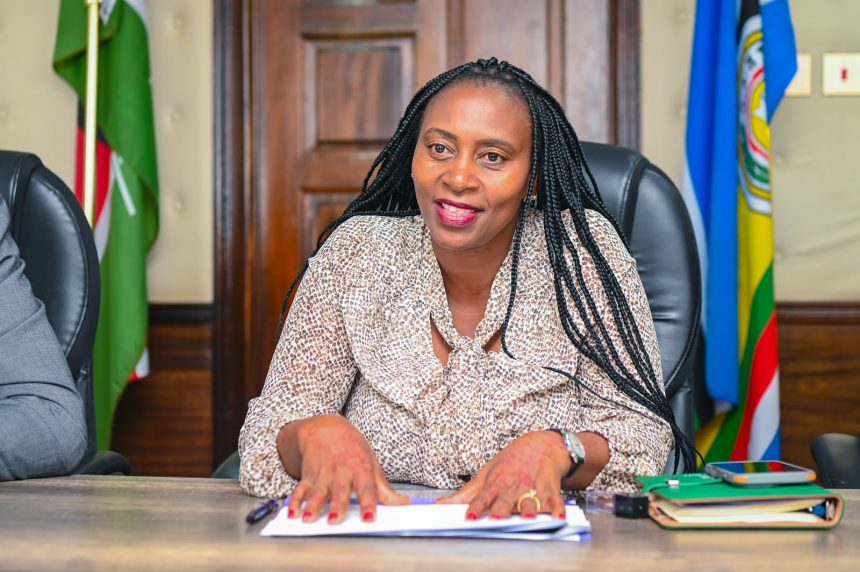
The writer is Mary Muthoni, Principal Secretary for Public Health and Professional Standards.
Disclaimer: Opinions expressed in this article do not represent the position of Kenya Broadcasting Corporation.