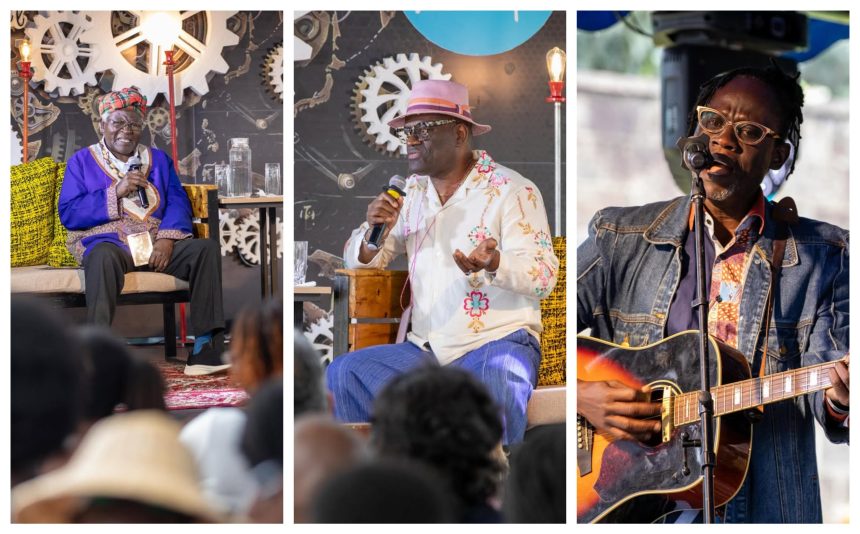
The fifth edition of the Nairobi Literature Festival, stylised as the Nairobi Litfest, ended on Sunday after a three-day event that blended literature, performance, politics and imagination mainly at the Eastlands library, with more events taking place at the MacMillan library and the Kaloleni library.
The festival launched with a kids’ show and session on Friday, which is part of the festival’s growing children’s programme, and featured a dance session hosted by MC Orpah.

Presented by Book Bunk and Hay Festival Global, this year’s festival explored “speculative cartography and South-to-South connections”, bringing together writers, thinkers, artists and activists from across Africa and beyond.
Here’s our roundup of the takeaways from the event.
Across the festival, conversations rarely stayed confined to books alone; instead, they spilt into questions about memory, identity, ecology, motherhood and the stories societies choose to preserve.
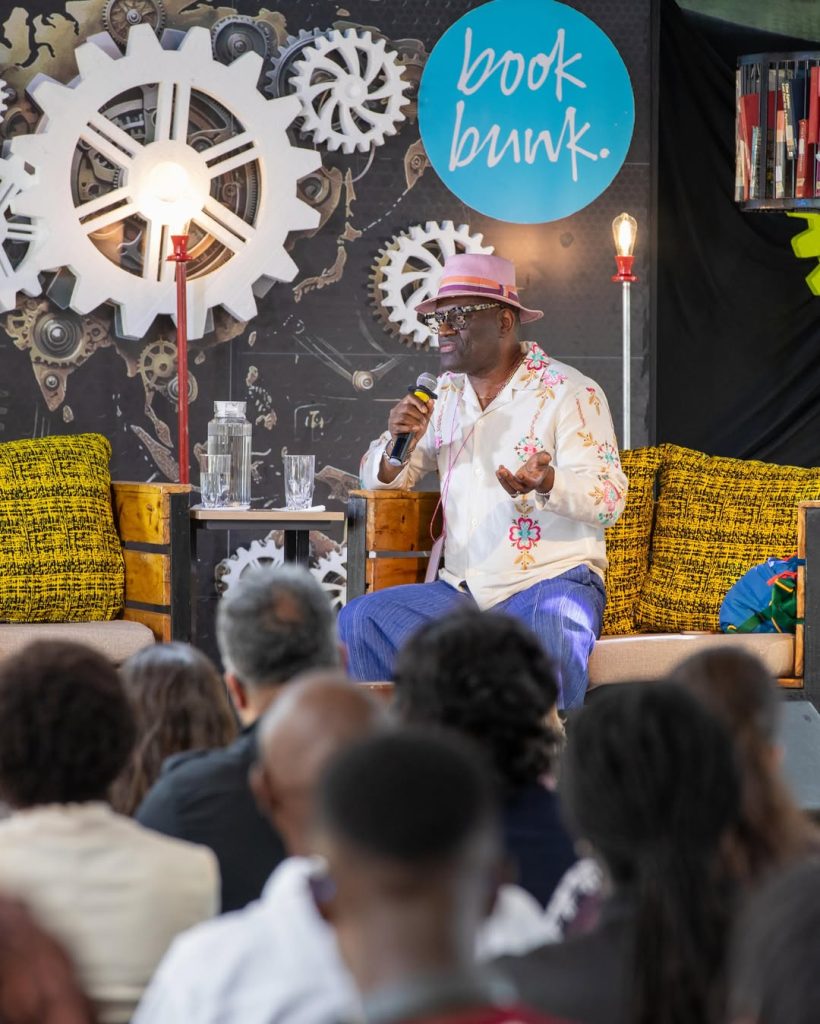
One highlight from a panel about Imagination and mythmaking, which included panellists like Congolese writer Alain Mabanckou and Kenyan novelist Yvonne Owuor, explored storytelling as an act of disruption, discussing how fiction can challenge received truths.
“Everything that we have received as history, certainly as people of the Global South, and particularly from Africa, has not necessarily served the truth or served the vision of who we are as human beings…There is a lot of work that now needs to be done to rewrite a story of lives,” said Ms Owuor.
Separately, while adding his thoughts about an African first narrative approach, Mr Mabanckou said more action was needed in place of conversation.
“I think we’ve been talking about PanAfricanism for decades. We talk, we theorise, we say everything, and I am sick and tired of this kind of explanation because we forget to go to the action. All these people, Padmore, Jomo Kenyatta, they spoke about this, but it’s time to express it with our creation.”
It wasn’t the only panel that explored language and narrative. This was also discussed in a panel about conservation and extractive systems, where panellist conservation writer Dr Mordecai Ogada described the enduring “Tarzan Narrative” and how it has influenced conservation in Kenya.
“The Tarzan narrative was a fiction created by Edgar Rice Burroughs in 1912, and is the narrative of a white man who ends up in the jungle in Africa and communicates directly with these wild animals in the jungle and begins protecting them from black people.
“In the first iterations of Tarzan, black people don’t appear, but when they do, they’re interlopers and criminals. This is based in fiction, but it is amazing how closely it has inspired the reality of conservation practice.”
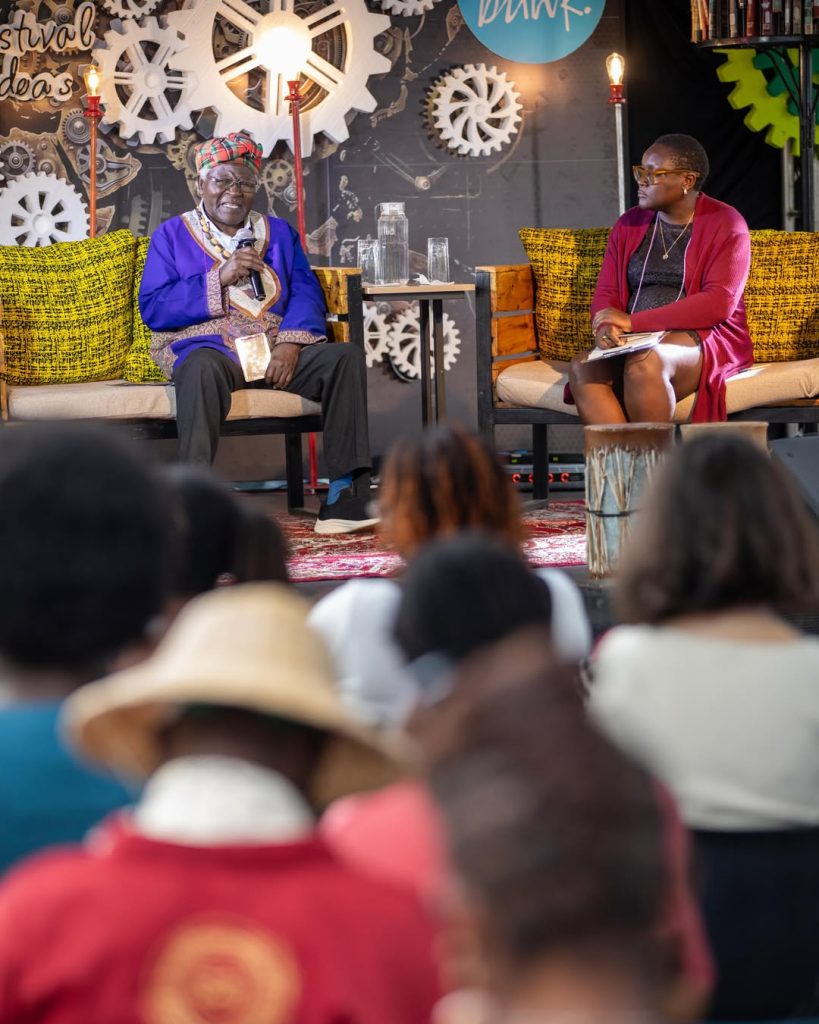
Elsewhere, the festival turned toward literary history through a retrospective on post-independence Kenyan fiction featuring veteran writer David Mailu. During his panel, Mailu emphasised the importance of promoting a reading culture that inspired an intergenerational conversation about literary rebellion, censorship and what earlier generations of writers risked in order to publish boldly.
“If we don’t read as a nation, and the world is reading, then we are going down, and we are killing our cultural value,” Mr Mailu said. By now, we should have as many bookshops and libraries as possible.”
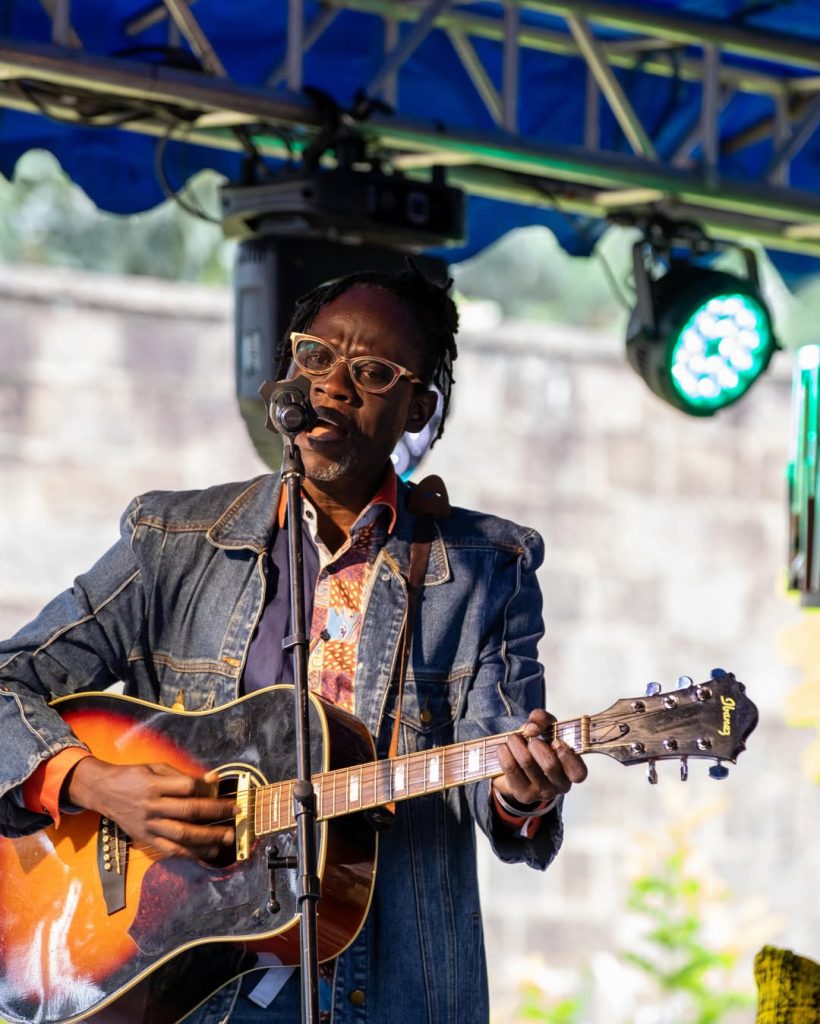
Saturday’s thought-provoking conversations bled into a live musical performance where a sing-along session to Mutoriah’s song “Beta” brought levity to a day filled with hard but important conversations.
On Sunday, which happened to be Mother’s Day, the festival turned to mothers examining maternal figures in literature.
Featuring 2024 OCM Bocas Prize for Caribbean Literature winner and poet, Safiya Sinclair whose memoir, ‘How to Say Babylon’, chronicles her mother’s strength and sacrifices; Ugandan poet and playwright based in London, Dr. Nick Makokha, whose work explores fatherhood and was recently shortlisted for the 2025 T.S. Eliot Prize and award-winning Chilean writer and scholar, Lina Meruane whose essay, Contra los Hijos (Against Children) warns of the dangers of conservative ecofeminist ideals.