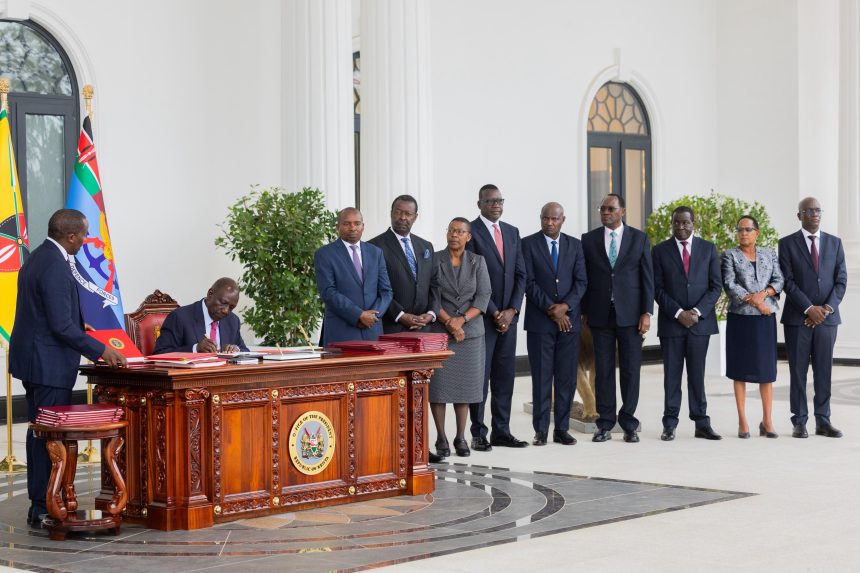
President William Ruto has assented to four Bills seeking to strengthen public finance management, streamline the administration of air passenger charges, establish a statutory framework for population planning and modernise Kenya’s trust law.
Ruto signed the legislation at State House, Nairobi, on Tuesday, September 8, 2026.

The Public Finance Management Amendment Bill, 2025, introduces changes aimed at strengthening accountability and oversight in the management of public resources.
Among the changes are provisions intended to ensure public entities act on recommendations arising from reports by the Auditor-General and Controller of Budget.
The amendments also seek to improve the management and tracking of additional allocations to county governments, including funds provided through intergovernmental agreements.
The Air Passenger Service Charge Amendment Bill seeks to streamline the allocation and administration of revenue collected from air passengers.
The law provides for the sharing of proceeds among key institutions, including the Kenya Airports Authority, Kenya Civil Aviation Authority, Kenya Meteorological Service Authority and Tourism Fund. The changes are intended to support aviation safety, weather services, tourism promotion and the wider aviation sector.
The Kenya National Council for Population and Development Bill establishes the Council as a statutory body, replacing its previous basis under an Executive Order.
The Council will coordinate population policies and programmes, support evidence-based population planning and advise the Government on population growth, demographic trends and their implications for national development.
The Trust Administration Bill, meanwhile, introduces a single legal framework for the creation and administration of trusts in Kenya.
The law repeals the Trustees Act and the Trustees (Perpetual Succession) Act, consolidating provisions governing trusts into one statute to address duplication and inconsistencies in the existing framework and provide clearer rules for trustees and beneficiaries.