President William Ruto has reaffirmed his administration’s commitment to equal development across all regions of the country, saying Kenya Kwanza is deliberately reversing decades of exclusion, neglect and marginalisation.
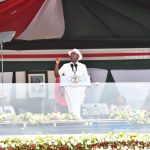
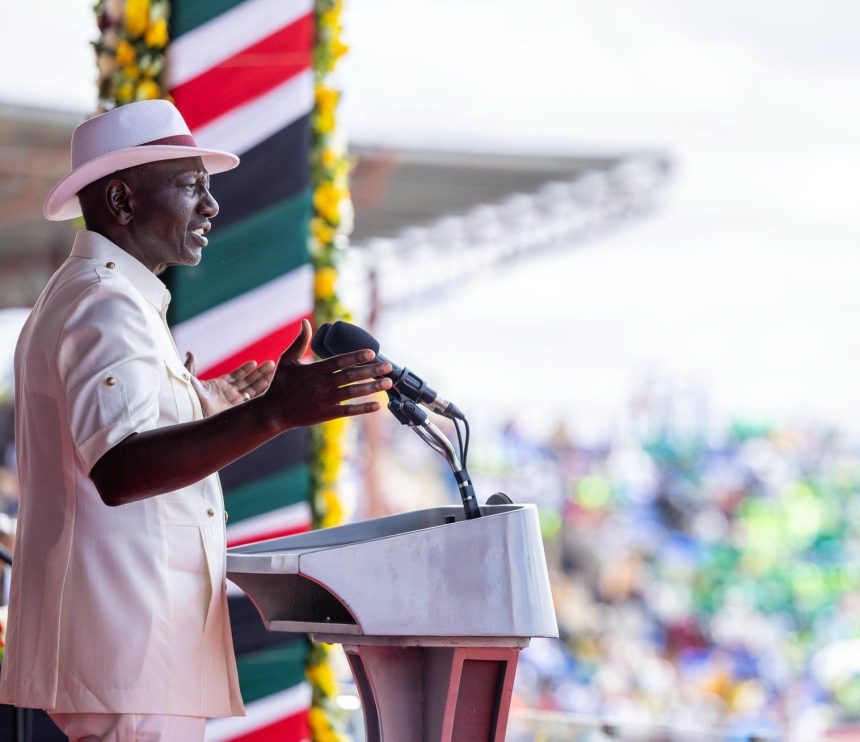
Speaking during the Madaraka Day celebrations in Wajir County on Monday, the President said no part of Kenya should be left behind in the national development agenda, regardless of geography, ethnicity or historical disadvantage.

Specifically, the Head of State announced that his administration is focused on eliminating discrimination, policy failures, and unequal access to opportunities that had for years affected residents of Northern Kenya and other historically marginalised areas.
“For decades, some parts of our country were told they were too distant, too dry, too difficult, or too marginal to matter. Today, Kenya rejects that thinking,” Ruto said.
He reiterated that every Kenyan deserves equal dignity, protection and opportunity under the Constitution.
“No county is too remote to deserve development. No citizen is too distant to deserve dignity,” he said.
“From Busia to Mandera, from Turkana to Kwale, and from Kisumu to Mombasa, every corner of this Republic matters because every Kenyan matters,” the President added.
The President defended the Bottom-Up Economic Transformation Agenda, describing it as a deliberate inclusion strategy aimed at ensuring all regions benefit from economic growth and public investment.
According to Ruto, the government has expanded investments in education, healthcare, roads, dams, affordable housing and economic infrastructure in regions that were previously neglected.
He highlighted the ongoing Ksh100 billion Northern Kenya Gateway Corridor linking Isiolo, Wajir and Mandera as one of the most significant infrastructure investments undertaken in the region since independence.
The 750-kilometre road project is expected to connect communities previously isolated from markets, public services and economic opportunities.
“For decades, distance was used to justify exclusion. Today, we are defeating distance,” Ruto said.
The President also pointed to investments in water infrastructure and dams, saying they would transform areas once seen only through the lens of scarcity into productive economic zones capable of supporting agriculture, livestock production and trade.
“What was once neglected will become indispensable to our food security, prosperity and the future we are building together,” he said.
Ruto further cited reforms in the issuance of national identity cards as evidence of his administration’s commitment to ending discrimination and ensuring equal citizenship for all Kenyans.
He said residents from previously marginalised communities can now access identification documents without unnecessary vetting processes, delays, or humiliation.
“No extra hurdles. No discrimination. No humiliation. Just their rightful document, in their hands, on time,” the President said.
Ruto maintained that his administration is committed to building a Kenya where every citizen feels included and valued. He noted that while political freedom was secured at independence, the country must now guarantee economic empowerment, inclusion and opportunity for all citizens.
“Our responsibility is to ensure every Kenyan experiences the full promise of that freedom,” he said.
The Head of State said Northern Kenya is now central to the country’s development strategy, citing its potential in renewable energy, livestock production, irrigated agriculture, logistics and regional commerce.
He said his government will continue investing in historically marginalised regions as part of efforts to create a more united, productive and globally competitive nation.
Ruto says the decision to host the Madaraka Day celebrations in Wajir was symbolic and part of the government’s broader push for inclusion and equitable national development.