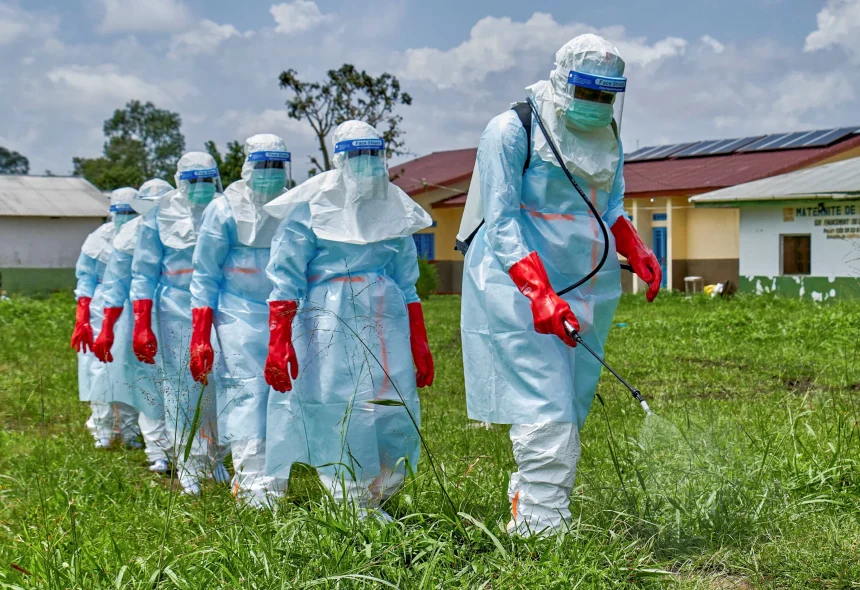
Uganda has confirmed six new cases of Ebola Virus Disease (EVD), bringing the total confirmed infections in the current outbreak to 15.
According to health authorities, 12 patients are currently receiving treatment while two have been discharged.

One person has died from the disease.
The Ministry of Health said all new cases were identified among individual who had been listed as contacts of previously confirmed patients.
A total of 668 contacts are currently under follow-up as the government of Uganda continues active surveillance and contact tracing.
Ebola
Ebola disease is a severe, often fatal illness affecting humans and other primates.
The virus is transmitted to people from wild animals (such as fruit bats, porcupines and non-human primates) and then spreads in the human population through direct contact with the blood, secretions, organs or other bodily fluids of infected people, and with surfaces and materials (e.g. bedding, clothing) contaminated with these fluids.
According to the World Health Organisation (WHO), the average Ebola disease case fatality rate is around 50pc. Case fatality rates have varied from 25–90pc in past outbreaks.
The first Ebola disease outbreaks occurred in remote villages in Central Africa, near tropical rainforests.
The 2014–2016 Ebola virus disease outbreak in West Africa was the largest and most complex Ebola outbreak since the virus was first discovered in 1976. There were more cases and deaths in this outbreak than all others combined.
It also spread between countries, starting in Guinea then moving across land borders to Sierra Leone and Liberia.
It is thought that fruit bats of the Pteropodidae family are natural hosts of the orthoebolavirus.
Ebola disease is a severe, often fatal illness transmitting from animals to humans and between humans.
Here’s what you need to know about how it spreads, the symptoms, and how to prevent infection. pic.twitter.com/Mmd97XHTDL
— World Health Organization (WHO) (@WHO) June 2, 2026