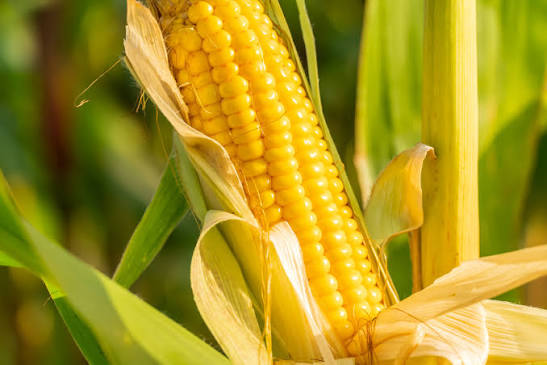
Farmers in the Country will not be forced to adopt genetically modified maize once commercialised instead it will be entirely voluntary; a seed breeder expert has told a Kisumu Court.
Appearing before Kisumu High Court Judge Justice Joe Omido, during the hearing of a case challenging the field cultivation, and placing on the market of genetically modified maize (Zea mays) commonly known as Bt maize (MON 89034), the expert witness for the respondents Dr. Stephen Mugo told the Court that farmers will retain full freedom to choose between GM, hybrid, improved, or indigenous seed varieties.

“In fact, many farmers customarily enhance indigenous varieties through natural crosspollination. Cross-pollination with Bt maize does not eliminate indigenous varieties; rather, it may introduce beneficial traits such as pest resistance, he told the Court during cross-examination by petitioners lawyers.
The case was filed last year by Mr. Moses Pius Ouma and others against the National Biosafety Authority, Ministry of Agriculture and livestock development and Kenya Plant Health Inspectorate Service.
The adoption of Bt maize by Kenyans farmers will held address the issue of food security as well as pest control which affects the plant in the country, a maize breeder expert has told the High Court.
Appearing before Kisumu High Court Judge Justice, Dr. Stephen Mugo urged the Court To dismiss the case filed by activists to oppose open field cultivation, and placing on the market of genetically modified maize (Zea mays) commonly known as Bt maize (MON 89034).
Dr. Mugo observed that currently used chemical control methods pose problems of high pesticide costs and application risks, direct and indirect damage to human and livestock health, damage to the environment, and development of resistance to the pesticides.
“This is further demonstrated by Kenya’s experience with Bt cotton, introduced over five years ago, where there has been neither monopolization by trait or variety owners nor any disputes arising from pollen flow among farmers,” Dr. Mugo told the Court.
He went on : “Regarding the effect of GM varieties on yields: substantial evidence shows that Bt maize contributes to higher effective grain yields by protecting crops from insect damage and competing weeds, respectively. Yield increases in farmers’ fields are ultimately the result of many factors, including genetics, agronomy, soil fertility, water availability, pest and weed control, and GMO traits, which are one tool among several (including conventional breeding and marker-assisted selection) used to improve crop performance.”
He told that GMO technology is therefore an additional method for boosting agricultural productivity and supporting food and nutritional security in Kenya and beyond.
The Bt maize which was approved by the National Biosafety Authority in 2025 was developed using modern biotechnology methods to protect itself against specific pests such as the maize stem borers and fall armyworms, which are devastating pests in maize fields.
National Biosafety Authority is mandated to exercise general supervision and control over the transfer, handling and use of Genetically Modified Organisms (GMOs) with a view to ensuring safety of human and animal health and provision of adequate protection of the environment.
Dr. Mugo told the Court that in Kenya, more than 400,000 metric tonnes (MT) of maize worth over USD 90 million is lost annually to stem borer pests
“The impact of insect-pests on crop production has worsened with the arrival of the invasive new pest – the fall armyworm (FAW) in Africa, including Kenya, in 2016. Fall armyworm poses a significant risk for about 10 million maize-producing smallholder farmers in Africa. A recent report indicates that a quarter of the 2.9 million hectares of maize land was infested by the pest in 2017, causing a loss of over 134,000 MT of maize worth more than USD 30 million,” added the expert.
He noted that therefore, there is an urgent need to address the menace of the fall armyworm in different parts of Africa because of its threat to maize production and food security.
Bt maize application, was jointly submitted by the Kenya Agricultural and Livestock Research Organization (KALRO) and the African Agricultural Technology Foundation (AATF) to the National Biosafety Authority.
The hearing of the case continues from 2nd to 3rd June 2026.