International thought leaders meeting at Pan Africa Christian University say the world faces a crisis of credible leadership amid rising geopolitical instability and deepening institutional uncertainty.
As the 2026 Global Leadership Summit got underway on Wednesday, 4th March 2026, global stakeholders have noted that the world needs strong leadership amid unprecedented levels of conflict and economic shocks that are impacting day-to-day life.

The summit, convened under the theme “Leading Transformative and Responsible Change in a Complex World,” attracted delegates from business, government, civil society, academia and faith communities. Organizers said Nairobi’s selection as host city reflects East Africa’s growing stature in global leadership conversations — a region that is increasingly shaping, rather than simply receiving, the world’s thinking on governance.
Global Leadership Summit (GLS) President and CEO David Ashcraft pointed to Kenya’s emergence as a continental hub for leadership dialogue, noting the country’s institutions are playing an ever-larger role in driving the accountability conversation across Africa.
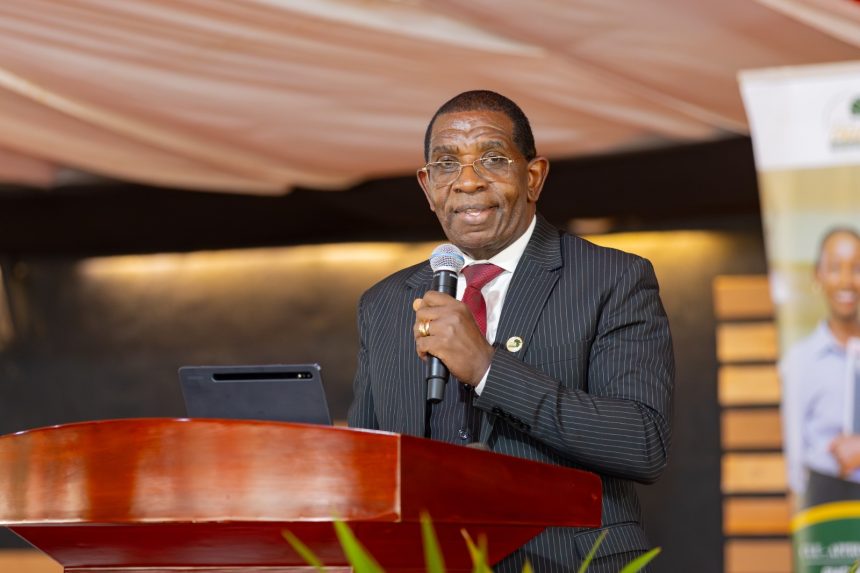
PAC University Vice Chancellor Prof. Dionysius Kiambi delivered a robust opening address, calling for credible, authentic, values-based and transformative leadership as the most urgent response to what he described as a VUCA world — one defined by Volatility, Uncertainty, Complexity and Ambiguity.
“The modern society is characterized by volatility that is shaking our stability, uncertainty clouding our planning, complexity challenging our reasoning, and ambiguity that has put our judgment to the test — placing immense pressure on all our institutions,” Prof. Kiambi said.
He painted a sobering picture of nations increasingly adrift, searching for direction amid converging crises, and pointed to the ongoing Middle East conflict as a sharp illustration of how quickly peace and stability can fracture.
“National and international peace and stability can change in the blink of an eye. The war in the Middle East has already destabilized many nations — if it escalates, we shall be on the verge of an international political and economic crisis that many are not prepared for,” he warned. “Nations are under pressure, yearning for credible and trustworthy leadership.”
A central argument running through the day’s sessions was that technical competence alone is no longer sufficient. Speaker after speaker contended that institutions are not failing because their leaders lack qualifications -they are failing because those leaders lack moral grounding, ethical discernment and genuine accountability to the people they serve.
The summit, co-hosted by Dr Gilbert Ang’ana and Rev. Charles Obara, featured presentations from Dr Purity Ngina, Elisha Bwatuti and Dan Owolabi, each bringing personal stories of resilience, faith and purpose that challenged delegates to look beyond strategy and metrics and lead instead from a place of deep integrity and conviction.
The Global Leadership Summit meets annually in cities across the world, drawing leaders from every sector. Wednesday’s Nairobi edition — among the first staged in East Africa — was read by organizers and delegates alike as a statement of arrival: that this region is no longer a passenger in global leadership conversations, but a driver of them.