As much of the nation remains fixated on the maneuvers of the United Opposition led by Rigathi Gachagua and Kalonzo Musyoka, a quiet yet determined movement is steadily taking root in Ukambani.
This movement, best described as revolutionary, is advancing gradually but firmly — from village to village, from one small town to the next.

And the name gaining traction is that of Dr. Augustus Kyalo Muli, leader of the National Liberal Party (NLP).
In a region where, six decades after independence, a majority of the population still lives below the poverty line — where even a short distance from county headquarters residents spend hours searching for drinking water, and where roads and electricity remain scarce — a revolution is bound to emerge.
“For years, the Kamba community has been misled and exploited. Leaders such as Kalonzo Musyoka have used the community as a bargaining chip for personal ambition and political leverage, leaving the people mired in poverty.Successive governments have also failed, making promises that were never fulfilled” Says Dr. Muli.
It is precisely this cycle of neglect that Augustus Muli and his National Liberal Party seek to break.
Town Halls Reshaping Politics
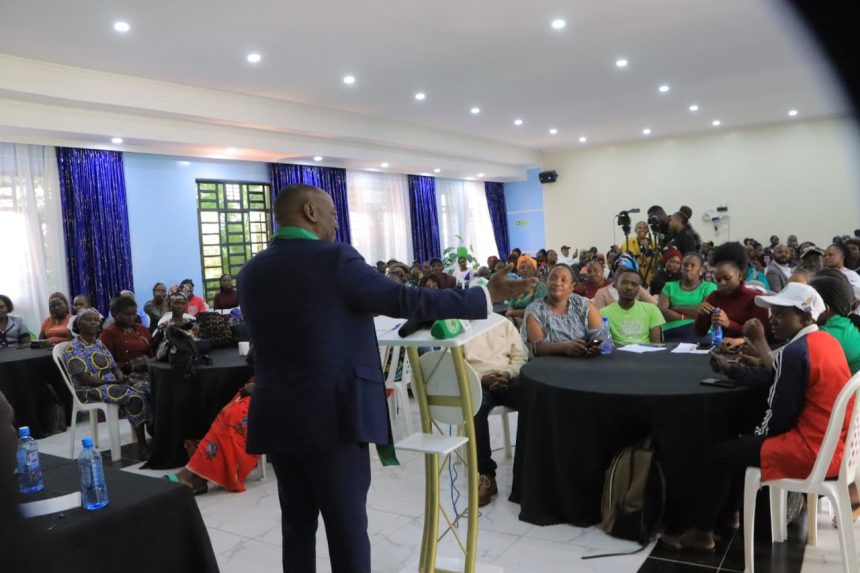
The town hall meetings spearheaded by NLP leader Dr. Augustus Kyalo Muli are redefining the political discourse in Ukambani, signaling the rise of a new force capable of challenging entrenched dominance in the region.
In Kitui, these forums have drawn overflowing crowds, with residents seizing the chance to directly question party leaders, debate policy priorities, and vent frustrations over stalled development.
The format — interactive, participatory, and policy‑focused — has resonated deeply with citizens weary of conventional rallies.
In Kitui, town halls have become a platform for ordinary citizens to express themselves in ways rarely witnessed in Kenyan politics.
“For the first time, I feel like my voice matters in shaping the agenda,” said Mary Mutheu, a small‑scale farmer. “We are not just being told what leaders want; we are telling them what we need.”
“We are tired of empty promises. Here, leaders are forced to answer directly,” added Peter Kilonzo, a youth leader from Kitui town. “If this continues, the region’s politics will never be the same again.”
“This is not a rally — it is a classroom of politics. We are learning, questioning, and contributing. That is how democracy should work,” observed Josephine Mwende, a teacher by profession.
A Growing Organizational Base
Behind this surge lies a formidable organizational foundation: the NLP boasts close to one million registered members in Ukambani alone, a figure that underscores its expanding influence. This membership strength lends weight to the town halls, transforming them from symbolic gatherings into platforms backed by a significant constituency.
While the forums are currently concentrated in Kitui, their ripple effects are spreading. Aspirants in Tharaka Nithi, Embu, and Meru have expressed interest in contesting under the NLP banner, signaling the party’s widening appeal in the Mt. Kenya region. This dual‑front expansion could position NLP as a formidable rival to Wiper, long considered the dominant voice in Ukambani politics.
A Shift in Campaign Culture
The town halls are expected to usher in a new campaign culture. Unlike personality‑driven rallies, these forums emphasize policy dialogue, accountability, and citizen participation. The participatory format is positioning NLP as a credible alternative — not only in Ukambani but also in regions where voters are hungry for inclusivity.
With the 2027 elections on the horizon, Dr. Muli’s grassroots liberalism could redraw Kenya’s political map.
The Big Question
A recurring question has surfaced in various forums: Kalonzo’s political prominence has largely stemmed from the votes he delivers from the Akamba community. But what if Dr. Augustus Muli can deliver even half that support?
This is a man who should not be underestimated. The tides in Ukambani politics may be on the verge of turning.