The prestigious American think tank, The Stimson Center, has described Morocco as “one of the most strategic and promising countries in Africa and the Arab world,” highlighting the Kingdom’s progress in the diplomatic, economic, energy, and geopolitical spheres, particularly regarding the issue of the Moroccan Sahara.
The Stimson Center’s report on the Kingdom describes a country “undergoing a major transformation,” combining political stability, industrial growth, energy ambitions, and growing diplomatic influence.

According to the analysis, Morocco is gradually establishing itself as a “strategic middle power” linking Europe, Africa, and the Middle East, thanks to a long-term geopolitical vision and the strategic continuity of its institutions.
The report highlights that the Kingdom has profoundly transformed its economic model over the past two decades, moving beyond the image of a primarily agricultural or tourism-based economy to become a competitive industrial platform and a leading African logistics and energy hub.
The think tank particularly highlights the performance of Morocco’s automotive industry, described as one of the most advanced on the African continent, as well as the progress made in aerospace, electronics, batteries, critical materials, and green technologies.
The report notes that many international companies now view Morocco as a strategic hub for serving Europe, Africa, the United States, and the Middle East, thanks in particular to its stability, modern infrastructure, and free trade agreements.
In terms of energy, the report highlights the Kingdom as a regional leader in solar, wind, and green hydrogen, citing in particular the Noor Ouarzazate solar complex as a symbol of Morocco’s ambition in the energy transition.
According to the Stimson Center, Morocco possesses major assets that position it to become a future strategic supplier of green energy to Europe and a key player in new global energy chains.
The report also highlights the Kingdom’s geographic location, described as a major geopolitical advantage, making Morocco a gateway to Africa and a global logistics hub.
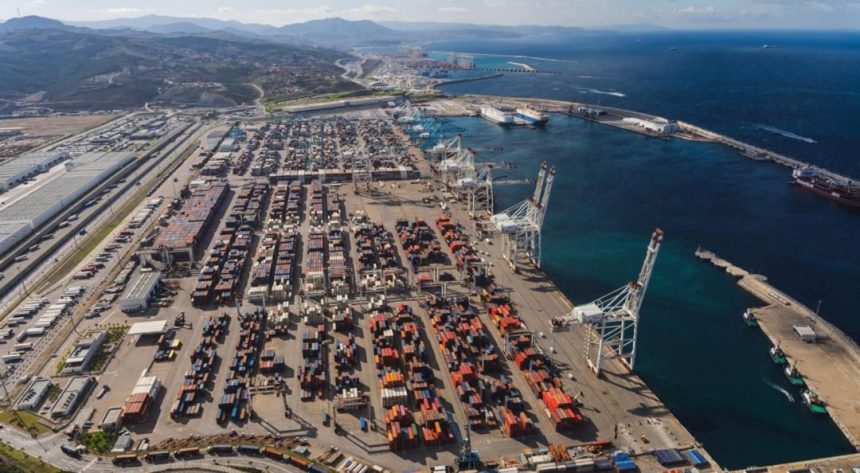
In this context, the Tangier Med port is presented as one of the country’s greatest strategic successes and as a key driver of Morocco’s industrialization and its integration into global trade flows.
On the diplomatic front, the document describes Morocco as an increasingly influential African power, thanks in particular to its investments in sub-Saharan Africa and the expansion of Moroccan banks, insurance companies, and telecommunications firms across the continent.
The think tank also highlights the Kingdom’s strategic partnership with the European Union, its close security ties with the United States, and its role as a reliable partner in the fight against terrorism, regional security, and migration cooperation.
Regarding the issue of the Moroccan Sahara, the report notes that the Kingdom has significantly strengthened its international position through active diplomacy, strategic partnerships, and major investments in the southern provinces.
According to the analysis, the Moroccan autonomy initiative is now viewed by many countries as “serious, credible, and pragmatic,” constituting “the most realistic solution” to the regional dispute over the Moroccan Sahara.
The document highlights the United States’ continued support for Morocco’s sovereignty over the Sahara, the favorable shift in the positions of several European countries, as well as the growing support from many African and Arab states for the autonomy plan.
The Stimson Center also notes that several countries have opened consular offices in the southern provinces or publicly expressed their support for the Moroccan initiative, describing this development as a “major diplomatic turning point” that strengthens the Kingdom’s international credibility.
The report also highlights investments made in the Southern Provinces, presented as a future African economic hub oriented toward the Atlantic and sub-Saharan Africa, notably through road infrastructure, Atlantic ports, energy projects, and industrial zones.
The report further highlights the strategic significance of the Atlantic coastline of the Southern Provinces, which Morocco aims to transform into a trade corridor to West Africa, a regional energy hub, and a major driver of South-South cooperation.
According to the analysis, this approach is part of the Kingdom’s strategy to strengthen African economic integration, facilitate access to the Atlantic Ocean for Sahelian countries, and consolidate regional trade and logistics.
Finally, the American think tank believes that Morocco is particularly well-positioned to capitalize on global economic transformations thanks to its phosphate reserves, its potential in batteries and critical materials, and its growing industrial capabilities.
According to the report, the Kingdom now has the necessary foundations to become, over the coming decades, one of the leading economies and influential powers on the African continent and in the Mediterranean region.