The Kenya Broadcasting Corporation (KBC) has underscored the need for African broadcasters to embrace honesty, collaboration and innovation as the media industry undergoes digital transformation.
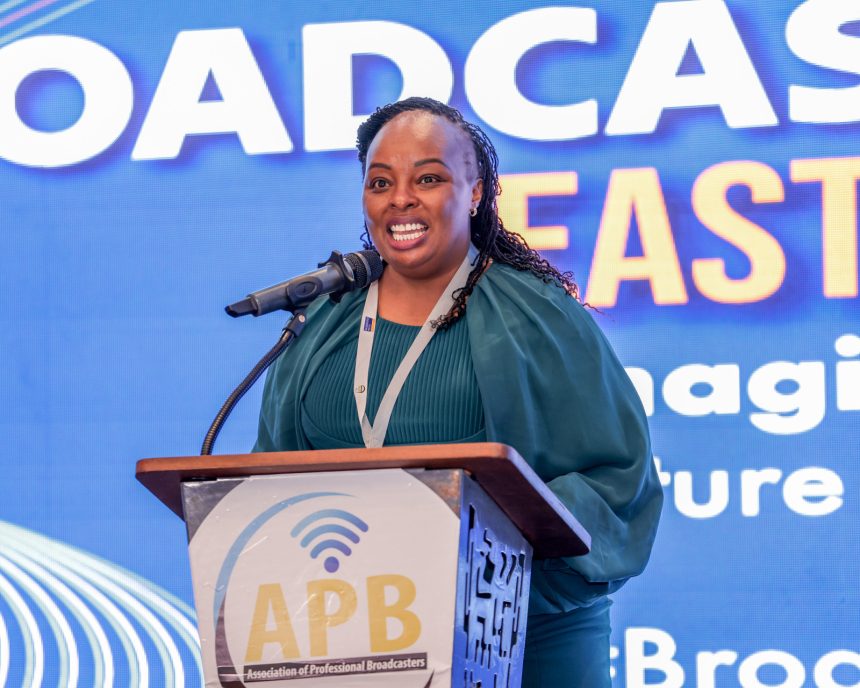
Speaking during the Africa Broadcasters Conference in Nairobi, KBC Managing Director Agnes Kalekye highlighted that for AI to serve Africa, it must reflect African realities, languages and cultures.

“Africa must not simply consume AI technologies developed elsewhere. We must actively participate in building, training, and owning solutions that respond to our unique contexts and aspirations. This is where regional collaboration becomes essential,” noted Kalekye.
While acknowledging the major shift AI represents in broadcasting, the KBC MD noted that the national broadcaster’s vision is to become a digital-first, AI-enabled public broadcaster that balances innovation with inclusivity, and technology with trust.
“Artificial Intelligence now represents the next major shift in broadcasting. At KBC, we view AI not as a disruption to fear, but as an opportunity to lead,” she said.
Adding that: “Our vision at KBC is clear: to become a digital-first, AI-enabled public broadcaster that balances innovation with inclusivity, and technology with trust. We are not preparing for the future. We are already living in it.”
At the same time, she acknowledged that KBC has not yet launched a full OTT platform, saying broadcasters must openly confront the realities of monetisation, cloud migration and digital sustainability.
Kalekye emphasised that digital transformation is no longer optional, highlighting KBC’s Signet platform, which currently supports more than 70 television and radio stations through over 40 transmission sites nationwide.
Further she noted that the broadcaster is also collaborating with the Communications Authority of Kenya on Digital Audio Broadcasting Plus (DAB+) technology aimed at easing frequency congestion and expanding broadcasting access.
“We are also making significant progress toward Digital Sound Broadcasting through DAB+ technology in collaboration with the Communications Authority of Kenya. This transition is helping address frequency congestion in our major cities while creating room for more broadcasters and more diverse content,” she said.
She lauded Nation Media Group and Royal Media Services for taking bold steps into digital streaming as well as iROKOtv and Africa Magic in Nigeria noting that they have shown us that local stories can build massive audiences not by imitating hollywood but by being unapologetically African.
“In South Africa, MultiChoice and Showmax proved that hybrid models work. Linear TV and OTT together, not fighting each other. One foot in the old world, one foot in the new,” she added.
“Even global players like Netflix and Disney+ have taught us something: when we package our stories with quality and care, the world watches,” Kalekye said.