The National Museums of Kenya hosted a Food Heritage Festival at the end of May aimed at reclaiming and promoting traditional food systems through a joint partnership between The Tendet Foundation and the Scaling Up Nutrition Civil Society Alliance Kenya (SUN CSA Kenya).
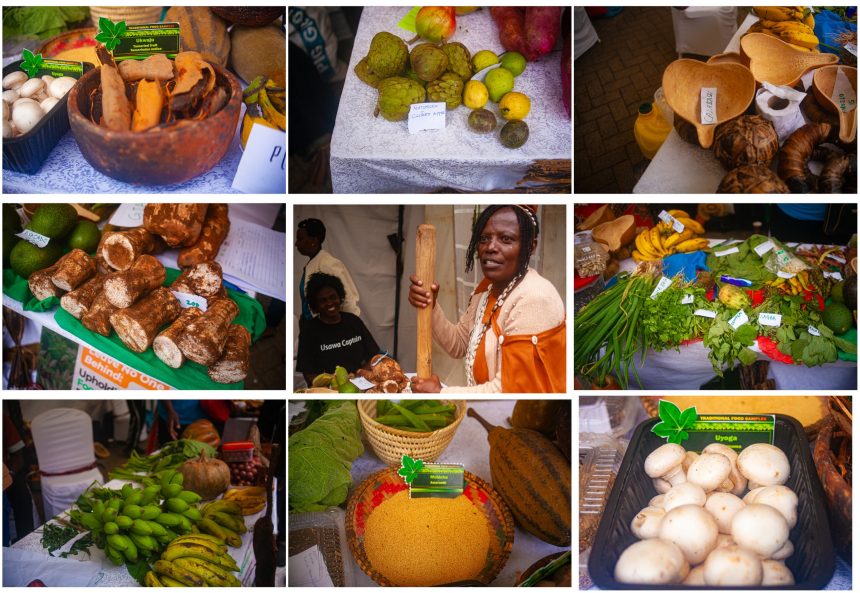
The event brought together farmers, chefs, researchers, journalists and food enthusiasts for a celebration of Kenya’s traditional foods. In addition to serving and showcasing foods such as arrow root, boiled maize, cassava and original seeds, the event highlighted the urgent need to preserve ancestral food practices that have sustained communities for generations.

One of the key themes emerging from the festival was the role of indigenous foods in addressing modern health challenges. Panel discussions led by SUN CSA Kenya, food scientists and journalists explored the politics of food, micronutrient deficiencies and the growing prevalence of obesity and diet-related diseases.
Perhaps, the most surprising thing about the event, however, was the number of young people in attendance who were passionate about preserving Kenya’s traditional culture, whether through food, knowledge, music or fashion.
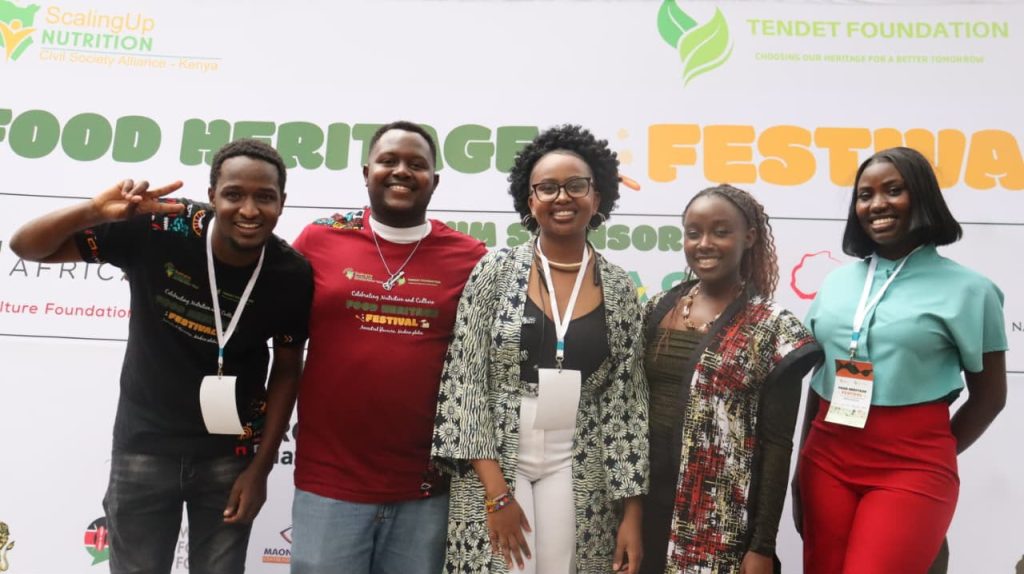
Most of the young attendees were invited through the Tendet Foundation, founded by two University of Nairobi Anthropology graduates – Mitchelle Tendet and Muusi Nzyoka.
Speaking exclusively to KBC Digital, the two founders of the Tendet foundation shared their motivation for organising an event celebrating traditional food and knowledge.
“In Kenya, traditional food has been under threat from historical factors and the pressure of modern lifestyles,” Muusi Nzyoka, Co-Founder and COO, said. “A festival creates a living, breathing space where that knowledge is celebrated rather than mourned.”
For Mitchelle Tendet, Founder and CEO, her lightbulb moment was realising that there was an audience and market for such a festival.
“One of the most powerful insights was the realisation that there is still a deep appreciation for indigenous foods across generations, but there are very few spaces where these conversations can happen collectively,” she said. “It was amazing to witness the multi-stakeholder and intergenerational engagement before my very eyes.”
In addition to food, the event was aimed at sharing indigenous knowledge and finding ways to preserve it.
“Food felt like the most immediate entry point, it is something every Kenyan interacts with daily, yet most of us don’t stop to ask where that knowledge comes from, who holds it, or what we lose when it disappears,” Mr Muusi said. “The Food Heritage Festival specifically appealed to us because food is not just nutrition, it is memory, identity, and community.”
“Food is more than nutrition; it is heritage, memory, and community,” Ms Mitchelle adds. “When traditional foods disappear, we risk losing entire knowledge systems that have sustained communities for generations.”
The two who just recently graduated say this idea began sprouting in their university days.
“Our journey began through university as anthropology students where we were exposed to the deep inequalities surrounding how indigenous knowledge systems are treated in Kenya,” Mr Muusi said. “That experience planted the seed. I grew up as a “naeza skia lakini siezi ongea” Kenyan, and as an adult, I feel a deep responsibility to help preserve our cultural heritage.”
Despite their age, Ms Mitchelle hopes to spark significant change through the Tendet Foundation.
“It is often seen as unusual for young people to be concerned about traditional knowledge systems, yet this is exactly why our involvement is important. Young people are not only the future custodians of these knowledge systems; they are also innovators, storytellers, researchers, entrepreneurs, and advocates.
“We hope to see more young people embracing indigenous foods, supporting local farmers, documenting community knowledge, and helping reimagine food heritage in ways that speak to contemporary realities while preserving the wisdom of the past.”
One of the major discussions that arose from the festival was the stigma around traditional food and the imagined prestige associated with fast food, prompting the need to sensitise the youth.
In Kenya, local foods have long been looked down upon and associated with poverty and backwardness,” Mr Muusi said. “Reversing that stigma, especially among youth, is foundational to everything we do. The balance isn’t about choosing between the old and the new. It’s about making sure the old never gets left behind.”
“I believe this is a societal problem. That we as individuals need to take an initiative to unlearn and deconstruct. There are two conditions we chase that I believe have led us here,” Ms Mitchelle added. “Convenience and validation; Globalisation, urbanisation, and Classism, all these are winning due to these conditions that provide a very enabling environment, combined with aggressive marketing, have made imported and processed foods more desirable.”
As Kenya faces the “triple burden” of malnutrition, characterised by persistent undernutrition, micronutrient deficiencies, and rising rates of obesity and diet-related non-communicable diseases (NCDs), according to the Ministry of Health, the duo want to continue building “intergenerational platforms.”
“Over the next few years, Tendet Foundation hopes to continue creating intergenerational platforms that connect communities, particularly young people, to culture, heritage, sustainability, and environmental stewardship,” Ms Mitchelle said.
The foundation is expected to host another event in Busia geared toward knowledge preservation through tree planting.
“Through annual initiatives such as the Food Heritage Festival, Mazingira week, this year will be our second edition, and traditional community garden projects such as the one we hope to do in Busia in July, community engagements, storytelling, and creative learning spaces, we want to make heritage and traditional knowledge accessible, relevant, and inspiring to younger generations, while enabling older generations to pass down these crucial knowledge systems to them,” Ms Mitchelle adds.