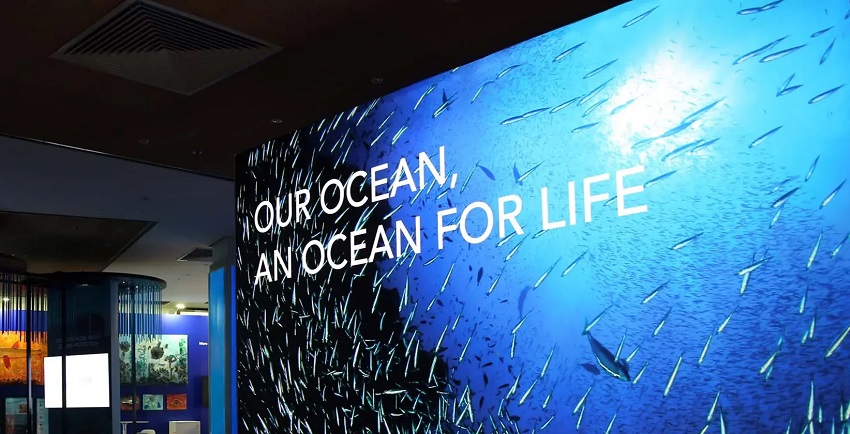
As the 11th Our Ocean Conference concludes in Mombasa, the Kenya Coalition to End Plastic Pollution has raised alarm over escalating plastic contamination in marine ecosystems, food systems, and coastal communities, calling for urgent and coordinated global action.
The coalition says plastic pollution is increasingly infiltrating oceans and food chains, with serious implications for both environmental and human health.

Plastic waste is estimated to account for around 80% of marine litter globally. Once in the ocean, marine animals often become entangled or mistake plastics for food, leading to injury or death. Experts also warn that microplastics and toxic chemicals associated with plastics are entering human food systems through seafood consumption, raising long-term health concerns.
“Studies by CEJAD and partners have confirmed that many recycled and everyday consumer plastics currently on the Kenyan market contain toxic chemicals, capable of leaching into the environment. Beyond this chemical threat, plastics fragment into microplastics that can be ingested by marine life and enter the food chain as seafood, posing serious health risks when consumed,” Griffins Ochieng’, Executive Director at the Centre for Environment Justice and Development (CEJAD).
The coalition emphasized that oceans and coastal livelihoods cannot withstand unchecked plastic leakage.
“Around 80% of marine plastic pollution originates on land, largely from mismanaged waste that is carried through rivers, waterways and drainage systems into the ocean. This underscores the urgent need to strengthen waste management systems if we are to tackle plastic pollution before it reaches our coastlines and oceans,” Frederick Njau, Programme Coordinator, Sustainable Development, Heinrich Böll Foundation.
Coastal communities, they say, are bearing the brunt of the crisis.
“Coastal communities are on the frontline of the plastic pollution crisis. They are the first to witness polluted beaches, declining fish catches impacting their earnings, marine creatures harmed by plastic waste, and contaminated food systems. Yet they are also at the heart of the solutions. Empowering and supporting these communities is essential to protecting both human and ocean health,” Hellen Dena, Pan-African Plastic Project Lead, at Greenpeace Africa.
As Africa hosts the conference for the first time, civil society groups are urging governments and industry to move beyond commitments and focus on implementation.
“As Africa hosts the Our Ocean Conference for the first time, we call on governments, industry, development partners, and the international community to move beyond declarations and deliver measurable action. The future of our ocean depends not on promises, but on implementation,” Stephen Kariuki, Executive Director at Mt. Kenya Network Forum.
The coalition is calling for urgent interventions, including increased investment in environmental education, public awareness, youth leadership, and community-led conservation, alongside sustainable livelihood opportunities for coastal populations; stronger protection and restoration of mangroves, coral reefs, beaches, and other critical marine ecosystems; full implementation and enforcement of Kenya’s Sustainable Waste Management Act and Extended Producer Responsibility (EPR) regulations to ensure producer accountability and improved waste systems and formal recognition and integration of waste pickers and frontline waste workers into national waste management systems.
The coalition also called for upstream action to reduce plastic pollution at its source, including reducing plastic production, eliminating hazardous chemicals in plastics, phasing out problematic single-use plastics, and scaling up reuse and refill systems.
“The ocean cannot be protected if the flow of plastic pollution across its life cycle continues unchecked,” the coalition warned, urging governments and businesses to accelerate the transition toward a toxics-free circular economy.
It added that protecting ocean health is inseparable from protecting human health and the future of coastal communities, urging governments to ensure commitments made during the conference are translated into concrete action.