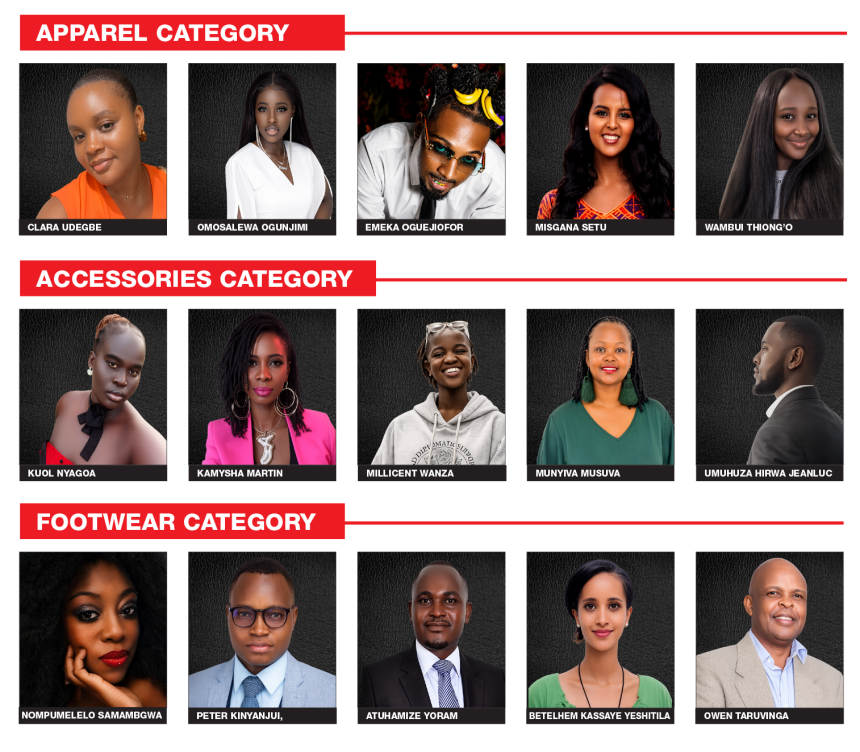
Fifteen exceptional designers from six African countries have been unveiled as the Top 15 Finalists of the Real Leather. Stay Different. (RLSD) Africa Talent Leather Design Showcase 2026, marking another major milestone in one of the world’s leading competitions celebrating leather design, craftsmanship, sustainability, and innovation.
Selected from hundreds of registrations and high-quality submissions received from more than ten African countries, the finalists represent the very best of Africa’s emerging creative talent. Their concepts demonstrate not only artistic excellence but also practical innovation, commercial potential, cultural authenticity, and a deep commitment to responsible design.

The Real Leather. Stay Different. initiative celebrates leather’s beauty, versatility, strength, and durability while providing designers with a credible and structured platform to demonstrate originality, craftsmanship, and responsible production. Through the competition, participants gain a deeper appreciation of leather as a natural material derived from hides that are by-products of the meat and dairy industries, encouraging informed material choices and sustainable product development.
At the heart of the programme is a commitment to Slow Fashion. By challenging the wastefulness of fast fashion, RLSD encourages the creation of high-quality leather products designed to endure, be repaired, and remain valued for generations rather than being quickly discarded. This philosophy was clearly reflected in this year’s submissions, where durability, circular design, sustainability, and long-term value featured prominently across all categories.
The finalists were selected by an eminent panel of internationally respected judges, including Michael Redwood, one of the world’s foremost leather authorities whose distinguished career spans more than six decades. He was joined by Preston Viswamo (Lead Judge), Ruth Girmay, Jacqueline Shaw, Tezera Ketema, and Judy Ngotho, bringing together unparalleled expertise in leather science, manufacturing, product development, sustainability, fashion, and international trade.
Every submission underwent a rigorous evaluation based on five core criteria: Individuality, Conceptualisation, Relevance, Sustainability, and Commerciality. The result is a remarkable cohort of designers whose work reflects the diversity, ingenuity, and future potential of Africa’s leather industry.
The finalists come from Kenya, Nigeria, Zimbabwe, Rwanda, Ethiopia, and Uganda, with each country contributing unique perspectives rooted in local heritage while embracing contemporary design and global market relevance.
Across the Apparel category, designers explored deeply personal and cultural narratives. Nigeria’s Clara Udegbe reimagined the ancient Igbo artistic language of Uli through contemporary leather craftsmanship in “ỌNỤ – Where Uli Finds a New Voice.” Fellow Nigerian Omosalewa Ogunjimi examined resilience and transformation through “Exuvia,” while Emeka Oguejiofor challenged environmental degradation with “Floating Lagos (Makoko),” turning reclaimed natural materials into high-end sustainable fashion. Ethiopia’s Misgana Setu celebrated Africa’s musical traditions through “Dress the Rhythm,” while Kenya’s Wambui Thiong’o explored personal growth and resilience in “Human Nature: The Becoming.”
The Accessories category showcased equally bold interpretations of culture, sustainability, and storytelling. Kuol Nyagoa transformed the organic elegance of the gourd and the symbolism of the matchbox into sculptural leather accessories in “From Nature to Flame.” Kamysha Martin blended music and craftsmanship in “NKS’D: Jazz,” while Kenya’s Millicent Wanza drew inspiration from landscape restoration in “Green Wall in Red.” Munyiva Musuva used the philosophy of Kintsugi to champion resilience and mental health awareness through the “Kintsugi Mamba Bag,” and Rwanda’s Umuhuza Hirwa Jeanluc celebrated cultural heritage through “INGABO: Shield Hobo,” inspired by the traditional Rwandan shield and royal drum.
The Footwear category highlighted Africa’s growing leadership in innovative product development. Zimbabwe’s Nompumelelo Marilyn Samambgwa impressed the judges with “Tethered Earth by Bu Kalanga,” combining architectural elegance with sustainable materials. Kenya’s Peter Kinyanjui celebrated Maasai heritage through “Adumu Jumpers – The Two-in-One African Heritage Sneakers,” while Uganda’s Atuhamize Yoram addressed road safety through the socially driven “Ride to Live Africa Safety Initiative.” Ethiopia’s Betelhem Kassaye Yeshitila preserved cultural memory with footwear inspired by the traditional Ankelba baby carrier, and Zimbabwe’s Owen Taruvinga completed the cohort with “Vandura Heritage Boot,” a powerful example of circular design that transforms discarded tyres and leather offcuts into durable heritage footwear.
Although inspired by different cultures, traditions, and lived experiences, the finalists are united by a common purpose: demonstrating that leather is one of the world’s most beautiful, versatile, durable, and sustainable materials for contemporary product design. Their projects explore themes as diverse as indigenous heritage, environmental conservation, music, architecture, mobility, personal resilience, mental health, the circular economy, safety, and luxury craftsmanship, illustrating the remarkable breadth of creativity emerging across the continent.
The unveiling of the Top 15 Finalists signals the beginning of an exciting new chapter. The designers will now enter the prototype development phase, where they will receive expert mentorship, technical guidance, and product development support to transform their concepts into fully functional, market-ready leather products
The journey will culminate in the selection of the RLSD Africa 2026 Most Commendable Designer, who will earn the honour of representing Africa at the global Real Leather.
Stay Different. finals in Bangkok, Thailand, competing against continental winners from around the world. The other category winners will be announced during the continental showcase in November this year.
While only fifteen designers could advance, the organisers have applauded every participant whose creativity and dedication contributed to making RLSD Africa 2026 one of the strongest editions in the competition’s history. Together, they have demonstrated that Africa is not only preserving its rich leather heritage but also redefining the future of global leather design through innovation, responsible production, and world-class craftsmanship.
As the competition advances, one message is unmistakable: Africa is no longer following global design trends, it is helping create them.