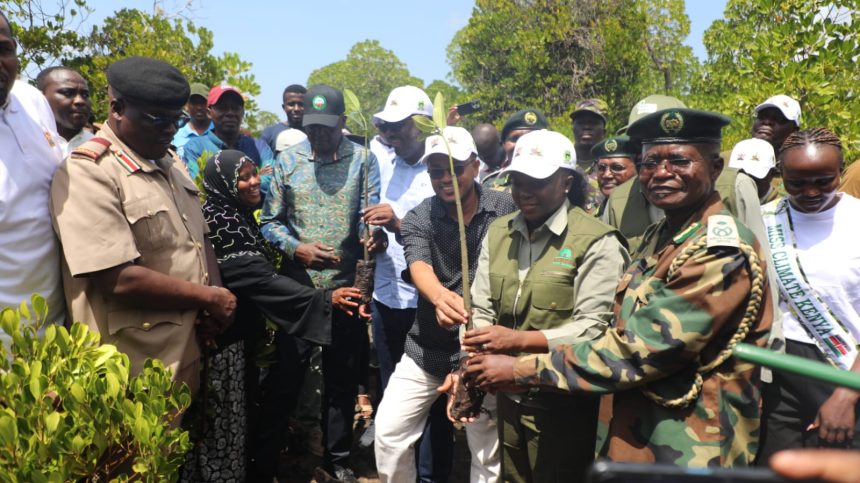
Lamu County is cementing its position as Kenya’s leading centre for mangrove conservation, with stakeholders describing the region as critical to the country’s efforts to protect coastal ecosystems, combat climate change and strengthen the blue economy.
The county, which is home to more than 60 per cent of Kenya’s mangrove forests, hosted this year’s World Mangrove Day celebrations at the KEFRI Grounds in Mokowe, drawing government officials, researchers, conservation organisations, development partners, Community Forest Associations and private sector representatives from across the country.

The event followed a two-day National Mangrove Stakeholder Forum that reviewed the implementation of the National Mangrove Ecosystem Management Plan (2017–2027) and laid the groundwork for Kenya’s next phase of mangrove conservation.
Addressing participants, Kenya Forestry Research Institute (KEFRI) Chief Executive Officer Dr. Jane Njuguna emphasized the importance of science in ensuring restoration programmes deliver lasting results.
“Every successful mangrove restoration begins with understanding the ecosystem. The right species, the right site and the right science make the difference between planting trees and restoring resilient coastal forests,” said Dr. Njuguna.
Her remarks highlighted the need for restoration projects to move beyond tree planting and embrace scientific research, ecological assessments and continuous monitoring to improve survival rates and restore healthy coastal forests.
Kenya’s mangrove ecosystems cover approximately 61,271 hectares along the country’s 536-kilometre coastline, with significant forests also found in Kilifi, Kwale, Mombasa and Tana River counties. These ecosystems are widely recognised for protecting shorelines against erosion and storm surges, supporting fisheries, conserving biodiversity and storing vast amounts of blue carbon.
However, conservation experts warned that the country’s mangrove forests continue to face multiple threats, including illegal harvesting, pollution, encroachment, sedimentation, unsustainable coastal development, declining freshwater inflows and the effects of climate change.
Stakeholders attending the forum agreed that addressing these challenges will require stronger partnerships among government agencies, research institutions, local communities, conservation organisations and the private sector.
Discussions also focused on improving mangrove governance, promoting community-led stewardship, strengthening monitoring systems and mobilising financing for restoration programmes.
Participants noted that the current National Mangrove Ecosystem Management Plan has helped improve coordination among stakeholders over the past decade, but called for more investment in research, innovation and community empowerment as the country develops a new long-term management strategy.
The World Mangrove Day celebrations also showcased the role of local communities in protecting coastal forests through sustainable resource management and restoration initiatives that support livelihoods while conserving biodiversity.
Organised by the State Department for Forestry in collaboration with KEFRI, the Kenya Forest Service and partners under the Global Mangrove Alliance, the event reaffirmed Lamu’s strategic importance in Kenya’s coastal conservation agenda.
Stakeholders expressed confidence that lessons emerging from Lamu’s conservation efforts will help shape future mangrove restoration programmes across the country, ensuring healthy coastal ecosystems continue supporting communities, biodiversity and climate resilience for generations to come.