For years, women in rural Malawi have borne the hidden costs of cooking. They walk long distances to collect firewood, spend scarce income on charcoal, inhale smoke that threatens their health, and witness the steady loss of trees that support their communities.
Now, a community-led clean cooking initiative supported by SHINE Collab is helping women challenge this reality while placing them at the centre of climate and energy justice conversations.

Speaking during community engagements under the Eco-Feminist Energy Justice Project in Blantyre District, Temwanani Banda said the initiative is empowering women to connect their daily experiences with broader environmental and social justice issues.
“Some women in my community walk long distances just to gather firewood, spending hours that could go toward their families, their businesses, or their rest,” Banda said. “Others buy charcoal, which is expensive and fills our homes with smoke every time we cook. Every meal comes with an invisible cost to our health and to the environment around us.”
The project is being implemented by the Get Together Youth Organization in partnership with civil society groups under the Zingwangwa Youth Network, with funding and technical support from SHINE Collab.
According to Banda, the initiative responds to a pressing challenge in Blantyre District, where an estimated 85 to 95 percent of households still rely on charcoal and firewood for cooking. Women and girls are disproportionately affected because they are primarily responsible for sourcing fuel and preparing meals.
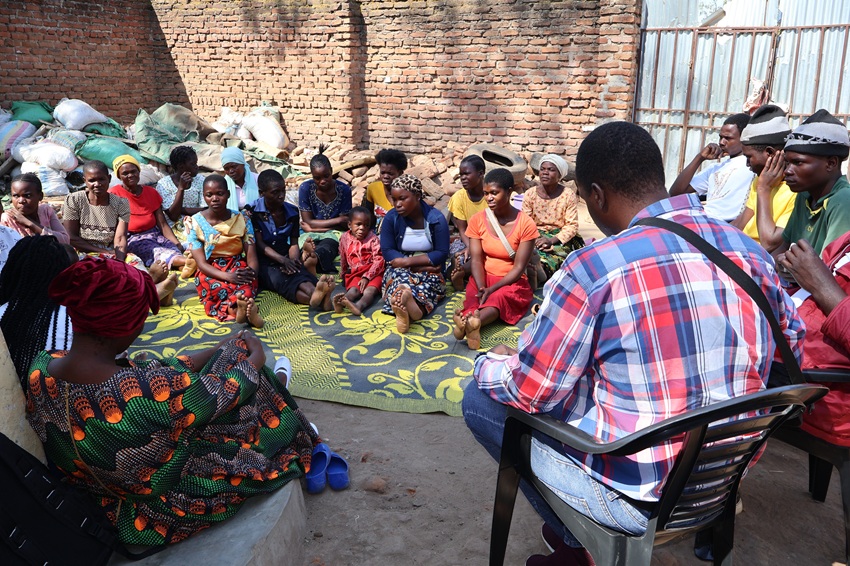
The project uses an eco-feminist approach that links women’s rights, environmental protection, and energy access. Through community dialogues and participatory learning circles, women are encouraged to share their experiences and identify practical solutions that improve livelihoods while reducing environmental degradation.
SHINE Collab Executive Director Dr Melania Chiponda said climate resilience and gender justice cannot be separated from questions of energy access.
“Women’s stories must be placed at the centre of climate and development conversations,” she said. “The challenges they face every day—from collecting fuelwood to dealing with the impacts of climate change—are not isolated experiences. They are part of larger systems that undervalue both women’s labour and the natural resources on which communities depend.”
The clean cooking initiative is part of SHINE Collab’s broader work to advance gender-just solutions at the intersection of climate resilience, community power, and sustainable energy access.
Community members participating in the project say the programme is helping them better understand the links between household energy use, environmental conservation, and community wellbeing. Women are increasingly recognizing that reducing dependence on charcoal and firewood can contribute to healthier households, reduced pressure on forests, and greater economic opportunities.
The initiative comes at a time when Malawi is facing growing climate-related challenges, including erratic rainfall patterns, prolonged dry spells, and increasing pressure on natural resources. Environmental experts have repeatedly warned that continued dependence on biomass fuels contributes to deforestation and worsens climate vulnerability, particularly for rural communities.
For Banda, the project represents more than a shift in cooking practices.
“It is about dignity, health, and recognising the role women play in protecting their communities and the environment,” she said. “Women are not just users of energy; they are leaders in creating solutions that benefit families and future generations.”
As Malawi continues to pursue sustainable development and climate-resilient growth, initiatives such as the Eco-Feminist Energy Justice Project are demonstrating how community-driven approaches can simultaneously advance gender equality, environmental protection, and energy security.
SHINE Collab believes that empowering women to shape energy solutions is essential to achieving a more just and sustainable future—one where clean cooking is not a privilege, but a right accessible to every household.