Residents from Northern Kenya have opposed a proposed law seeking to abolish regional development authorities, warning that the move could undermine water access, livestock production and livelihoods in arid and semi-arid areas.
The residents say the Ewaso Ng’iro Development Authority (ENNDA) has played a critical role in addressing water scarcity, reducing resource-based conflicts and supporting pastoral communities through water infrastructure and livestock feedlots.

During a public participation forum held by a parliamentary committee on regional development in Isiolo town, residents unanimously rejected the Regional Development Authorities (Repeal) Bill, sponsored by National Assembly Majority Leader Kimani Ichung’wah.
The committee, chaired by Kigumo MP Joseph Munyoro, heard submissions from residents and representatives who called for the authorities to be strengthened rather than dissolved.
For decades, ENNDA has implemented development projects across its areas of operation, including boreholes, water pans and dams aimed at improving access to water for domestic use, livestock and agricultural activities.
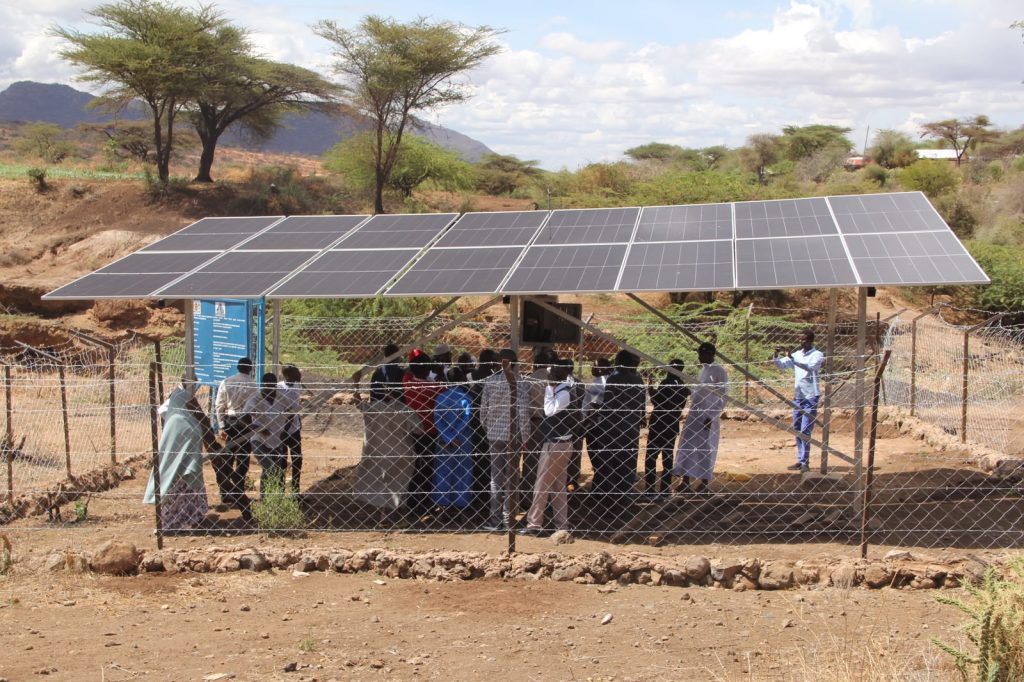
In Burat Ward, Isiolo County, the impact of the authority’s interventions is already being felt by residents who previously struggled to access reliable water supplies.
Fatuma Adan says she relied on traditional water scooping methods along riverbeds and sometimes walked more than 20 kilometres in search of water before the launch of the Burat borehole water project last month.
“We have had water challenges for a very long time. Sometimes we seek county interventions, but they are not sustainable. With this project, we are grateful because we will now have clean water for domestic use, learners and the mosque,” she said.
Adan said the project had connected households to piped water and provided storage tanks, easing the burden of long-distance water collection.
“Every household has piped water and a storage tank. It is like we are living in town, and our lives have improved,” she added.
For Fauzia Hussein, reliable water access has created opportunities for household food production and environmental conservation.
She said she had started a kitchen garden and planted trees around her homestead, activities that had previously been difficult because of water shortages.
“We no longer have water challenges. Women have suffered a lot while fetching water, but that is now becoming a thing of the past,” she said.
Hussein added that more than 600 households benefiting from the project were being encouraged to grow vegetables and plant trees.
In Chumvi, an area serving communities in Buuri and Laikipia, residents are also benefiting from a water pan constructed by ENNDA.
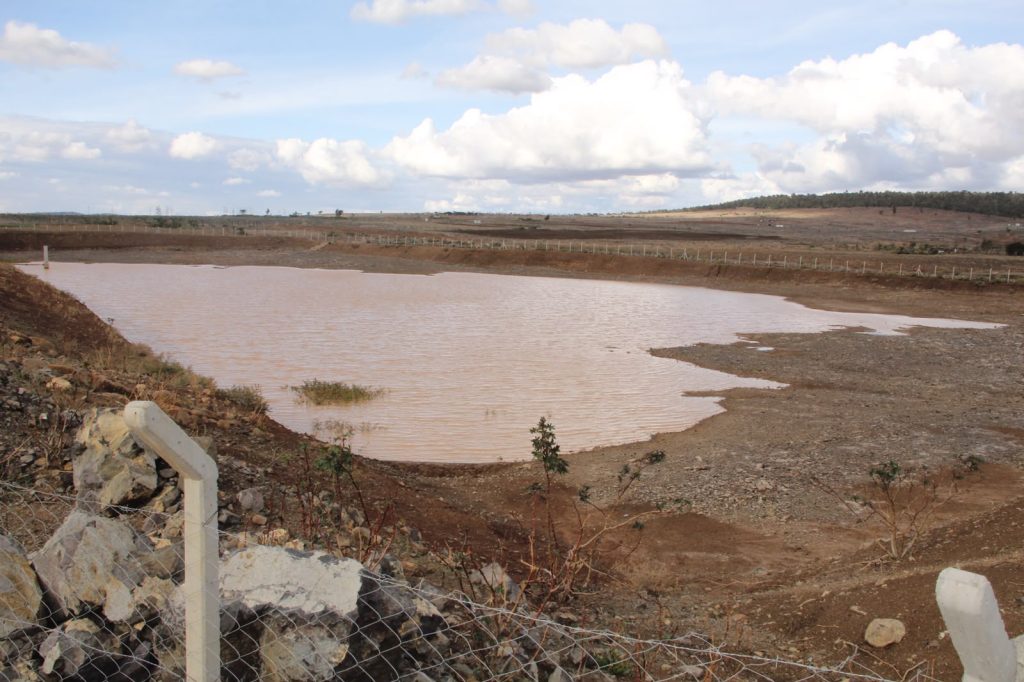
Susan Napeiyo said prolonged drought had threatened livelihoods in the area for years, but access to water was gradually transforming the once-dry landscape through irrigation.
She said the emerging green patches were giving residents renewed hope for improved food production and more resilient livelihoods.
Established in 1989 through an Act of Parliament, ENNDA has implemented development projects across the Ewaso Ng’iro basin, with Laikipia County among the beneficiaries.
In Laikipia North, a dam valued at Sh65.5 million serves more than 30,000 pastoralists in Doldol and surrounding areas.
However, residents fear that abolishing the authority would disrupt ongoing and future interventions, particularly in communities already vulnerable to drought and limited access to essential services.
Engineer Joseph Mulwa told the parliamentary committee that the proposed dissolution lacked a clear baseline assessment demonstrating why the regional development authorities should be abolished.
He argued that the agencies had operated for decades and that concerns over overlapping mandates could be addressed through better coordination and restructuring.
“Regional development authorities undertake very serious functions. They coordinate because water, rangelands, wildlife and trees do not recognize administrative boundaries, just as the needs of children and women in arid regions do not. We owe them a duty not to abolish their golden camel,” Mulwa told the committee.
Isiolo resident Said Buke warned that repealing the law establishing ENNDA would threaten the livelihoods of communities that depend on the authority’s interventions.
“This institution cuts across ten counties, and the functions it performs are crucial to the livelihoods of the people of Northern Kenya. Repealing these authorities means threatening the livelihoods of our people,” he said.
Said argued that allocations to county governments were insufficient to meet the development needs of the region, calling on the national government to increase ENNDA’s budget and strengthen its operations instead of dissolving it.
Jane Wayuwa, a pastoralist from Marsabit County, said the authority had helped cushion vulnerable households against the effects of drought and livestock losses.
She added that its programmes had supported pastoral women through livelihood opportunities and employment, enabling some to provide for their families and educate their children.
Wayuwa urged the government to review the authority’s operations and identify ways of improving service delivery rather than abolishing an institution she described as a lifeline for communities in dryland areas.
Embu County woman representative Pamela Njoki who is a member of the parliamentary committee urged residents to engage their elected leaders to ensure their views were represented when the Bill is debated in Parliament.
“You have spoken loudly, and we can only emphasize that you talk to your leaders whom you elected so that when this Bill is brought to Parliament, they are not absent. They should be there to say what you have said, since you have rejected it in totality,” she said.
Banisa MP Ahmed Hassan pledged to oppose the proposed dissolution, assuring residents that he would defend the authority’s continued existence.
Munyoro assured participants that the committee would present their views accurately and fairly as part of the legislative process.
Other regional development agencies facing a similar proposed fate include the Kerio Valley Development Authority (KVDA), Lake Basin Development Authority (LBDA), Tana and Athi Rivers Development Authority (TARDA), Ewaso Ng’iro South Development Authority (ENSDA) and Coastal Development Authority (CDA).
The proposal to abolish the agencies has also attracted opposition from communities and stakeholders concerned about the potential impact on regional development.
Meanwhile, the Integrated Regional Development programme under the State Department for Arid and Semi-Arid Lands was allocated Sh3.5 billion for the 2026/2027 financial year.
The funds are intended to support programmes including water projects, environmental conservation, drought and emergency interventions, and food security initiatives.
Residents are now calling for increased funding and improved coordination of regional development programmes, arguing that the authorities remain essential in addressing the unique challenges facing communities in arid and semi-arid lands.