Kenya is stepping up efforts to expand access to clean and affordable energy, particularly in communities that remain underserved by the national electricity grid.
Civil society and faith-based organisations are now calling for greater transparency in financing for decentralised renewable energy, saying investments must reach households, schools, health facilities, farmers, and small businesses that need reliable power.

Access to reliable and affordable energy remains a challenge for many communities, particularly in areas where connection to the national grid is limited, or electricity costs remain high.
The Kenya Climate Change Working Group says the transition to clean energy presents an opportunity to change this, but financing must be directed to projects that deliver tangible benefits at the community level.
Through the Energy Advocacy Project, the Kenya Climate Change Working Group, with support from Christian Aid, is assessing financing by the African Development Bank for decentralised renewable energy projects in Kenya.
The call for greater investment comes as counties explore renewable energy alternatives to reduce their dependence on the national grid and cut electricity costs.
The Kenya Climate Change Working Group says financing decisions will ultimately determine whether the transition benefits communities beyond the major urban centres.
The guide provides a practical roadmap for structured, sustained civil society and inter-faith actor engagement with the AfDB and national energy planning processes.
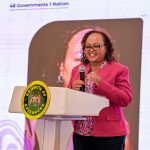
Elizabeth Wanja, Coordinator of KCCWG, presented key highlights from the 2026 AfDB CSO processes and findings from KCCWG’s assessment of AfDB financing for decentralised renewable energy and clean cooking in Kenya, noting that while AfDB financing has delivered significant contributions to renewable generation, geothermal development, and grid-based access, direct financing for mini-grids, standalone solar, and community-level energy outcomes remains comparatively limited.
“This workshop reflects what KCCWG has always believed — that civil society and faith actors are not bystanders in Kenya’s energy transition, but essential partners in making sure investment reaches the communities that need it most,” said Elizabeth Wanja.
The communiqué records a collective commitment to strengthen CSO and inter-faith coordination, promote meaningful participation in Mission 300 and national energy planning, champion energy justice for last-mile and marginalised communities, strengthen transparency and accountability in AfDB-funded programmes, and build continued technical capacity among civil society and faith actors.
It sets out priority recommendations for the African Development Bank and the Ministry of Energy and Petroleum, including institutionalised CSO and interfaith engagement, improved pipeline transparency, expanded DRE financing and stronger county-level participation.
“The Engagement Guide previewed gives CSOs and faith actors a practical, structured way to engage AfDB and government on energy investment decisions that affect their communities,” stated Jacqueline Kimeu, Energy and Climate Change Advisor, Christian Aid.
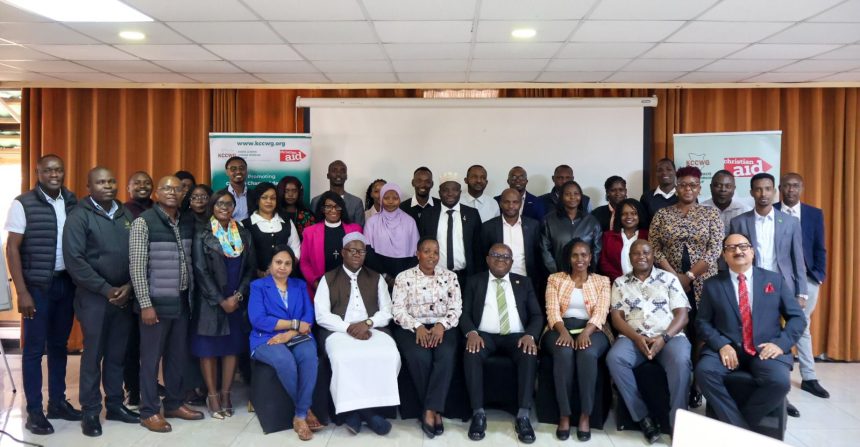
The workshop was held under KCCWG’s ongoing AfDB CSO Engagement Project, supported by Christian Aid through the Africa Energy Advocacy Project, and drew participation from the Ministry of Energy and Petroleum, the Nairobi Rivers Commission, the Hindu Council of Kenya, SUPKEM, GreenFaith Africa, Norwegian Church Aid, and a broad cross-section of civil society organisations and faith-based institutions from across Kenya.