Weak implementation of environmental and social safeguards could expose communities and ecosystems to risks from development projects, despite Kenya having established laws and regulatory institutions.
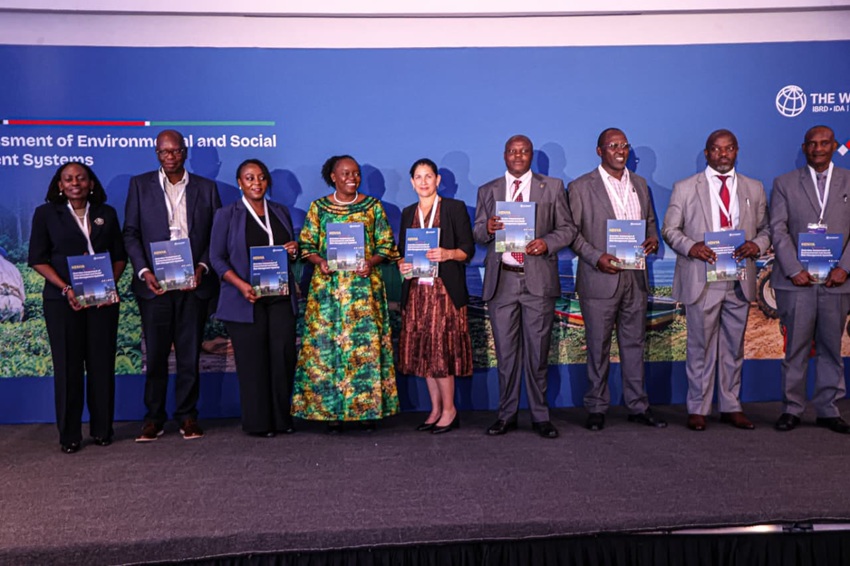
To address these gaps, the World Bank Group has launched an assessment report examining Kenya’s environmental and social risk management systems and proposing reforms to strengthen their implementation.

The Kenya Overview Assessment examined the country’s legal, institutional and operational arrangements against the World Bank’s 10 Environmental and Social Standards, identifying gaps in areas including labour, pollution prevention, community health and safety, land acquisition, biodiversity, cultural heritage and stakeholder engagement.
Gaps in national laws and institutional capacity
Babatu Adam, Senior Social Development Specialist at the World Bank, said the findings would help government institutions and development partners identify areas requiring regulatory reforms and stronger institutional capacity.
Having worked with the Bank for nearly 10 years, Adam noted that governments needed support to implement environmental and social safeguards rather than simply being required to comply with international standards.
“It is one thing to ask governments to make sure that they comply with World Bank policies and regulations. It is another to support them to do that because we have to recognise that countries have capacity deficits,” he said.
One of the gaps identified concerns livelihood restoration for people affected by development projects. While Kenyan laws provide for compensation following land acquisition and resettlement, additional support to help affected people restore their livelihoods needs strengthening.
“If you are going to do development, you need to make sure that the process of development is not creating poverty,” he added.
He also highlighted the need to strengthen environmental assessments conducted under the National Environment Management Authority (NEMA) to ensure they adequately address both environmental and social impacts.
The next step, he said, was to identify practical interventions and prioritise reforms that could be implemented progressively, with clear responsibilities assigned to government institutions and development partners.
Grace Mohimpundu, Senior Social Development Specialist and Environmental and Social Coordinator at the World Bank, said Kenya had made considerable progress in establishing laws and institutions to manage environmental and social risks, but gaps remained in implementation and institutional capacity.
She explained that the assessment sought to establish where the country’s systems were performing well and where additional reforms, institutional support and capacity building were needed.
“The ultimate goal is to have all environmental and social risk management done through the existing institutions within each country,” she said, explaining the Bank’s intention to rely more on national laws, policies and regulatory institutions.
Although Kenya has relatively strong policies and regulatory structures, including NEMA, weaknesses remain in managing land-related risks, stakeholder engagement, occupational health and safety, and monitoring projects implemented through financial institutions.
“However, there are areas where, as an institution, we would not fully rely on the government to ensure that these risks are managed,” Mohimpundu said.
She emphasised the need for stakeholders to agree on the institutions responsible for addressing the gaps, the resources required and who would provide technical leadership.
County governments were also important to implementation, she noted, but often faced limitations in budgets, resources and guidelines.
“We would have liked to see more of the county executive committee members involved because they are key in all of this. They are, like I said, the ones on the ground,” she said.
Construction sector urged to put people at the centre
Beyond regulatory enforcement, the assessment also raised questions about how social safeguards are incorporated into Kenya’s construction sector.
Ruth Onkangi, a researcher at the National Construction Authority (NCA), called for greater integration of social considerations into construction policies, saying the industry must prioritise people alongside environmental sustainability and profitability.
She observed that while developers were increasingly incorporating environmental considerations to meet regulatory requirements, the health, safety and well-being of building occupants and surrounding communities often received less attention.
“I appreciate that we are putting up breathtaking buildings in Kenya, with beautiful facades and impressive skyscrapers. But I also want to ensure that people are able to breathe within those buildings. My focus is on healthy buildings, indoor environmental quality and occupant-centred designs,” she said.
Onkangi noted that the construction industry was largely profit-driven, with social considerations often taking a back seat.
“People are building for profit and, to some extent, for the planet because there are government requirements. But you realise that people are not building for people. The three Ps – people, planet and profit – need to move in lockstep,” she said.
Working in NCA’s Construction Research and Business Development Department, she said the World Bank’s Environmental and Social Standards (ESS1–ESS10) provided an opportunity to strengthen social safeguards in the built environment.
The standards were particularly relevant as Kenya implements the National Building Code 2024 and develops its green building framework, which should give equal attention to environmental sustainability and the well-being of building users.
She also cited ESS3 on resource efficiency and pollution prevention as relevant to the authority’s Construction Waste Management Strategy, which targets a 20 per cent reduction in construction waste at project sites.
“The Environmental and Social Standards will inform the updating of the building code and ongoing discussions around the green building framework. We should not have a framework that leans heavily towards the environment while overlooking the social aspects affecting building users and surrounding communities,” she said.
Onkangi welcomed the Bank’s emphasis on environmental and social safeguards, noting that its influence on development financing could help shape policies, encourage responsible construction practices and support innovation and job creation.
NEMA calls for stronger collaboration, data and public participation
At the regulatory level, NEMA called for stronger collaboration, quality data and meaningful public participation to improve environmental and social risk management.
David Ongare, Director of Compliance, said the assessment provided an opportunity for stakeholders to identify gaps and improve existing practices.
“We have come mostly to learn and hold very candid discussions. The issue is to have conversations that are not defensive, but to see how we can use this instrument to improve our practice,” he said.
He identified physical planning, zoning, resettlement action planning and emerging projects such as nuclear power plants as areas requiring attention.
Ongare also called for an integrated approach, saying different systems must work together to achieve better outcomes.
“Is a car better if the engine is running on its own and the tyres are running on their own, or do we put them together?” he posed.
He further cited inadequate public participation and disclosure as challenges contributing to litigation.
“Many times, we don’t know what the thresholds for proper public participation are and what is adequate in terms of public disclosure,” he said.
On data, he noted that inadequate baseline information in assessment reports affected decision-making.
“Quality data is the basis of decision-making,” Ongare said, reaffirming NEMA’s commitment to collaboration and continuous improvement.
Barasa calls for safeguards throughout the development cycle
Environment, Climate Change and Forestry Cabinet Secretary Dr Deborah Mlongo Barasa called for stronger coordination among government institutions to ensure environmental and social safeguards are integrated into every stage of development.
Speaking during the launch, Barasa said the assessment provided an opportunity to reflect on how the country plans and implements development while safeguarding people, natural resources and the environment.
Kenya’s Bottom-Up Economic Transformation Agenda (BETA) prioritises investments in infrastructure, energy, agriculture, water, housing, manufacturing and urban development. However, development should not be measured solely by infrastructure delivered or resources invested, but also by whether projects are environmentally sustainable, socially inclusive and beneficial to communities.
“Environmental and social safeguards are not an obstacle to development. They are what make development sustainable, responsible and economically viable,” she said.
Barasa noted that Kenya had a strong constitutional, legislative and institutional foundation, including environmental laws, regulatory institutions, environmental impact assessment processes and mechanisms for public participation. However, the real test lay in implementation, coordination and enforcement.
She emphasised that environmental and social risk management could not be left to the Ministry of Environment or NEMA alone.
“It is a collective responsibility of all institutions, including those responsible for land, infrastructure, energy, labour, occupational health and safety, finance, planning and social protection, as well as county governments,” she said.
The Cabinet Secretary stressed the need for clear institutional responsibilities, stronger information sharing and integration of environmental and social considerations into development plans from the earliest stages.
Environmental risks, she said, should be addressed throughout the entire project cycle, informing financing, design, implementation, supervision and closure rather than treating environmental assessments as procedures for obtaining licences before construction begins.
“Prevention is considerably more effective and less expensive than remediation,” she said, urging the Bank to continue supporting Kenya’s priority work plans as the country moves from assessment to implementation.
She further emphasised the need to strengthen county governments and involve communities in environmental monitoring, enforcement, public participation, waste management, land-use planning and natural resource conservation.
Communities should not be engaged merely to fulfil statutory requirements but recognised as partners whose knowledge, concerns and experiences inform project design and implementation. She also called for particular attention to vulnerable and marginalised groups to ensure they do not disproportionately bear the environmental and social costs of development.
On institutional accountability, Barasa welcomed the assessment’s emphasis on digitisation, noting that digital platforms could improve efficiency, coordination, monitoring and measurement of results.
She urged development partners to support implementation through technical assistance, institutional strengthening, technology transfer and capacity building, while reinforcing national institutions rather than creating parallel structures.
“The success of this assessment will be determined by what changes in our institutions, how projects are implemented and whether we achieve better environmental and social outcomes,” she said.
Barasa challenged stakeholders to translate the assessment’s findings into practical commitments by identifying the required actions, responsible institutions, resources and expected results.
Story by Victoria Musimbi