As breast cancer continues to affect women across different age groups in Western Kenya, survivors and patients are breaking the silence, sharing their journeys and urging communities to embrace early detection, timely treatment and psychosocial support.
For 35-year-old Sharon Awuor and her husband, John Omollo, 35, life changed dramatically on June 15, 2026, when what initially appeared to be an ordinary illness became the beginning of an unexpected battle with breast cancer.

The young couple, who live in Kisumu, had little reason to imagine that a bout of fever, persistent vomiting and extreme body weakness would eventually lead to a diagnosis that would change their lives forever.
Sharon woke up feeling unusually unwell, unable to keep anything in her stomach. Concerned by her deteriorating condition, Omollo insisted that she seek medical attention.
They arrived at Jaramogi Oginga Odinga Teaching and Recferal Hospital ( Russia), where an exhausted Sharon was immediately taken to the outpatient emergency department. Initial investigations focused on malaria, but further examinations prompted doctors to recommend specialised oncology services.
The referral left Sharon frightened and confused. She struggled to accept the possibility that something more serious could be wrong and even contemplated giving up on further investigations.
However, her husband’s encouragement helped her confront the uncertainty.
It was during this process that they met Dr Lilac Wattanga, a consultant clinical and radiation oncologist, who recommended a biopsy to establish the nature of the suspected disease.
“I felt weak, but my husband encouraged me to undergo all the tests as required,” Sharon recalls.
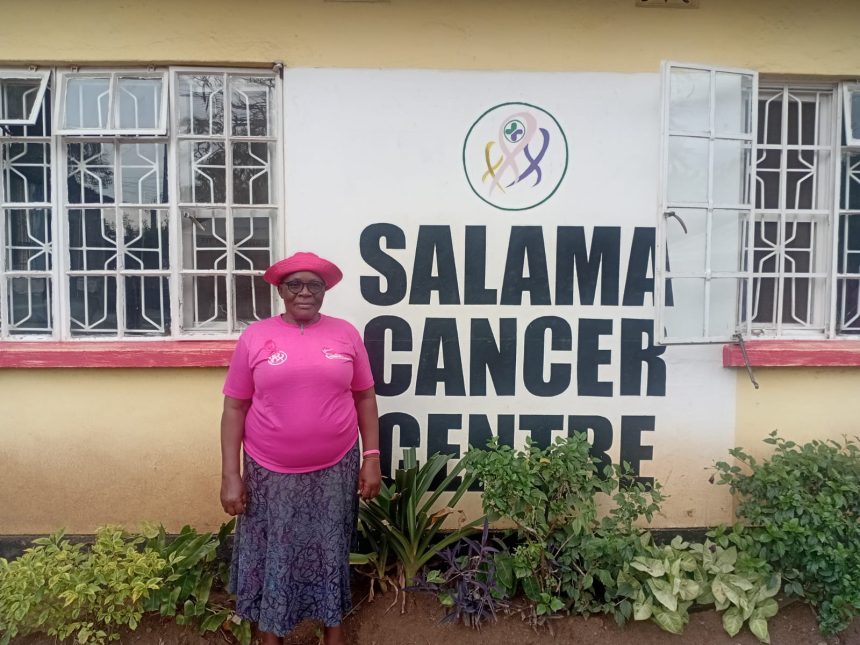
The couple subsequently proceeded to Salama Cancer Centre for the biopsy. When the results came back, they confirmed stage-two breast cancer.
The diagnosis shattered Sharon’s world
“My world fell apart. The only thing I could see was a casket. I literally felt like I had died,” she recalls.
Having married only a few years earlier, Sharon suddenly found herself confronting a diagnosis that threatened to change the course of their young marriage and the future they had envisioned together.
Overwhelmed, she broke down in tears, repeatedly questioning why she had to go through such an ordeal.
Omollo admits that his wife was devastated, but he knew she needed him more than ever.
For him, the reality of her diagnosis also came with an enormous emotional burden. As they made their way home, the weight of the news began to sink in, leaving him grappling with fear and uncertainty about their future.
“The reality hit me so hard that I contemplated so many things. But I told myself that if I left her in this state, the heavens would judge me,” he says.
Determined not to abandon his wife, Omollo made a personal commitment to stand by her, offering the love, reassurance and support she needed as they embarked on an unfamiliar and challenging cancer journey.
The diagnosis marked the beginning of an equally demanding treatment journey. Sharon is undergoing chemotherapy every three weeks, a process that has brought severe side effects, leaving her physically drained, dehydrated and at times unable to eat.
“Mine is after every three weeks, but throughout the process I get sick. I become weak, dehydrated and I cannot eat,” she explains.
Despite the physical toll, Sharon says the encouragement of her husband, family and friends has helped her overcome moments when she feels like giving up. She is also scheduled for surgery as part of her treatment plan and remains hopeful about recovery.
For Omollo, watching someone he loves endure the painful effects of chemotherapy has not been easy. He admits that he initially struggled with denial and experienced his own mental health challenges before gradually accepting the situation.
“It is not an easy journey. It is challenging, especially after chemotherapy, when the side effects become severe,” he says.
He now urges other men to stand by their partners during cancer treatment, offering emotional support, compassion and encouragement.
Rather than allowing her diagnosis to define her, Sharon has turned her personal battle into a platform for breast cancer awareness, particularly among young people and Generation Z.
Through TikTok, Facebook, Snapchat and Instagram, she openly shares her treatment journey, challenges misconceptions about breast cancer and encourages young people to seek early diagnosis and treatment.
The response has been encouraging. Beyond seeking sympathy, Sharon is using her online presence to become an ambassador in the fight against cancer.
Sharing her experience publicly has also become an important part of her healing journey, helping her confront the stigma, fear and emotional trauma often associated with a cancer diagnosis.
By speaking openly about her condition, she is challenging the culture of silence and encouraging other young people to seek help without shame or fear of judgement.
Beyond the hope of beating cancer, Sharon holds on to another deeply personal dream: becoming a mother. She remains optimistic that once she completes treatment and recovers, she will one day conceive and experience the joy of holding her own child in her arms.
Living beyond the diagnosis
For 31-year-old Maryanne, a breast cancer diagnosis in June 2025 brought similar fears about mortality and an uncertain future.
When her biopsy results confirmed stage 2B breast cancer, her immediate thought was death.
“I think I have been blank since day one. My goal was to get cured because deep down I knew this journey was going to weigh me down,” she recalls.
Her journey began at Salama Cancer Centre in Kisumu, where she underwent further investigations, including a CT scan, before starting chemotherapy.
She completed eight rounds of chemotherapy on December 4, 2025, followed by a mastectomy in January and radiotherapy in Nairobi, as the specialised treatment was not available in Kisumu at the time.
The treatment was physically and emotionally demanding, but Maryanne says the support she received from her family, colleagues, friends and medical team helped her endure the difficult moments.
“Chemotherapy is not an easy thing, but I thank God because of the support from here, my family, workmates and friends. People really came through for me, financially, emotionally and spiritually,” she says.
After completing the major stages of treatment, she returned to Kisumu for hormonal therapy, which forms part of her continuing treatment and follow-up care.
Her first scan in August 2026 brought encouraging news, with doctors reporting no cancer cells detected.
For Maryanne, the results marked an important milestone, but they did not mean that the journey had ended.
She says one of the least discussed aspects of cancer survivorship is the emotional and psychological burden that follows treatment.
While friends, colleagues and society may assume that a survivor has returned to normal life, the reality is often different.
“People see that you have finished treatment and think you are moving on. But there is still a lot going on. You have appointments, emotions and other challenges. You are not the same person again,” she explains.
Beyond the physical effects, the financial burden of cancer treatment remains a major challenge for patients and their families.
Maryanne says the cost of scans, surgery, chemotherapy and radiotherapy can quickly drain household resources.
She applauds initiatives that help subsidise treatment, noting that support towards radiotherapy and surgical expenses can make a significant difference for patients who would otherwise struggle to afford care.
She also believes expanding cancer treatment services beyond Nairobi is essential to improving access and reducing the financial and logistical burden on patients from the western region.
Today, she uses her experience to encourage others not to surrender to fear or misinformation. She cautions patients against relying on unverified information from internet searches or advice from people who are not medically qualified.
Her message is simple: seek professional medical attention, follow the recommended treatment and remain in contact with qualified healthcare providers.
A mother’s fight for survival
At 42, Lilian Juma, a mother of four from Bungoma County, has endured years of living with breast cancer, a journey marked by physical pain, uncertainty and financial challenges.
Her search for specialised treatment led her to Jaramogi Oginga Odinga Teaching and Referral Hospital (JOOTRH) in Kisumu after the facilities available in Bungoma lacked the necessary equipment.
She initially sought care at Life Care Hospital in Bungoma town before being referred to Moi Teaching and Referral Hospital. However, having a caregiver in Kisumu influenced her decision to seek treatment at JOOTRH.
Lilian recalls how severe the disease had become, with her breast swelling and discharging pus.
She has since undergone a mastectomy and continues to receive chemotherapy to suppress any remaining cancer cells and prevent the disease from spreading.
She credits the Social Health Authority (SHA) with easing the financial burden of treatment, saying the medical cover has been crucial to her survival.
“If it were not for SHA, I don’t know whether I would be breathing today,” she says.
Beyond medical care, Lilian draws strength from her family’s unwavering support. Her relatives have even created a WhatsApp group to share updates on her treatment and coordinate assistance.
With her treatment covered, she says she is less anxious about accessing medical services, allowing her to concentrate on recovery and spending time with her children.
Her experience highlights the importance of affordable healthcare financing and family support in ensuring that patients can access and complete treatment.
Oncologists raise alarm over cancer burden
While patients and survivors are finding hope through treatment, oncologists are raising concern over the growing cancer burden in Western Kenya, particularly breast, cervical and prostate cancers.
Dr Lilac Wattanga, a consultant clinical and radiation oncologist at JOOTRH, says the region continues to bear a significant burden of these cancers, with many patients presenting at health facilities when the disease has already advanced.
“Western Kenya is bearing the brunt of breast, cervical and prostate cancer cases. The trend is worrying, especially because many patients come to hospital when the disease is already at an advanced stage,” says Dr Wattanga.
She attributes the high numbers partly to delayed hospital visits and limited awareness of the importance of early screening and diagnosis.
“Many patients delay seeking medical attention until they start experiencing serious symptoms. By the time they come to us, the disease may have progressed, making treatment more challenging,” she says.
Dr Wattanga urges women to pay attention to changes in their breasts, noting that early medical assessment can improve treatment outcomes.
“Women should not ignore any unusual changes in their breasts. These include lumps, swelling, changes in breast size or shape, nipple discharge, nipple inversion, persistent pain and dimpling of the breast skin. Anyone experiencing these changes should seek medical attention immediately.”
She says her experience treating patients from Western Kenya, South Nyanza, parts of the South Rift Valley and occasionally neighbouring countries has exposed the growing demand for specialised cancer services.
The Health professional, emphasise that while not every breast abnormality is cancerous, any unusual change requires medical assessment. She encourages women to seek professional advice on appropriate screening based on their age, risk factors and medical history particularly for younger women who may mistakenly believe that breast cancer only affects older people.
Growing demand for cancer services
The increasing number of patients seeking care is also being felt at Salama Cancer Centre in Tom Mboya Estate, Kisumu.
The facility’s Nursing Director, Helen Okelo, says it receives referrals from across the region for screening and treatment of various cancers, including breast, cervical and prostate cancer.
The centre conducts biopsies, with results typically available within three to five days to facilitate timely treatment.
Okelo says the facility also provides psychosocial support to patients and caregivers to help them cope with the emotional impact of a cancer diagnosis.
“After receiving a new diagnosis, especially cancer, usually people have so many negative thoughts, which might make the patient and even the caregiver fear facing treatment or walking through the journey,” says Okelo.
She explains that accepting a cancer diagnosis takes time, adding that patients are given an opportunity to process the news before making decisions about treatment.
The facility also maintains regular contact with patients through follow-up calls, treatment reminders and direct communication to encourage treatment adherence.
“When they start treatment, the day they receive treatment they go home. After three days, we call them to find out how they are faring. We also give them our number so they can call us anytime,” she says.
Okelo notes that patient numbers have grown considerably since the centre was established in June 2021.
Initially receiving one or two patients monthly, the facility now attends to approximately 15 to 30 patients daily undergoing treatment excluding those receiving oral medication.
She cautions that some patients delay treatment while seeking alternative opinions from different facilities, allowing cancer cells to multiply and the disease to progress.
“By the time this person has gone round and tried different places, the cells are multiplying. When they finally come back, the cancer may have already progressed,” she warns.
Okelo is calling for a multi-sectoral approach to cancer awareness, bringing together local administrators, chiefs, community meetings and markets to encourage early screening and diagnosis.
“It should be multi-sectoral. We need chiefs, barazas and markets so that we don’t reach stages three and four. If we can get these people early, management is good, and our people will live as normally as possible,” she says.
Psychosocial support in the cancer journey
Beyond medical treatment, psychosocial support is playing a critical role in helping breast cancer patients cope with the emotional, psychological and social challenges that accompany a cancer diagnosis.
At Salama Cancer Centre, psychosocial counselling is integrated into patient care, with support extended to cancer patients, their caregivers and healthcare workers.
Involliata Vogodi provides psychosocial counselling at the facility, says the support begins immediately after diagnosis and continues throughout the treatment journey.
She notes that receiving a cancer diagnosis can trigger fear, anxiety, confusion and uncertainty, with some patients struggling to accept their condition or communicate the news to their families.
“Counselling starts when the patient receives the diagnosis and continues throughout the treatment journey. We help patients understand what they are going through, process their emotions and prepare themselves psychologically for treatment,” says Mugalavii.
She explains that counselling sessions also address concerns about treatment, possible side effects and the difficulties patients may experience in their relationships with family members and caregivers.
For breast cancer patients, emotional support is particularly important as they navigate changes in their physical appearance, body image, self-esteem and relationships while undergoing treatment.
Mugalavii says the centre has established follow-up mechanisms to ensure patients do not feel abandoned once they leave the hospital.
“We continue supporting our patients even when they are away from the facility. We follow up through phone calls and a WhatsApp group where they can raise their concerns and receive assistance from the multidisciplinary team,” she says.
Patients who require additional emotional support are also offered further counselling when they return to the facility.
The experience highlights the importance of patient education, emotional support and continuous engagement in helping individuals overcome denial and make informed decisions about their health.
For survivors such as Maryanne and patients such as Sharon and Lilian, this support is an important part of navigating life beyond the diagnosis.
Expanding specialised cancer services in the Lake Region
The need to strengthen cancer services is underscored by statistics from Kisumu County, which recorded 524 breast cancer cases between 2011 and 2025, according to the JOOTRH Angaza Cancer Dashboard.
In response to the growing demand, JOOTRH is establishing a Comprehensive Cancer Centre within its facility to expand access to specialised cancer services.
JOOTRH Acting Chief Executive Officer Dr Joshua Okise says the proposed centre will bring essential cancer care closer to patients, reducing the need to travel to Nairobi and Eldoret for specialised treatment such as radiotherapy.
The facility will offer screening, diagnosis, chemotherapy, radiotherapy, surgical oncology and palliative care, serving Kisumu and neighbouring counties across the Lake Region.
The initiative is expected to reduce treatment costs, improve continuity of care and strengthen access to cancer services, particularly for breast cancer
Increased public awareness, early screening, timely diagnosis, affordable treatment and sustained psychosocial support must work together to address the growing burden.