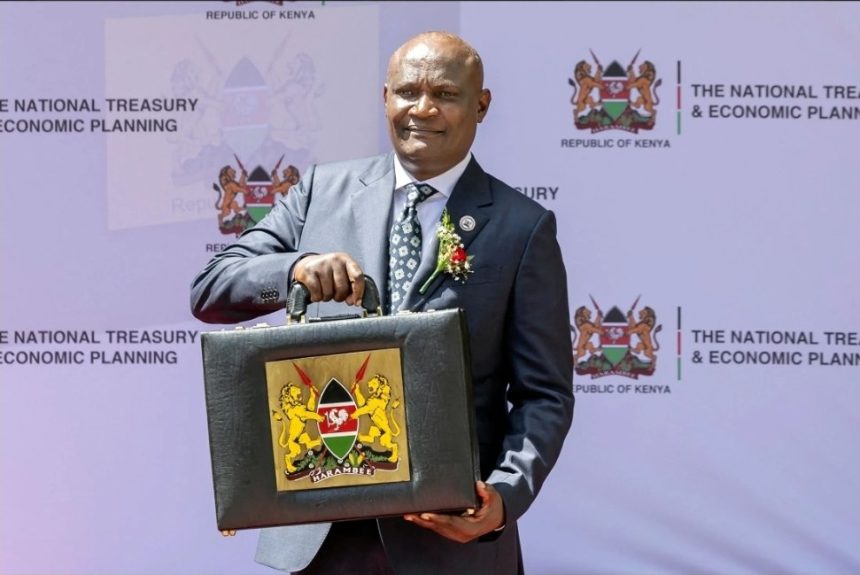
Treasury Cabinet Secretary John Mbadi announced that the 2026/2027 Budget was shaped by the direct input and expectations of ordinary Kenyans, who want the government to alleviate the economic pressures currently burdening households and businesses.
While presenting the national budget in Parliament on Thursday, Mbadi stated that feedback collected during public participation forums held across the country revealed widespread concern over the rising cost of living, high unemployment rates, and the critical need for responsible management of public funds.

“The message from Kenyans across the country, from our rural villages to our bustling towns and cities, the ordinary mwananchi is clear and consistent in their message. They have genuine expectation from the government,” said Mbadi.
The Treasury CS noted that Kenyans desire an economy that directly enhances their well-being through affordable living expenses, expanded employment opportunities, and inclusive economic growth.
“Kenyans want an economy that works for them, where the cost of living is manageable, where opportunities for employment and businesses are expanding and where the benefits of economic growth are shared widely across society,” he said.
Mbadi further informed Parliament that citizens expect a responsive and accountable government that addresses their concerns and implements policies promoting fairness and prosperity.
“Kenyans want to see a government that listens to their concerns and responds with policies that promote opportunity, fairness and prosperity,” he stated.
He added that many participants in the public engagement forums urged the government to safeguard livelihoods by supporting farmers, empowering youth and women, and strengthening businesses.
“Kenyans want to see a government that protects their livelihoods, a government that supports farmers and businesses, empowers the youth and women, and ensures that public resources are used prudently and transparently,” said Mbadi.
The Treasury CS also highlighted that taxpayers expect tangible returns from public spending and improved service delivery.
“The people of Kenya want assurances that their hard-earned taxes will translate into tangible improvements in their daily lives,” he said.
Mbadi confirmed that a primary concern raised during public consultations was the high cost of living and the tax burden on households.
“The main feedback from Kenyans is that the government should reduce the overall cost of living by lowering the tax burden on essential commodities, tame wastage of public resources and decisively deal with corruption,” he stated.
In a move likely to be welcomed by taxpayers, Treasury Cabinet Secretary Mbadi announced that the government would not introduce additional taxes in the 2026/2027 financial year.
Mbadi stated, “In preparing these proposals, I have been guided by the overriding principle of placing the well-being of the common mwananchi first. In this regard, I have deliberately chosen not to introduce new taxes or increase tax rates that would further overburden hardworking Kenyans and their families.”
This announcement is expected to provide relief to households and businesses that have been struggling with a high cost of living and the impact of previous tax measures implemented in recent years.
Mbadi made the remarks even as he disclosed that the broad-based political arrangement between President William Ruto and the late former Prime Minister Raila Odinga had significantly influenced the budget’s policy direction.
“The Rt. Hon. Raila Amolo Odinga was a key partner to President William Ruto in the broad-based arrangement. This budget captures the ideals of the two great leaders especially on the aspiration to transform our economy from its current status to a more developed nation status, a path to Canaan through Singapore,” Mbadi said.