The World Meteorological Organisation (WMO) now says the recent weak La Niña event is expected to fade into El Nino Southern Oscillation (ENSO)-neutral conditions.
In a statement, WMO explains that during neutral conditions “there is neither El Niño nor La Niña,” with the neutral conditions expected to last until July when what the world weather body says the conditions will, “swing to a warming El Niño episode later this year.”
WMO explains that El Niño refers to the periodic large-scale warming of the ocean surface temperatures in the central and eastern equatorial Pacific Ocean, coupled with changes in the tropical atmospheric circulation, including changes in winds, pressure and rainfall patterns. It usually has the opposite effects of La Niña on weather and rainfall patterns.
The World Weather body’s Global Producing Centres forecasts indicate a 60% chance of ENSO (El Niño-Southern Oscillation) neutral conditions, when there is neither El Niño nor La Niña between March and May 2026, rising to a 70% chance during April to June.
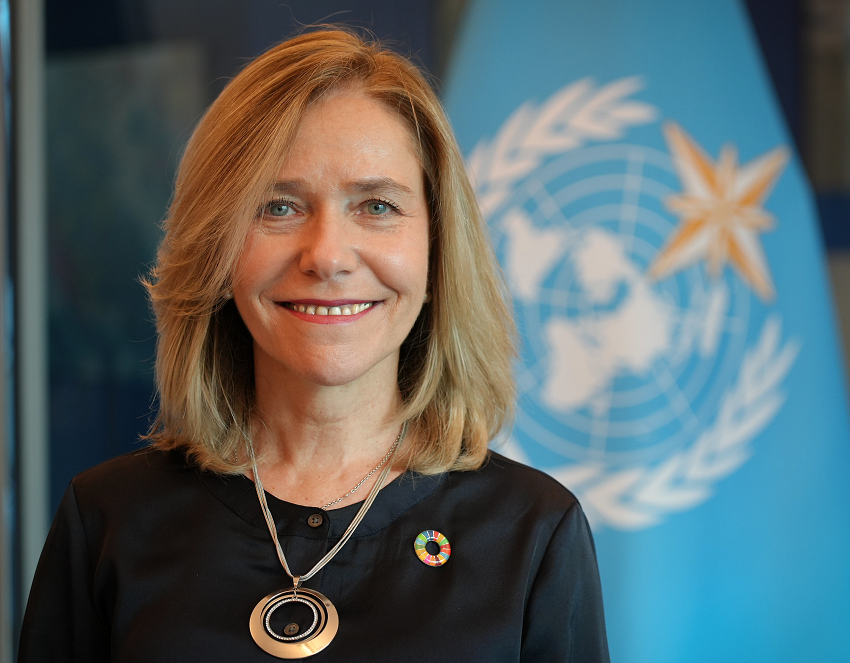
“The WMO community will be carefully monitoring conditions in the coming months to inform decision-making,”said WMO Secretary-General Celeste Saulo, and added, “The most recent El Niño, in 2023-24, was one of the five strongest on record and it played a role in the record global temperatures we saw in 2024,”.
The Secretary General further noted that forecasts for El Niño and La Niña help in averting millions of dollars in economic losses and are essential planning tools for climate-sensitive sectors like agriculture, health, energy and water management.
“They are also a key part of the climate intelligence provided by WMO to support humanitarian operations and disaster risk management, and thus save lives,” she said.
The head of the WMO said the naturally occurring large-scale climate events such as El Niño and La Niña are taking place in the broader context due to human-induced climate change, “which is increasing global temperatures in the long-term, exacerbating extreme weather and climate events, and impacting seasonal rainfall and temperature patterns,” said Celeste Saulo in the statement.
She noted that in order to provide a more comprehensive climate outlook, the WMO also issues regular Global Seasonal Climate Updates (GSCU) that take into account the influence of key climate variability patterns, such as the North Atlantic Oscillation, the Southern Annular Mode or the Indian Ocean Dipole.
The updates also monitor the global and regional anomalies of surface temperature and precipitation and their evolution over the upcoming season.