Kenya has substantially addressed 19 of the 21 actions in its reform plan with the Financial Action Task Force (FATF), requirements for removal from the organisation’s “grey list” of jurisdictions under increased monitoring.
The reforms are aimed at addressing weaknesses in the country’s systems for combating money laundering, terrorist financing and the financing of proliferation of weapons of mass destruction.

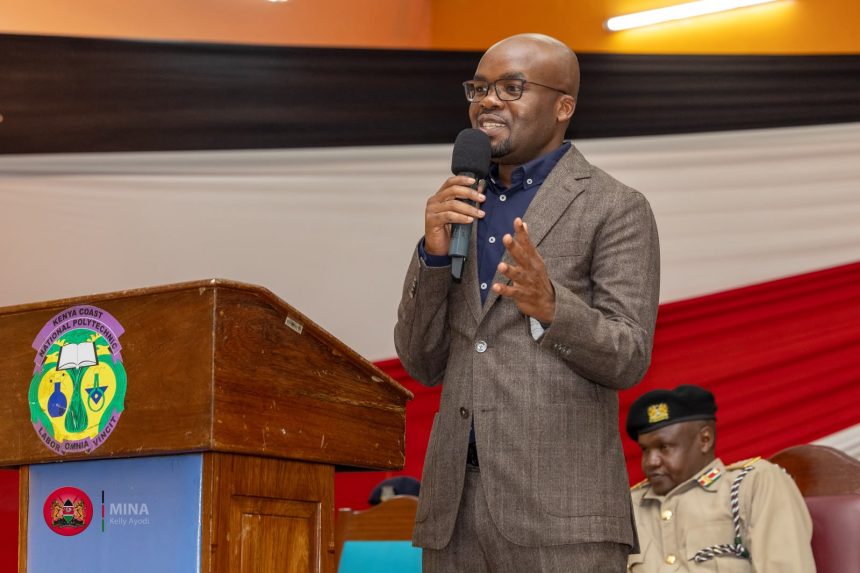
Interior Principal Secretary Dr. Raymond Omollo said Kenya had substantially addressed the 19 actions as of October 2026, representing more than 90 per cent of the requirements under its reform programme.
“As of October 2026, we had substantially addressed 19 of the 21 action items under our national International Cooperation Review Group (ICRG) Action Plan.This progress demonstrates our commitment to addressing identified vulnerabilities, strengthening institutional capacity and aligning our systems with international standards,” Dr. Omollo said.
He was speaking in Nairobi during the Global CFT Expert Hub Conference 2026, a three-day international gathering bringing together more than 150 delegates from across the world.
Participants represent Governments, non-profit organisations, civil society, financial institutions, development partners, multilateral organisations and other stakeholders.
Kenya’s inclusion in the “grey list” follows its commitment to work with the international standard-setting organisation and the Eastern and Southern Africa Anti-Money Laundering Group (ESAAMLG) to strengthen the effectiveness of its anti-money laundering and counter-terrorist financing regime.
The country made a high-level political commitment to undertake the reforms in February 2024 and has since implemented a series of measures to address identified weaknesses.
These include strengthening risk-based supervision of financial institutions and designated non-financial businesses and professions (DNFBPs), as well as improving their understanding and implementation of preventive measures, including requirements for filing suspicious transaction reports (STRs).
The Government has also designated an authority to regulate trusts, strengthened the collection of accurate and up-to-date beneficial ownership information, and improved the use and quality of financial intelligence products.
Additionally, Kenya has aligned its targeted financial sanctions framework with FATF Recommendation 6 and is working to ensure its effective implementation.
It has also revised the regulatory and supervisory framework for non-profit organisations to ensure that measures to prevent terrorist financing abuse are proportionate to identified risks and do not disrupt or discourage legitimate activities.
The 21 actions are outlined under the International Co-operation Review Group (ICRG) Action Plan, a tailored roadmap developed through the FATF process to help countries address serious weaknesses in their systems for combating money laundering, terrorist financing and the financing of proliferation of weapons of mass destruction.
According to FATF, for a country to exit increased monitoring, it must address all or nearly all the components of its action plan.
FATF then conducts an on-site visit to verify that the necessary legal, regulatory and operational reforms are being implemented and that the country has the political commitment and institutional capacity to sustain them.
Following a successful assessment, the decision to remove the country from public monitoring is considered at the next FATF plenary.
Dr. Omollo said Kenya’s reforms also seek to strike a balance between preventing the abuse of non-profit organisations for terrorist financing and protecting their legitimate role in humanitarian assistance, development and community service.
“Kenya recognises that these objectives are complementary. An effective counter-terrorist financing framework must be firm against abuse, proportionate in its application and responsive to the risks presented. It must also preserve the civic space within which legitimate organisations serve communities,” he said.
To illustrate this approach, the PS cited a risk assessment of 260 faith-based organisations undertaking charitable activities in nine counties identified as having higher exposure to risk.
The assessment found that 76.2 per cent of the organisations were classified as Medium-Low Risk, while 13.8 per cent were categorised as Low Risk.
Another 5 per cent fell under Medium Risk, 3.8 per cent under Medium-High Risk and only 1.2 per cent under High Risk.
The PS said, “These findings reinforce why regulation must be informed by evidence, not assumptions. They also demonstrate the importance of distinguishing between organisations that present genuine vulnerabilities and those undertaking legitimate activities with relatively low exposure to risk.”
“Our success must ultimately be measured by our ability to prevent abuse while ensuring that organisations serving vulnerable communities can continue their work without unnecessary barriers,” he added.
Under the differentiated supervisory framework, organisations assessed as High and Medium-High Risk, accounting for 5 per cent of those assessed, are subjected to enhanced on-site supervisory reviews and mandatory annual counter-terrorist financing returns.
The remaining 95 per cent undergo routine annual desktop reviews. The government has also designated the Public Benefit Organizations Regulatory Authority (PBORA) as the sector supervisor, established a dedicated division within the Authority and removed non-profit organisations from mandatory reporting entity lists.
Speaking at the conference, PBORA Director General Dr. Laxmana Kiptoo said the operationalisation of the Public Benefit Organizations Act, together with the PBO Regulations of 2026, marked an important stage in strengthening governance, accountability and transparency in the sector.
Dr. kiptoo said the Authority was committed to a regulatory framework that promotes compliance while facilitating the legitimate activities of organisations.
He noted that its designation as the sector supervisor for preventing terrorist financing abuse reinforced this responsibility. “With the findings at the core, it is important to address identified vulnerabilities without subjecting the entire sector to blanket restrictions,” he said, adding that PBORA’s approach was anchored on proportionate regulation, stakeholder engagement, capacity building and continuous improvement of accountability measures.
He noted, “The fight against terrorist financing must strengthen, not undermine, the legitimate work of organisations that serve humanity.”
Dr. Omollo said the government was also working to address de-risking, where legitimate organisations lose access to banking services because of broad perceptions of risk associated with the sector.
“Our approach is clear: risk management should not become risk avoidance. We must manage risks intelligently without restricting legitimate humanitarian, faith-based, development and community activities,” he said.
He called on financial institutions to make evidence-based decisions that distinguish between actual and perceived risks rather than excluding entire categories of customers.
The need for a balanced approach was also emphasised by Christopher Likomwa, representing the Executive Secretary of ESAAMLG, who said the region had a shared interest in preventing terrorist financing while protecting legitimate civic activity.
He noted that terrorist groups required financial resources to acquire equipment, move funds and sustain their activities, making it necessary for countries to understand how money was raised, transferred and used.
Likomwa acknowledged that some non-profit organisations had been exploited, knowingly or unknowingly, to move funds in support of terrorist financing.
However, he cautioned that efforts to comply with FATF Recommendation 8 could lead some Governments to impose measures that go beyond the standards, resulting in unnecessary restrictions on legitimate organisations.
He said the region’s ongoing third round of mutual evaluations made the conference particularly timely, as countries needed to demonstrate effective implementation without undermining the non-profit sector.
“You will therefore appreciate that collaboration between governments, NGOs, financial institutions and experts is key to strengthening and securing a flourishing and resilient NGO sector,” Likomwa said.
He added that engagement would help organisations understand the risks in their respective contexts while enabling governments to implement international standards and address challenges arising from their application.
Also addressing the conference, Kodjo Attisso, Coordinator of the Illicit Finance Fusion Center – Africa at the United Nations Office on Drugs and Crime’s Regional Office for Eastern Africa (UNODC-ROEA), called for a shift from focusing on technical compliance alone to measuring the effectiveness of anti-money laundering and counter-terrorist financing measures.
Attisso said such measures must be guided by proportionality, financial integrity, financial inclusion and respect for fundamental freedoms.
He identified three areas requiring sustained attention: strengthening evidence-based understanding of risk, promoting financial inclusion and deepening partnerships and knowledge-sharing among governments, regulators, financial institutions and civil society organisations.
He said financial inclusion was particularly important because access to secure and transparent financial services supported development programmes and helped maintain confidence among stakeholders.
Attiso said, “Trust, transparency and dialogue are increasingly recognised as critical enablers of successful Anti-Money Laundering and Combating the Financing of Terrorism efforts.”
He reaffirmed UNODC’s commitment to supporting governments, regional bodies and civil society organisations through technical assistance, risk assessments, analytical capacity building and regional cooperation.