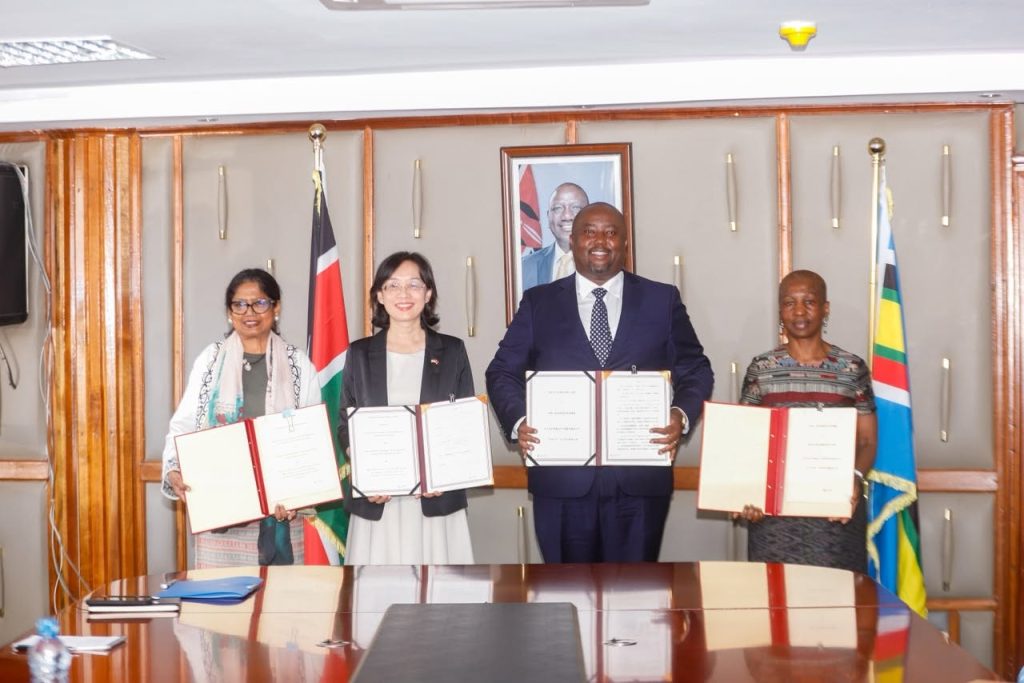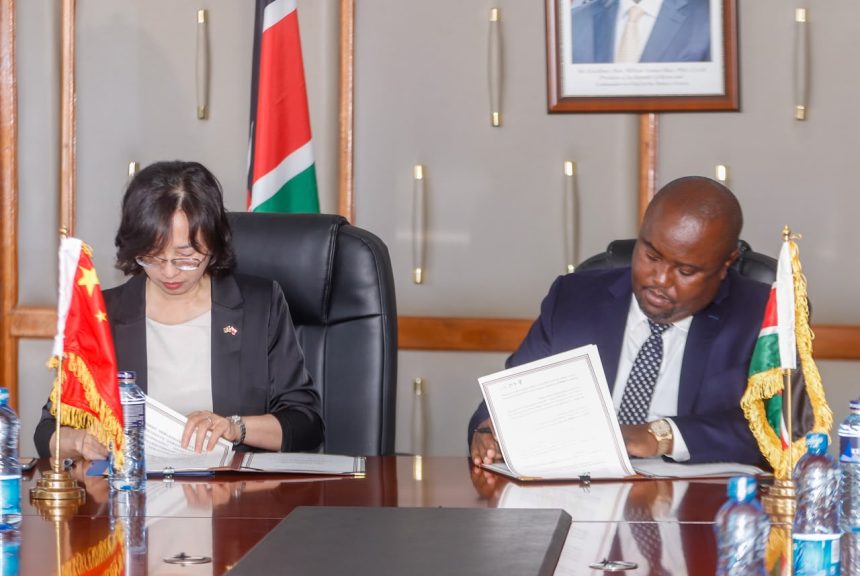
Kenya and China have signed a Memorandum of Understanding (MoU) for the rollout of the Africa Solar Belt Project, paving the way for the installation of 80 off-grid solar power systems, aimed at expanding electricity access in remote and underserved communities.
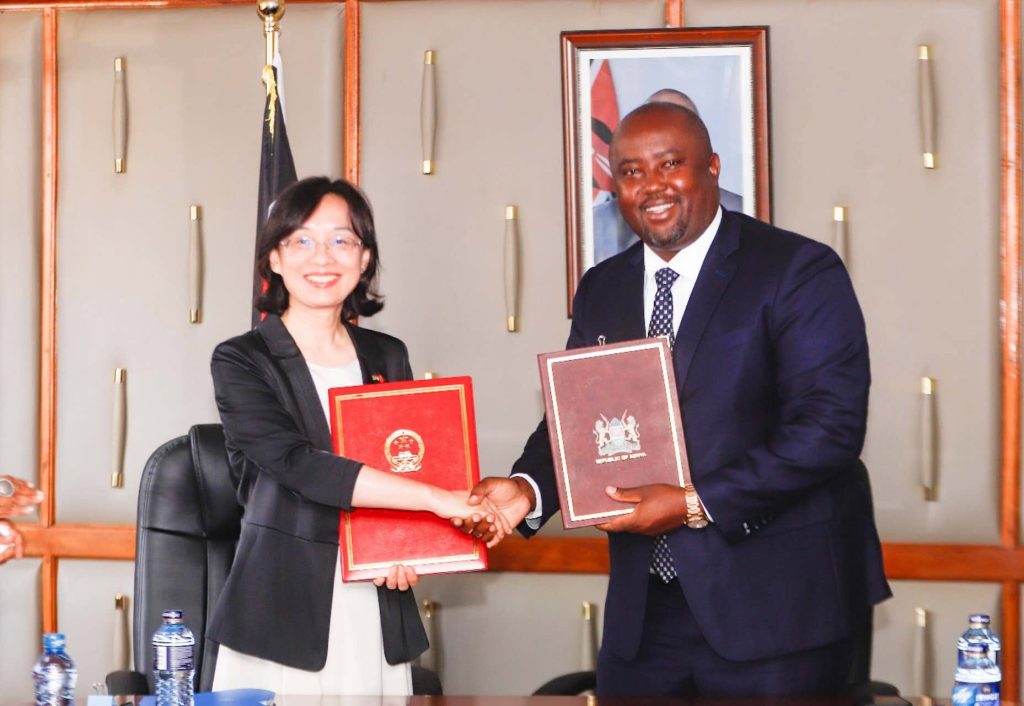
The MoU was signed on Tuesday in Nairobi by Chinese Ambassador to Kenya Guo Haiyan, representing China’s Ministry of Ecology and Environment, and Alex Wachira, Principal Secretary for Energy, representing Kenya’s Ministry of Energy.

The signing, held at the Kawi Complex, was witnessed by United Nations Children’s Fund (UNICEF) country Representative Dr. Shaheen Nilofer, whose organisation is participating in the initiative as a third party.
The project will involve the installation of off-grid solar photovoltaic (PV) systems at selected locations, including Tana River and Kilifi counties, as well as Maasai Mara University.
“The implementation of this project will provide renewable energy power supply to schools, health facilities and support water systems in remote rural areas in Kenya that have limited or no access to reliable electricity,” stated the Chinese Embassy in Kenya.
In schools, the solar systems will support digital learning, enhance classroom conditions, and strengthen the delivery of essential education services. Health facilities and water supply systems will also benefit from a more reliable power supply.
China first announced the Africa Solar Belt Project during the inaugural Africa Climate Summit, held in Nairobi in 2023. The signing of the Kenya-China MoU marks a significant step towards translating this initiative into practical projects within the country.
The programme forms part of China’s broader South-South cooperation framework on climate change, building on initiatives such as the Ten-Hundred-Thousand Initiative and the Belt and Road South-South Cooperation Initiative on Climate Change.
UNICEF will support implementation through matching funds, technical expertise, and other resources, with a particular focus on improving access to essential services for children and vulnerable communities.
The initiative, according to the Ministry of Energy and Petroleum, aligns with Kenya’s Vision 2030 and the Bottom-Up Economic Transformation Agenda (BETA), particularly the government’s commitment to inclusive development, equitable access to essential services, and improved livelihoods.
The partnership strengthens Kenya and China’s cooperation in renewable energy, while supporting the country’s transition towards cleaner energy solutions and greater climate resilience.
The government of Kenya and the People’s Republic of China have also stressed the importance of effective coordination to ensure the proper operation, maintenance, and long-term sustainability of the solar installations.