Kenya has not recorded a single confirmed Ebola case. Of the 59 suspected cases whose samples have been sent to the laboratory, all have returned negative. But Public Health Principal Secretary Mary Muthoni says there is no room for complacency.
“As of today, we have 59 suspected cases from whom we have taken samples to the lab, and none of them is positive. All of them are negative. And we are praying that in Kenya, we will not have any positive cases as we continue,” she stated during a visit to the Malaba Border.

According to the PS, the rising number of suspected cases, even with all testing negative, is itself a serious concern.
“The cases are increasing. Albeit they are negative, the very fact that we are suspecting them is enough to pinpoint that we are at high risk. Therefore, let us observe very high levels of hygiene,” Muthoni advised.
Of all Kenya’s border crossings, she believes Malaba presents the most immediate risk. The entry point borders Uganda, a country that has already recorded confirmed Ebola cases. This border sees between 1,500 and 2,000 travellers pass through daily, alongside approximately 300 inbound trucks. This is why Kenyan authorities are worried.
“Because of the proximity to Uganda, we are very keen that we are at high risk. Therefore, it is important to note that we are not taking things lightly,” Muthoni emphasised.
During her inspection visit, Muthoni observed that some travellers were not taking the screening process seriously, a concern she addressed directly.
“Please take the screening seriously. I have watched during the screening time, and some of them want to be evasive. Let us not look at this exercise as an exercise in futility,” she urged.
She confirmed that enforcement teams have been deployed alongside port health officers to ensure compliance.
“Whether you like it or not, you must be screened before you get into the country,” stated Muthoni.
The situation, according to Muthoni, calls for dedicated quarantine centres across the country’s 47 counties, noting that a gap in this infrastructure presents a significant vulnerability in Kenya’s Ebola response.
“Listen, if we had 47 quarantine centres in this country, I would be sleeping easy. But right now I am still restless because we need those quarantine centres at whatever cost,” she said.
The PS drew a clear distinction between quarantine and isolation, terms with different public health meanings. She explained that quarantine applies to individuals who have been exposed to the virus but have not yet been confirmed as positive, while isolation is reserved for confirmed cases who must be separated from the general public.
“When you are exposed, we quarantine you. When you are tested and confirmed as a case, we isolate you from other members of the public. From the bottom of my heart and from a health point of view, we need the quarantine centres,” she said, adding that the issue should not be politicised.
The PS indicated that surveillance has been enhanced from the national level down to county governments, with teams monitoring and responding to emerging hotspots around the clock.
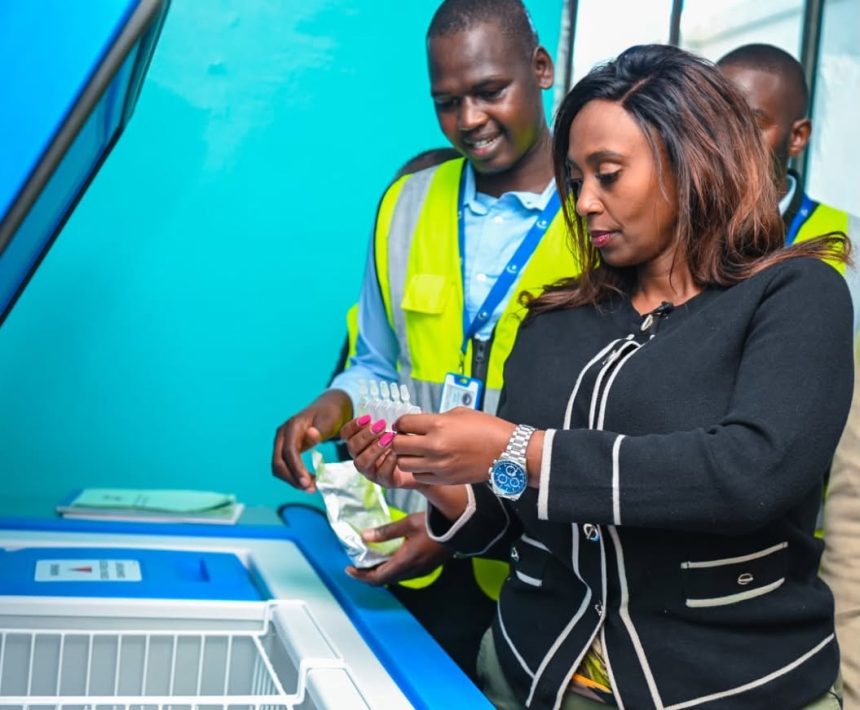
She said laboratory capacity has also been strengthened, with Kenya currently having KEMRI facilities in Nairobi and Kisumu, national public health laboratories, and a mobile laboratory capable of testing samples in the field.
The PS further reported that healthcare workers are receiving ongoing training on case management, covering how to handle both suspected and confirmed cases safely.
At airports, including Jomo Kenyatta International Airport and Eldoret International Airport, she stated that passenger screening, emergency response readiness, infection prevention measures, and inter-agency coordination have all been reviewed and gaps addressed.
Accommodation providers have also been directed to clean and disinfect all bedding between guests, with public health officers deployed to enforce compliance.
“When you are exposed, we quarantine you. When you are tested and confirmed as a case, we isolate you from other members of the public,” the PS reiterated, stressing that without proper quarantine infrastructure, the ability to contain a potential outbreak remains limited.
Muthoni urged the public not to panic, saying authorities had the situation under control and would continue providing accurate and timely information.
“I am asking members of the public, let us remain calm. We are in control. Please let us give you information as it should be,” she said.
With Uganda’s confirmed cases just across the border and hundreds of travellers crossing daily, Kenya’s health authorities say vigilance, hygiene, and compliance with screening remain the country’s most important lines of defence, at least until those quarantine centres are built.