Shared responsibility, continuous learning and risk management took centre stage at a Media Council of Kenya (MCK) working retreat.
The retreat aimed to strengthen how the institution manages uncertainty in delivering its mandate.

The retreat brought together the MCK Board, Management and the institution’s risk champions to review the corporate risk register and refine MCK’s Enterprise Risk Management (ERM) framework. The review put into consideration the MCK’s Strategic Plan 2026-2030 and recent shifts in the institution’s operating environment.
ERM is a structured, organisation-wide method of identifying, assessing, prioritising and monitoring risks and opportunities so that they stay within an agreed risk appetite and support strategic goals. At MCK, it links Board oversight with Management’s daily implementation. It connects the corporate risk register with departmental work plans, budgets, reporting and escalation, and builds risk into decision making rather than treating it as a separate compliance duty.
MCK Board Chairman Maina Muiruri said the exercise should build a common understanding between the Board and Management, so that risk reporting and decisions reflected the same institutional priorities. He described its purpose as “harmonising of our thoughts” and stressed that clarity on risk appetite and mitigation was essential to the Board’s performance.
Mr Muiruri pointed out that risk management went beyond accounting and legal matters and touched the work of every Board committee.
He reminded members that committee papers were expected to include an assessment of risks and the measures to address them. He also acknowledged that this practice needed to be deepened.
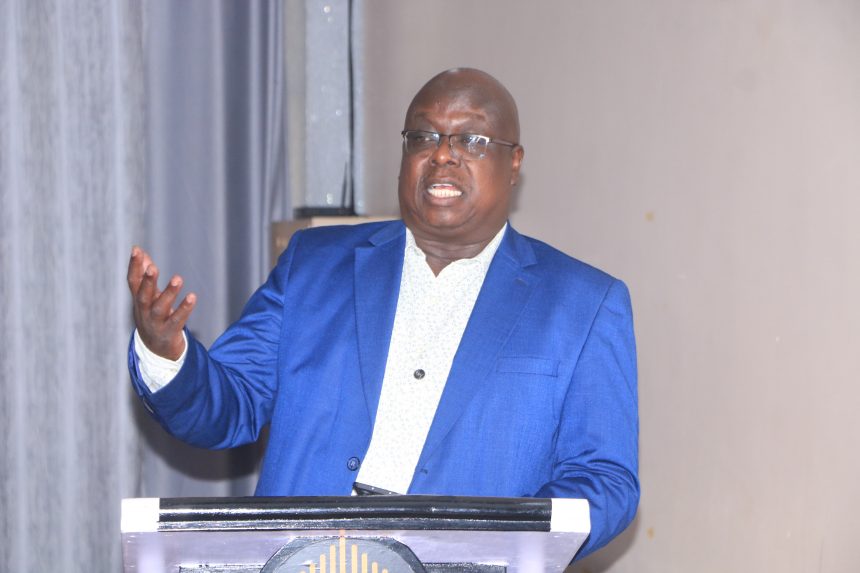
MCK Chief Executive Officer David Omwoyo Omwoyo, MBS, urged participants to remain open to learning, including those who had attended similar sessions before. He asked them to apply the lessons to their own decisions by weighing the risks to their departmental objectives, time, effort and allocated financial resources. He characterised MCK’s approach to risk as deliberate and anchored in strategy.
“The Council has intentionally embedded risk management into the fabric of its operations, recognising that risks cannot exist in isolation. As such, our risks are attached to our strategic plan.”
Lead consultant Sam Kibaara of Pinebridge Training and Consulting Ltd, who facilitated the retreat, explained that the exercise sought to make risk management part of everyday institutional planning rather than a separate reporting obligation. He noted that the preparatory sessions had focused on aligning the corporate risk register with MCK’s new Strategic Plan.
“We can’t have risks that are not attached to the strategic plan,” Mr Kibaara said.
He told participants that the Risk Management Steering Committee and the risk champions had spent three days reviewing the register and grouping risks under MCK’s four key result areas. They also assessed whether the 2019 Risk Rating Matrix and the 2019 ERM Framework were still relevant to MCK’s current operating environment.
Mitigation measures, he added, should be reflected in departmental work plans and budgets, with clear responsibilities and timelines.
Participants also examined risk appetite and related concepts. The key deliverables from the exercise included specific risk appetite statements, tolerance thresholds, key risk indicators (KRIs) and an implementation roadmap.
The revised framework is expected to give MCK a basis for more consistent monitoring and accountability, with decisions, work plans and oversight aligned to its mandate.