The move by the National Transport and Safety Authority (NTSA) to ban graffiti on public service vehicles (PSVs) has suffered a setback after President William Ruto gave in to concerns raised by transport industry players during talks over rising fuel prices.
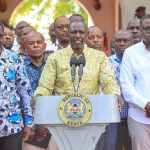
Addressing the nation at State House, Mombasa, after hours of engagement with transport-sector stakeholders, Ruto overturned the directive requiring the removal of graffiti, artistic designs, and tinted windows from PSVs.

The President said the decision was aimed at creating an enabling environment for matatu operators to continue using artwork and graffiti as part of creativity and self-expression.
He, however, cautioned that artistic designs and expression must be exercised in a manner that upholds safety standards and respects other road users.
“Recognising the important role of creativity and self-expression within our transport culture, I have directed NTSA to facilitate an enabling environment for matatu operators to continue utilising artwork and graffiti on their vehicles in a manner that upholds safety and respect for other road users”, he directed.
The latest development comes barely a month after the High Court upheld the government’s decision to ban graffiti, decorative artwork and tinted windows on PSVs, ruling that the restrictions were lawful and necessary for public safety.
The ban of the ‘nganya’ culture — a distinctive urban transport style known for colourful graffiti, neon lighting, tinted windows, loud entertainment systems and customised interiors had been challenged by players.
The petition was presented as a public interest case aimed at protecting artistic expression in the matatu industry.
In its ruling, the court said the National Transport and Safety Authority (NTSA) notice issued on May 14, 2025, was a lawful administrative reminder of existing legal obligations and did not violate the right to fair administrative action or any legitimate expectation.
NTSA had defended the directive, saying the move was intended to improve passenger visibility, assist law enforcement, enhance road safety and ensure uniform standards across the PSV sector.