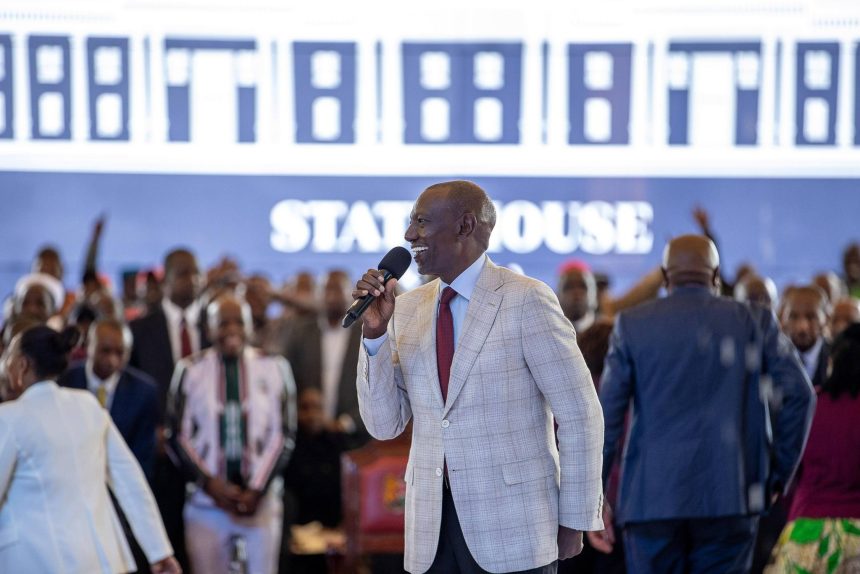
President William Ruto has highlighted significant achievements by his administration in the country’s education sector over the past three years.
The head of state, who was hosting grassroots leaders from Kirinyaga County at State House, Nairobi, credited his administration with positive reforms in the sector, including increased funding, large-scale teacher recruitment, and initiatives aimed at enhancing equity in access to education.

He noted that the education budget has risen from KSh 500 billion in 2022 to KSh 702 billion in 2025, with further increases planned to reach KSh 765 billion this year.
“Elimu ni muhimu sana. Elimu inatuletea usawa. Mtoto wa maskini na ule wa tajiri wanakuwa sawa wanapopata elimu. Ndio maana tunaongeza bajeti ya elimu,” he said.
The President highlighted teacher recruitment as a key achievement, stating that the Kenya Kwanza administration has hired more teachers in three years than previous administrations, which typically hired around 5,000 teachers annually.
He further announced plans to recruit an additional 20,000 teachers before the end of the year, bringing the total to 120,000, exceeding his earlier promise of 116,000.
“In three years, we have hired 100,000 teachers, a task that would have taken other governments 20 years to accomplish. That is the difference we are making,” he said.
Ruto also pointed to reforms in education financing, noting a shift in the capitation model to ensure that schools receive funds before reopening. He said the government recently disbursed KSh 23 billion to schools, improving operational stability and planning.
In terms of infrastructure development, the administration has constructed 23,000 classrooms nationwide to reduce overcrowding and enhance learning conditions.
Regarding higher education, Ruto stated that the government has overhauled the university funding model to address long-standing inequities and financial challenges previously faced by institutions of higher learning.
“We have changed the university student funding model. Previously, there was no equitable funding system. 23 universities had become insolvent, almost bankrupt. Things have now changed. All students, especially those from low-income backgrounds, are receiving scholarships and adequate loans to support their education,” he said.