The Government has recorded significant and sustained progress across eight strategic development sectors in the Nyanza Region, as President William Ruto’s administration advances its commitment to equitable infrastructure investment and economic transformation across the country.
An assessment of ongoing projects across Kisumu, Homa Bay, Siaya, Migori, Kisii and Nyamira counties reveals that housing, water and sanitation, and market infrastructure have emerged as the region’s strongest performing sectors, while transport and industrial park development continue to advance against well-documented financing and contractor challenges.
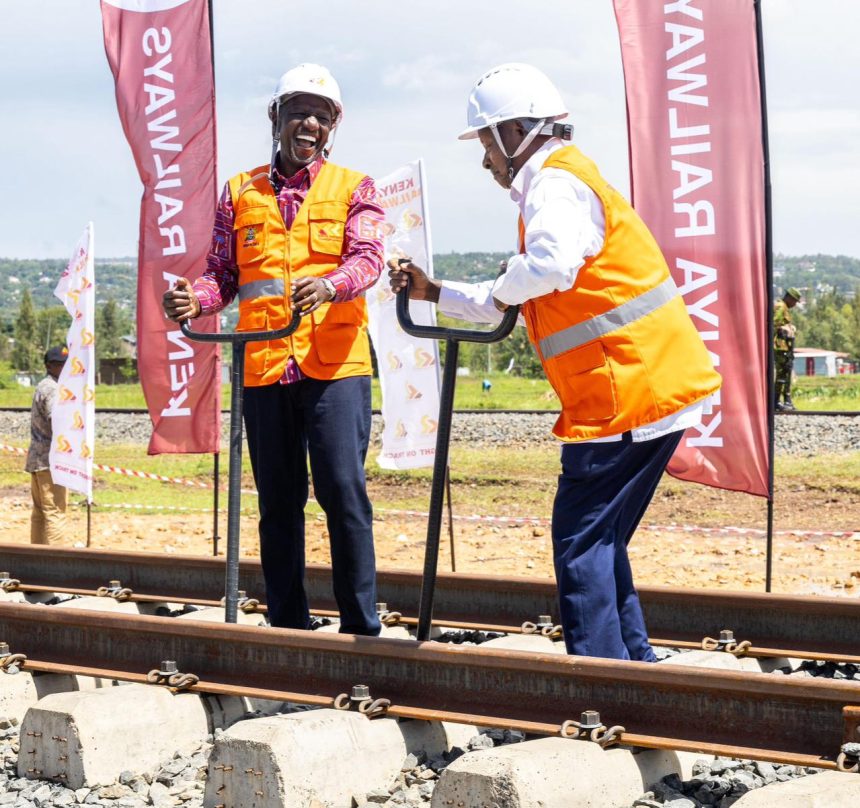
President Ruto has embarked on a four-day development tour of the region with the launch of the Kisumu–Malaba SGR (Phase 2C) project by William Ruto and his Ugandan counterpart, President Yoweri Museveni, at Kisumu East Sub-County, being the defining moment.
Nyanza Regional Commissioner, Ms Flora Mworoa, noted that the scale of deployment across the region reflects the Government’s deliberate strategy to close the infrastructure gap between urban centres and historically underserved communities.
“The figures speak for themselves – thousands of homes under construction, markets that now provide clean water and electricity to traders, water projects delivering 100 per cent completion in communities that have waited for decades, and a Blue Economy agenda that is turning Lake Victoria’s potential into real livelihoods,” said Ms. Mworoa.
Housing is the single largest investment sector across the Nyanza Region and the most direct driver of employment, generating more than 1,000 jobs daily from active construction sites. In Kisumu, the flagship Lumumba Affordable Housing Programme is about 56 per cent complete, with more than 9,000 units currently under active construction – representing the largest single housing rollout in the region.
Migori’s Mabera Affordable Housing Programme stands at 98 per cent completion, placing it among the most advanced sites in the country, while Homa Bay has already recorded full completion of its housing programme.
Siaya County has 3,832 units in progress and Kisii has 2,116 ongoing units at varying stages of advancement. Nyamira, where several projects report progress of only two to four per cent, is identified as a priority county for accelerated mobilisation.
The Economic Stimulus Programme markets initiative has emerged as the most visible success story at the grassroots level, delivering not just trading spaces but clean water access and electricity connections to market communities across the region.
In Homa Bay, multiple markets are between 70 and 98 per cent complete, while Siaya reports several markets between 88 and 95 per cent and nearing full handover.
Kisii records markets in the 85 to 93 per cent range. Kisumu presents a mixed picture reflecting phased rollout schedules, and Migori’s markets show a good spread at 40 to 88 per cent. Nyamira again lags behind, with most markets still below 20 per cent, requiring urgent contractor and financing attention.
On education, the programme is firmly anchored in the Government’s skills and youth employment agenda, with Technical and Vocational Education and Training (TVET) facilities and student hostels forming the core of the investment.
Kisumu and Siaya are leading the hostel programme with more than 10,000 student beds planned or currently under construction. Homa Bay is recording strong TVET expansion, and Migori has multiple Kenya Medical Training College and Technical Training Institute hostels in progress.
Kisii and Nyamira are in early stages and will be prioritised in the next implementation cycle. Water and sanitation stands as the best-performing sector in the region and the intervention with the most immediate social impact on households and communities.
The Kendu Bay and Oyugis Water Projects in Homa Bay County are 100 per cent complete and are in active operation. The Ugunja Water Project in Siaya County has equally achieved full completion. The Lake Victoria Water and Sanitation project in Kisumu is at 85 per cent.
The Soin-Koru Dam project remains stalled due to a combination of court proceedings and funding constraints, and its resolution is being actively pursued. Transport represents one of the highest financial investments in the region but is also the sector most significantly affected by pending contractor bills, site withdrawals and land compensation disputes.
The Rusinga Ring Road in Homa Bay is at 98 per cent completion and is among the most advanced road projects in the region. Airport infrastructure projects in Kisumu and Kabunde are progressing well, at between 85 and 98 per cent. Most roads across Kisumu, Homa Bay and Siaya are reporting progress of between six and 25 per cent, reflecting the impact of contractor disruptions, and the Government is actively engaging the contractors and resolving pending bills to restore momentum.
Development of industrial parks in Nyanza holds significant economic potential and is central to the region’s long-term job creation and value addition agenda. The Homa Bay County Aggregation and Industrial Park is the most advanced at approximately 59 per cent completion, while the Siaya facility has stalled due to contractor failure and financing gaps.
Kisii and Nyamira have limited industrial park presence at present, and the Government is reviewing financing structures across the region to ensure delivery within agreed timelines. On energy, last-mile infrastructure rollout has been slower than targeted, though anchor transmission works are recording strong progress.
The Sondu Transmission Line in Kisumu is at 94 per cent completion, which will significantly enhance electricity supply stability across the lake region. Market lighting projects are at varying stages of between two and 50 per cent completion and will be accelerated alongside the markets they serve. The Blue Economy agenda represents Nyanza’s most distinctive comparative advantage, anchored in the resources of Lake Victoria and surrounding communities.
The Homa Bay Pier has been completed and is operational. The Homa Bay Fish Market is fully operational and supporting income generation for fishing communities. Fisheries development centres across the region are progressing, and the Kisumu Maritime Rescue Centre has been established to safeguard lives on the lake.
The Government continues to expand its Blue Economy investment as part of a broader strategy to make Lake Victoria a driver of regional economic transformation.