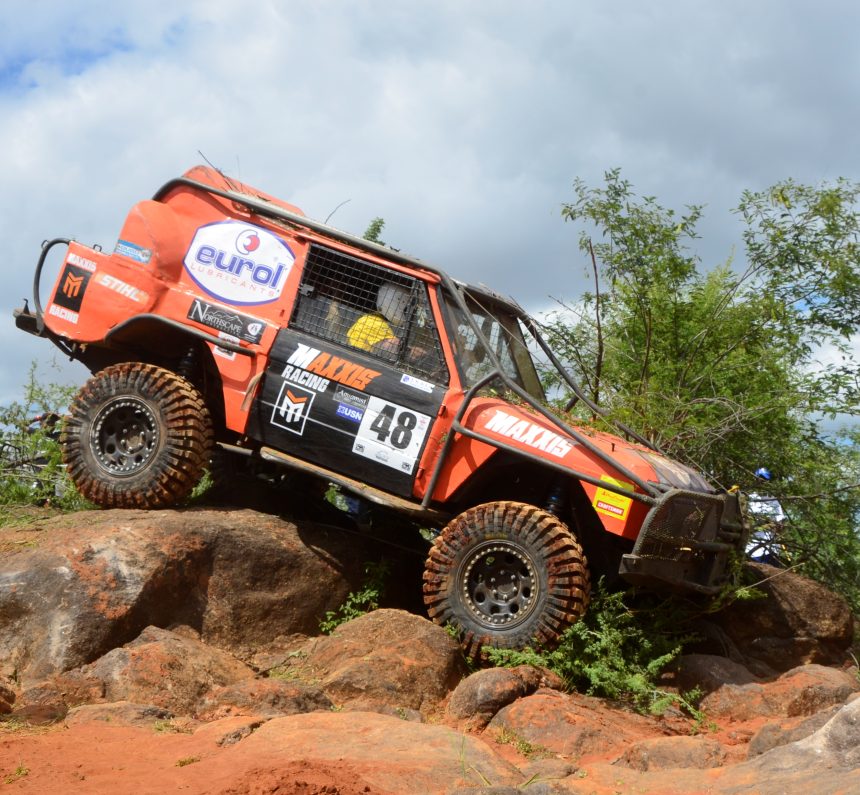
Samburu County will host the 37th edition of the Rhino Charge later this month, bringing Kenya’s iconic off-road motorsport competition to the rugged north as organisers seek to raise more funds for forest and wildlife conservation.
The announcement was made on Saturday morning by Clerk of Course Don White during the Drivers’ Briefing at Braeburn School in Nairobi, where competitors, sponsors, officials, checkpoint crews, camp operators and members of the media gathered ahead of the annual event.

The exact competition site in Samburu will remain secret until a few days before the event, in keeping with the Rhino Charge tradition of preserving competitive fairness and surprise. However, route notes are expected to begin at Archers Post on the Isiolo-Samburu border.
Scheduled for May 29 to 31, the event has already attracted a full entry list of 65 competition vehicles, reflecting continued interest in one of Kenya’s most celebrated motorsport and conservation fundraisers.
White said this year’s edition has also drawn fresh participation from younger competitors.
“We have seven new entrants to the Rhino Charge this year, which signifies growing relevance to the new generation. This not only makes the event more sustainable but also helps us operate at full house and secure additional funding for Rhino Ark projects,” he said.
He added that organisers had reviewed the use of GPS systems to improve fairness and precision in scoring as competition becomes tougher.
“We went through a whole process of reviewing how to get more accurate results to keep up with the increased competitiveness at the event”, he explained.
White also issued a safety advisory to teams and guests planning to travel by air to the remote venue.
“We need to ensure that everyone coming by air gets preauthorisation. No aircraft should be parked at the airstrips to enable safe operations during the event.”
He further introduced Philip Watson, a former navigator of car number 5, who now heads the Rhino Charge Results Committee. Watson said results would be released to teams shortly after the event, with disputes handled before the prize-giving ceremony.
Organised by Rhino Ark Charitable Trust, the Rhino Charge was launched in 1989 and has since raised more than Ksh 2.7 billion for conservation initiatives across Kenya. Funds have supported the protection of ecosystems such as the Aberdare Range, Mount Kenya, the Mau Forest Complex and Kakamega Forest.
Rhino Ark Chief Executive Officer Christian Lambrechts said the organisation had made notable gains over the last year, especially in the Southern Mau Forest.
“Over the past year, we have invested considerable resources in the southern part of the Mau, a 158,000-hectare indigenous forest that forms critical catchments for the Mara, Sondu, and Ewaso Nyiro South rivers. This landscape has faced immense pressure from excisions and settlements, but together with our partners, we are working to transform it into a tourism-centred conservation area,” he said.
He said Rhino Ark had opened a field office in Olenguruone to oversee a major European Union-backed conservation programme and had also completed a 32-kilometre fence along the northern boundary of South Western Mau through private sector partnerships.
Lambrechts said fencing work in other landscapes was also progressing steadily.
“Fencing on Mount Kenya is progressing well, with 318 kilometres completed to date, while in Kakamega, 50 kilometres of the planned 117-kilometre perimeter fence have been constructed. These interventions are critical in protecting ecosystems from illegal resource extraction and reducing human-wildlife conflict.”
As preparations intensify, Samburu’s vast semi-arid terrain is expected to provide a dramatic backdrop for the 2026 Rhino Charge, blending adventure, community participation and conservation impact. The main competition will take place on May 30, followed by the prize-giving ceremony on May 31.