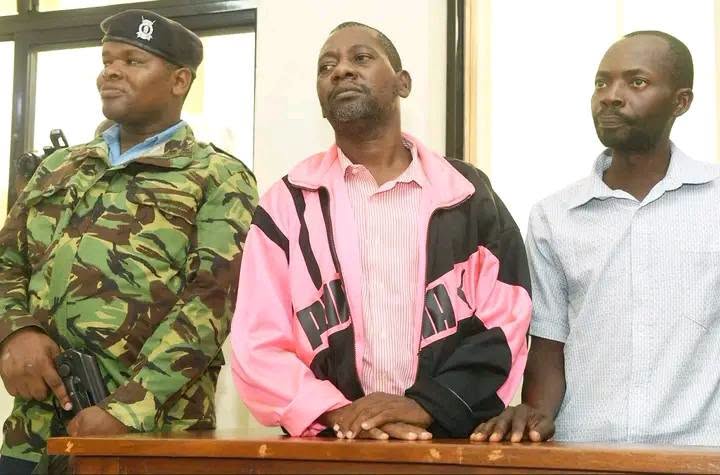
All eyes will be on the Mombasa Law Courts on Monday as the fate of self-proclaimed preacher Paul Nthenge Mackenzie and his 35 co-accused is determined.
The much-awaited judgment is scheduled for delivery at 9 am on October 19, 2026.

Lady Justice Diana Kavedza-Mochache was expected to deliver the ruling on October 16 but postponed it.
“Take Notice that under the direction of Hon. Lady Justice Diana Kavedza-Mochache, the Judgement date for Case no. E003 of 2024 has been moved to 19th October 2026 at 9:00am at Mombasa Law Courts,” reads part of the notice dated October 9.
In the trial (Case No. E003 of 2024), Mackenzie and his followers face 191 murder counts connected to the deaths of children whose bodies were exhumed from mass graves in Shakahola Forest, Kilifi County. The alleged offences were committed between January 2021 and September 2023.
On April 15, 2026, Justice Kavedza ruled that the prosecution had established a prima facie case, placing all 31 accused persons on their defence.
The DPP said the prosecution presented extensive evidence supporting its case, including testimony from 121 witnesses in total.
The prosecution called 121 witnesses in support of its case, including survivors, expert witnesses, and investigating officers, and presented exhibits that included postmortem reports and government analyst findings, among others, the statement said further said.
In the ruling, Justice Kavedza observed that it was not disputed that bodies, including those of children, were exhumed from the Shakahola forest area.
The DPP further noted that several relatives of the victims testified in court, confirming the deaths of their children as reported.
Additionally, some witnesses placed a number of the accused persons at or near the scene, describing them as having played various roles within the settlement, including village elders, guards, grave diggers and cooks.