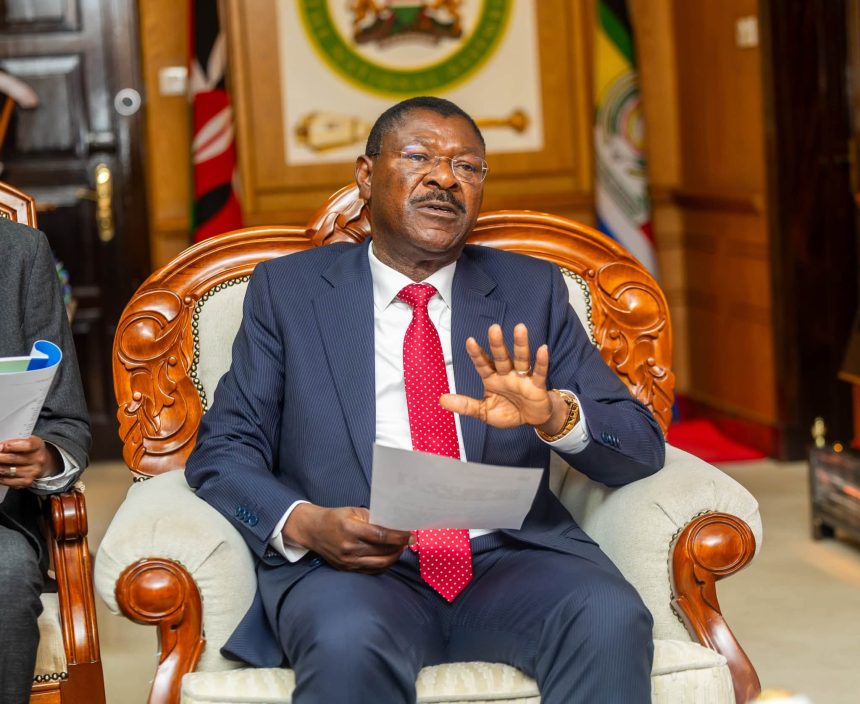
National Assembly Speaker Moses Wetang’ula and Members of Parliament have issued a strong warning against the resurgence of ethnic profiling and inflammatory political rhetoric cautioning that divisive utterances could undermine national cohesion and threaten peaceful preparations for the 2027 General Election.
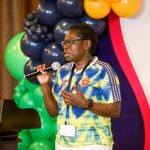
The concerns dominated proceedings in the National Assembly after Lamu East MP Ruweida Mohamed sought a Statement from the Chairperson of the Select Committee on National Cohesion and Equal Opportunity regarding the enforcement of laws against political leaders accused of making inciteful remarks at public rallies.

Presiding over the House, Speaker Wetang’ula urged leaders across the political divide to exercise restraint in their public statements saying Kenya’s strength lies in its diversity and that political competition should never be allowed to inflame ethnic tensions.
“As we head towards the elections, let us all try, not only in this House but also outside it, to lower our political temperatures. Bellicose statements and unhelpful rhetoric cannot help this country,” the Speaker said.
Drawing from his own parliamentary experience spanning decades, Wetang’ula reminded legislators that Kenya has a rich history of electing leaders based on merit rather than ethnicity or race.
He cited former MPs Basil Criticos, Philip Leakey, Satish Gautama, Amin Walji, Sumra and Dr Swarup Mishra noting that despite belonging to minority communities, they were overwhelmingly elected by constituents from different ethnic backgrounds.
The Speaker also referenced international examples, including former United States President Barack Obama and former United Kingdom Prime Minister Rishi Sunak, to illustrate that leadership should transcend race and ethnic identity.
“We are a diverse people, and that diversity is something we should be proud of. Let us not escalate issues that do not help our country,” he said, while urging politicians to avoid statements capable of igniting unnecessary conflict.
The debate was prompted by a Statement request by Ms Mohamed who expressed concern over increasing incidents of inflammatory political remarks as the country gradually enters the election cycle.
She warned that some leaders were openly making statements encouraging residents to reject individuals perceived as outsiders despite them having lived and co-existed peacefully within those communities for generations.
According to the legislator, some politicians have even publicly challenged the National Cohesion and Integration Commission (NCIC) and other law enforcement agencies to summon or arrest them, exposing what she described as growing impunity.
She asked Parliament to explain the measures the NCIC has taken against individuals making remarks likely to incite violence or hatred based on ethnicity, political affiliation or regional origin.
The MP also sought details on mechanisms the Commission has established to monitor political rallies, document incidents of hate speech and work jointly with other agencies to ensure prompt enforcement of the law.
Hon. Mohamed cited Lamu County as an example of peaceful coexistence among different communities.
She questioned political narratives suggesting that only people born within particular ethnic communities should seek elective office in specific regions.
“If leaders are saying that only women from their communities should give birth to future Members of Parliament, what do we say in Lamu?” she posed.
She noted that Lamu currently has leaders from different communities serving in elective positions, demonstrating that leadership should remain open to all Kenyans regardless of ethnic background.
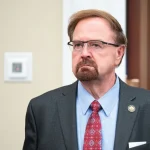
North Imenti MP Hon. Rahim Dawood echoed the concerns after revealing that he recently became the target of ethnic profiling during a political meeting in Meru.
The Independent legislator said a former political leader publicly urged voters not to elect him because he is of Indian descent despite having been born and raised in the area.
“I have been elected four times. I was born there. My mother was born there in 1937 and attended Meru Primary School,” Dawood told the House.
He warned that such rhetoric threatens the constitutional rights of every Kenyan to seek elective office anywhere in the country.
While criticising the effectiveness of the NCIC, Hon. Dawood argued that investigations into hate speech should be handled directly by the Directorate of Criminal Investigations (DCI), saying the Commission lacks sufficient enforcement powers.
“We are so close to the elections. If we start inciting the populace, how are we going to go into the General Election?” he asked.
Eldas MP Hon. Adan Keynan called for equal application of the law, saying Kenya was witnessing a dangerous trend where leaders were increasingly subjected to ethnic insults and profiling without consequences.
He questioned why agencies mandated to enforce laws against hate speech appeared reluctant to act despite repeated incidents of divisive political messaging.
Hon. Keynan urged the Parliamentary Committee on National Cohesion and Equal Opportunity to table a comprehensive report recommending action against individuals promoting tribalism.
“Modern-day Kenya has no place for tribalists, regionalists and individuals who seek to divide our people,” he said.
The legislator also defended Dawood, describing him as a leader repeatedly endorsed by his constituents on the basis of performance rather than ethnicity.
Dagoretti South MP Hon. John Kiarie similarly condemned attempts to limit leadership opportunities along ethnic lines.
He observed that many distinguished Kenyan politicians had successfully represented constituencies outside their ancestral regions, arguing that citizenship alone qualifies every Kenyan to contest elective office anywhere in the country.
“Being Kenyan, in itself, qualifies one to be elected,” he said.
Hon. Kiarie recalled that Kenya’s political history is full of leaders who won elections in regions far from their communities of origin, saying Parliament must continue championing national integration.
Mombasa Woman Representative Hon. Zamzam Mohammed also defended Kenya’s multicultural identity, saying no Kenyan should be made to feel like a stranger in their own country.
She criticised politicians who use derogatory nicknames and ethnic stereotypes against opponents, insisting that mutual respect should guide political discourse.
“This Kenya belongs to all of us,” she declared, adding that every Kenyan has an equal constitutional right to vie for any elective office regardless of county or community.
Jomvu MP Hon. Bady Twalib associated himself with the sentiments, saying ethnic politics should be buried permanently.
He praised constituencies that evaluate leaders based on development records instead of race or tribal affiliation and commended the country’s diversity in public leadership.
Throughout the debate, Members from both the Kenya Kwanza and Opposition benches expressed rare bipartisan unity in condemning tribal politics and warning against hate speech as campaigns ahead of the 2027 General Election begin to gather momentum.
The discussion underscored growing concern among the lawmakers over rising political temperatures and renewed calls for the NCIC, police and other investigative agencies to enforce existing laws firmly and impartially.
The MPs maintained that safeguarding national cohesion, protecting every Kenyan’s constitutional rights and ensuring peaceful political competition will be critical to preserving the country’s democratic gains as the next electoral cycle approaches.