
A Wildlife stakeholders’ forum has called on relevant partners to conserve to promote the protection and sustainable management of the Mara River Basin.
Speaking at the forum held this week, Conservation Secretary, State Department for Wildlife, Dr. John Kipkorir Chumo said the Government is working closely with stakeholders to ensure that the Mau Forest and other important catchment areas extending towards our borders are protected and restored through afforestation and other conservation programmes.

He called upon our development partners to continue supporting these efforts. As a government, we cannot do it alone. “We must work together because when we unite, we are better able to conserve our environment,” he said.
He also underscored the need to protect rivers along the Mara Basion from pollution saying it was threatening wildlife and the ecosystems upon which they depend.
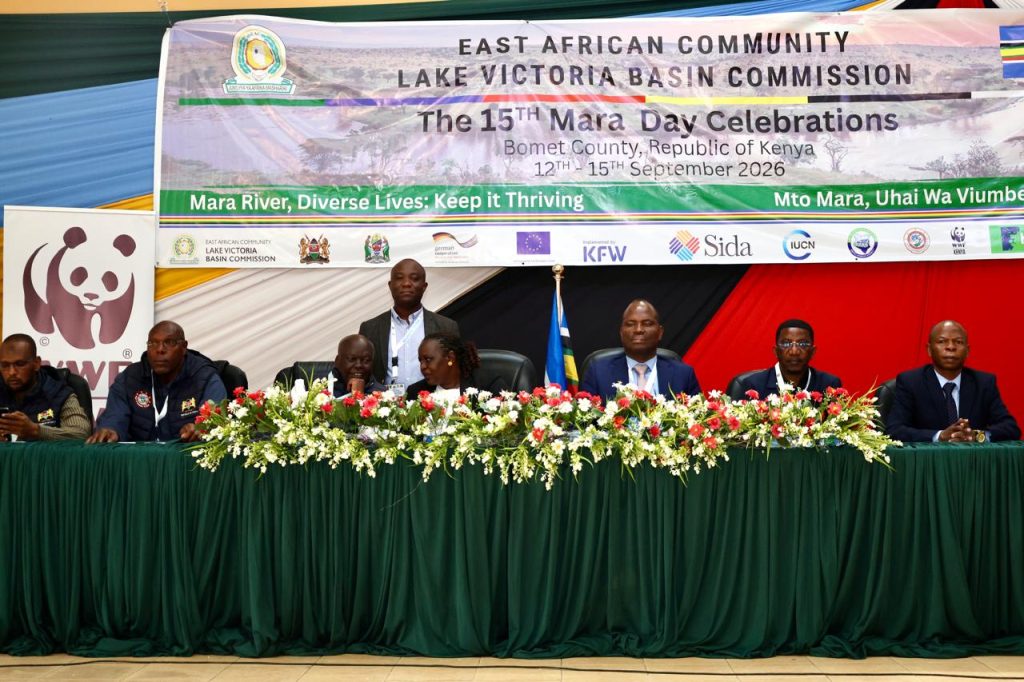
“We must therefore continue working together to ensure that our rivers remain healthy, our wildlife is protected, and our natural resources continue supporting present and future generations,” he added.
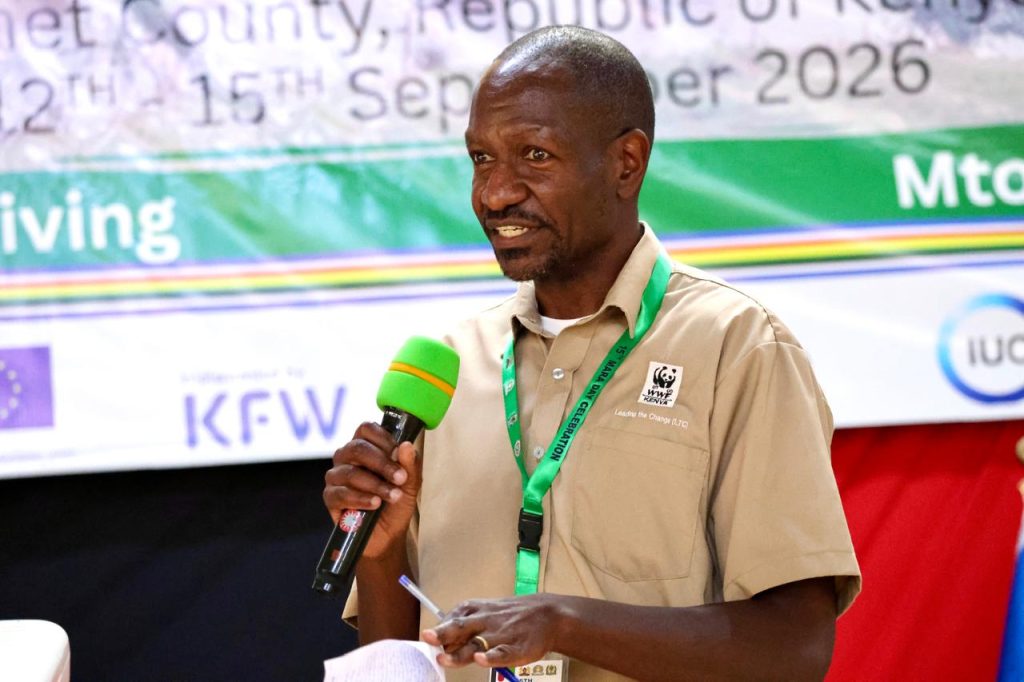
On his part, Kevin Gichangi, Manager, Kenya Rift Lakes Region, WWF-Kenya, spoke of the continued collaboration with different partners, including development partners, which has brought significant changes, especially in the formation and strengthening of community-based institutions in both Kenya and Tanzania which include Community Forest Associations, Water Resource Users Associations and many others.
“We have therefore continued collaborating with our partners, and what we are seeing here is an indication that Integrated Water Resources Management is actually in action. Collaboration between two countries that share a river is exactly what is required for us to effectively manage that resource,” said Gichangi.
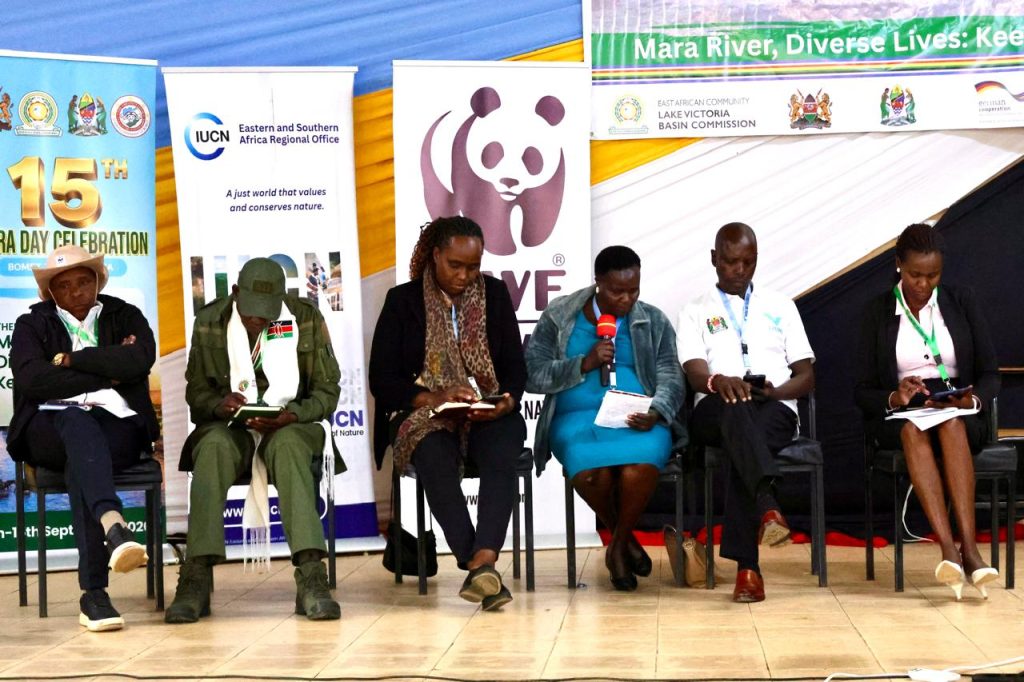
He also emphasised that the Mara River is more than a waterway. “It is a lifeline connecting people, wildlife, forests, grasslands, agriculture, tourism and local economies from its source areas in Kenya through to Tanzania.”
Gerald Kusaya, Regional Administrative Secretary, Mara Region United Republic of Tanzania reaffirmed the country’s commitment to working with Kenya and other partners to conserve the Mara River Basin.
He stressed that conservation of the Mara should not be viewed simply in terms of protecting natural resources, but as an investment in the future of communities whose lives and livelihoods depend on the ecosystem.
He called for the two countries to build on progress already made through transboundary cooperation and strengthen structures that allow communities, governments and other stakeholders to work together.
Challenges Identified Across the Basin
Representatives highlighted increasing degradation of the Mara River’s source areas as one of the most serious threats to the basin. Human activities and large numbers of livestock around sensitive catchment areas are contributing to loss of vegetation, soil erosion and sedimentation of waterways.
On the Kenyan side, participants raised concerns about the inappropriate use of agricultural chemicals, fertilisers and unsustainable farming practices, which are affecting water quality. Expansion of agriculture has also placed increasing pressure on riparian areas, forests and grasslands.
Deforestation in the Upper Mara was also identified as another major concern. Participants noted that growing demand for land, fuelwood and agricultural expansion continues to reduce forest cover.
Industries that depend heavily on fuelwood, including some tea-processing operations, were challenged to take greater responsibility for tree growing and restoration.
The growth of urban centres without adequate planning was also identified as an emerging threat. Participants raised concerns about sewage and wastewater management, particularly where expanding settlements do not have appropriate systems to prevent untreated waste from reaching rivers.
Conflicting Policies and Governance
Stakeholders identified differences in laws, regulations and management approaches between Kenya and Tanzania as a challenge to integrated management of the shared basin.
Even within Kenya, participants noted that counties such as Bomet and Narok may have different policies and approaches affecting the same ecosystem. They called for greater harmonisation of county, national and transboundary policies.
Strategic management plans, water policies, land-use regulations and conservation frameworks need to complement rather than contradict one another.
Participants also highlighted the need for stronger mechanisms for regular communication between institutions and their counterparts across the Kenya–Tanzania border.
Community Perspectives
Community representatives emphasised that conservation must deliver tangible benefits to the people protecting natural resources.
Joseph Koech reflected on the need to provide communities with sustainable conservation-related livelihood opportunities, including beekeeping, bamboo production and nature-based enterprises. Such initiatives can provide economic incentives for communities to protect forests, rivers and other ecosystems.
Youth representatives highlighted unemployment and increasing water scarcity as major concerns, while women representatives spoke about the growing effects of unpredictable rainfall and water availability on households and livelihoods.
Participants also stressed that communities require more information and capacity building. For example, livestock owners managing very large herds need support to understand the relationship between livestock numbers, grazing pressure, water availability and ecosystem health.

Mara Day is an annual transboundary conservation event that brings together stakeholders from Kenya and Tanzania to promote the protection and sustainable management of the Mara River Basin.
Coordinated through the Lake Victoria Basin Commission (LVBC) under the East African Community, the event provides a platform for governments, communities, conservation organisations, academia, development partners, private sector actors and other stakeholders to reflect on the state of the Mara ecosystem and agree on collective actions for its future.
The 2026 celebration marks the 15th anniversary of Mara Day, an important milestone that reflects 15 years of continued transboundary collaboration and commitment to safeguarding the Mara River and the communities, wildlife and economies that depend on it.
This year’s theme, “Mara River, Diverse Lives: Keep It Thriving” – “Mto Mara, Uhai wa Viumbe, Tuuutunze”, recognises the Mara River as a lifeline supporting people, wildlife, agriculture, tourism and local economies across Kenya and Tanzania.
The anniversary also provides an opportunity to reflect on progress made over the years while recognising the growing pressures facing the basin, including deforestation, changing land use, pollution, unsustainable agriculture, water abstraction, catchment degradation and the impacts of climate change.
Because the Mara is a shared transboundary resource, its protection requires coordinated action, harmonised policies, strong community participation and collaboration between institutions in Kenya and Tanzania.
Ultimately, the 15th anniversary of Mara Day reinforces a simple but powerful message: the Mara River is a shared resource, and keeping it thriving is a shared responsibility.