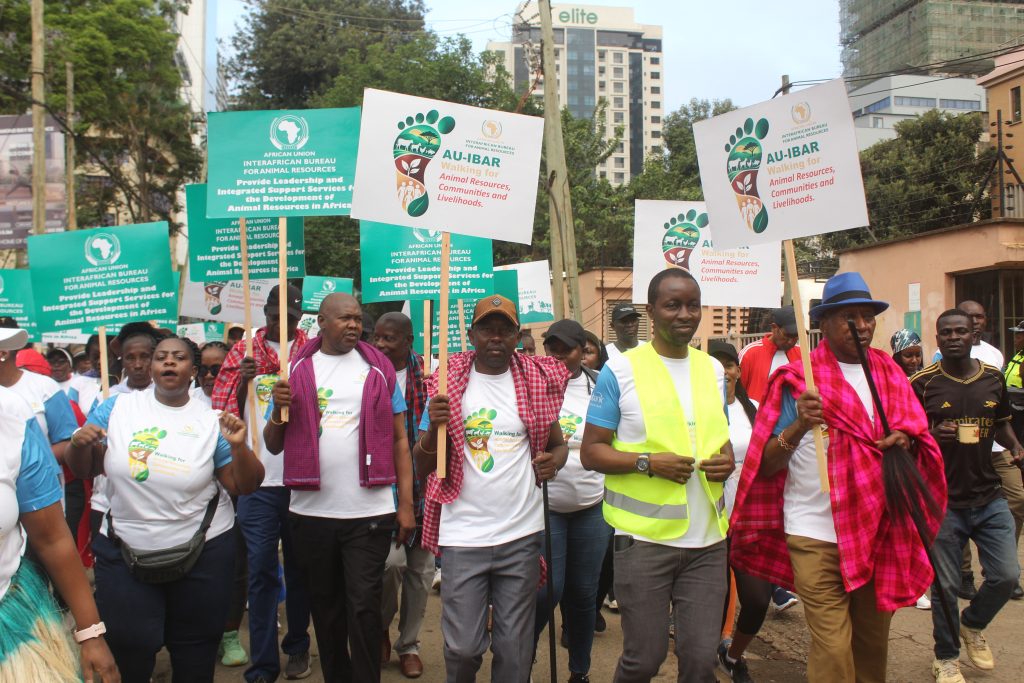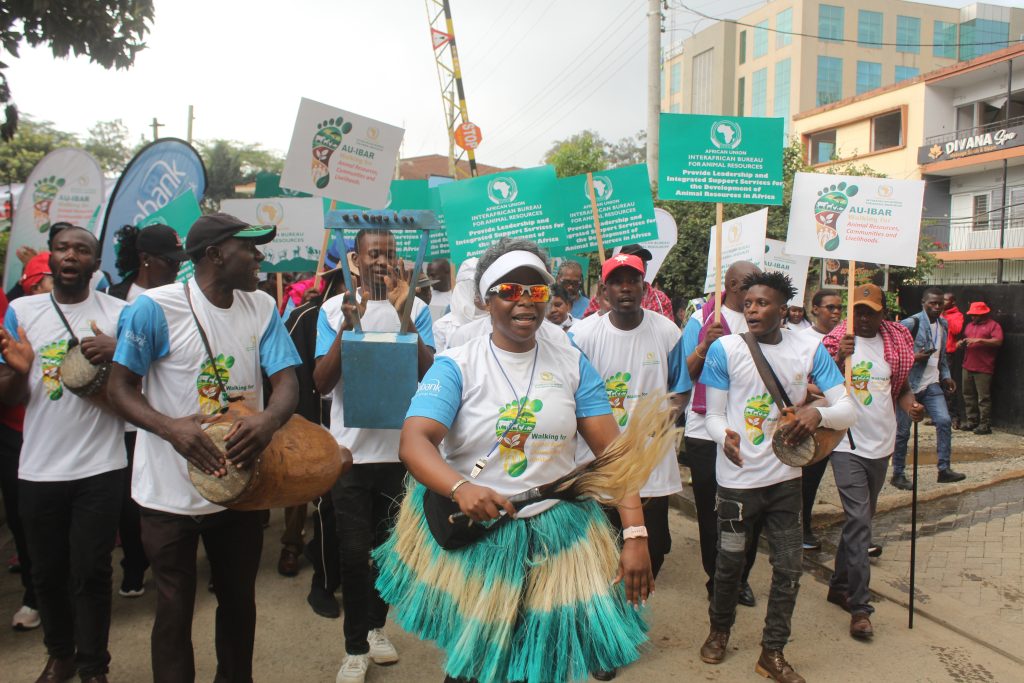
Officials from the African Union Inter-African Bureau for Animal Resources (AU-IBAR) and Kenya’s Ministry of Agriculture and Livestock Development have urged for enhanced continental partnerships and increased investment in animal resources. They emphasized the critical role these resources play in ensuring food security, fostering economic development, and sustaining community livelihoods.
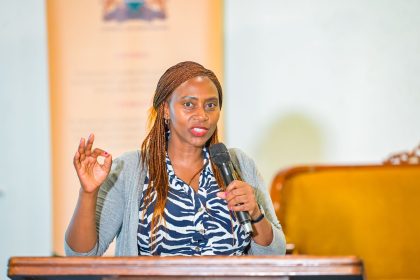
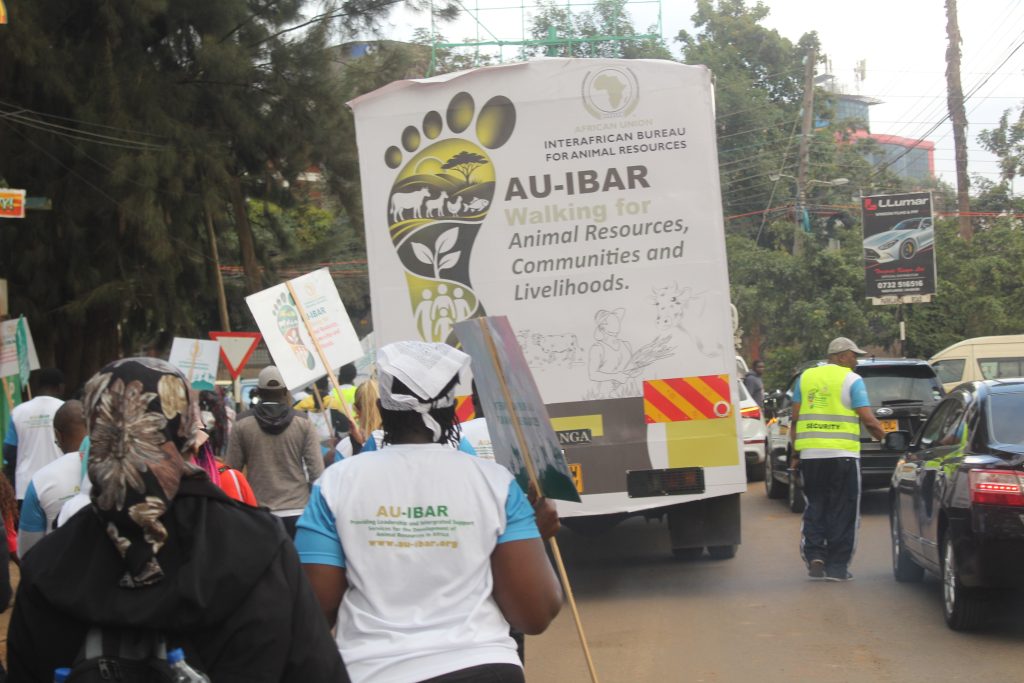
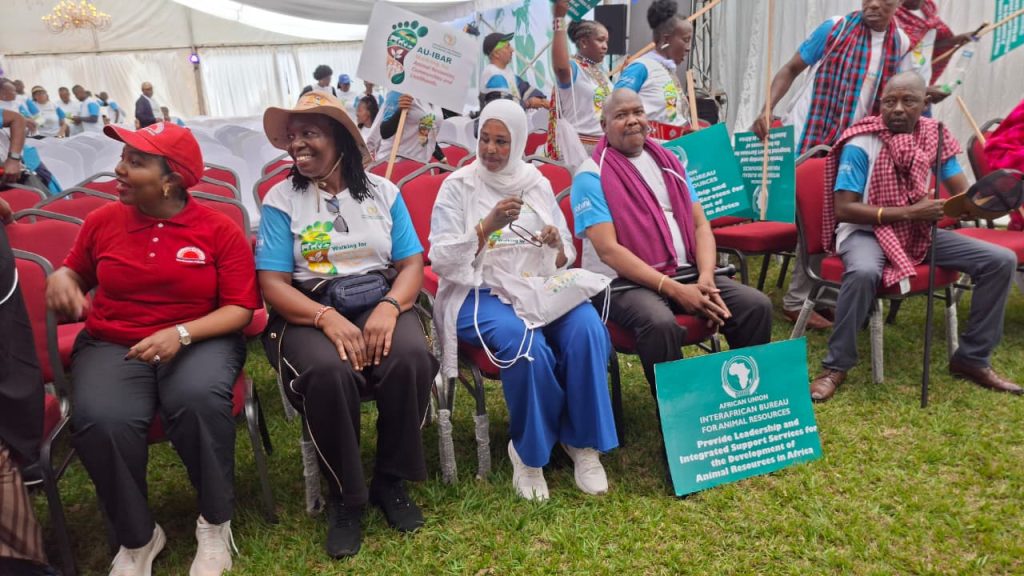
Speaking during the AU-IBAR Awareness Walk and Open Day in Westlands, Nairobi, Dr. Huyam Ahmed Mohammed Elamin Salih, Director and Head of Mission at AU-IBAR, reiterated the organization’s commitment to strengthening animal resource development across Africa. The event, themed “Walking for Animal Resources, Livelihoods and Communities,” drew approximately 2,000 attendees, including stakeholders from various segments of Kenya’s livestock value chain and beyond.

Dr. Salih explained that AU-IBAR fulfills a dual mandate: serving as the African Union’s continental technical institution for animal resource development across all 55 member states, and representing the African Union Commission.
She highlighted that over the past 15 years, the organization has mobilized and deployed approximately 100 million euros to support food security, trade, and disease control throughout the continent.
“Our collective efforts achieved the historic eradication of rinderpest, and today we stand united to achieve the global eradication of Peste des Petits Ruminants (PPR) by 2030,” she stated.
Dr. Salih further noted that AU-IBAR is actively working to increase intra-African livestock trade by at least 10 percent, enhance animal health and welfare, and advance the One Health approach to support sustainable livestock value chains.
She also detailed ongoing initiatives to transform fisheries and aquaculture, including support for small-scale fishers and women, alongside efforts to strengthen aquaculture value chains and address deficits in fish production across the continent.
Regarding institutional cooperation, Dr. Salih stressed the importance of completing the African Union Campus in Nairobi, deeming it a crucial foundation for more effective coordination.
The campus is designed to consolidate five African Union institutions—AU-IBAR, AUDA-NEPAD East Africa, the African Institute for Remittances, ATMIS, and PAUSTI—under a shared-services arrangement. This setup aims to minimize duplication and enhance efficiency.
Dr. Sabenzia Wekesa, Senior Deputy Director of Veterinary Services at the Ministry of Agriculture and Livestock Development, called upon African institutions to transform cooperation into concrete benefits for communities.
Dr. Wekesa affirmed Kenya’s commitment to supporting AU-IBAR’s continental mandate, emphasizing that challenges affecting animal resources necessitate coordinated responses involving governments, research institutions, and development partners.
“We are here as a ministry to support AU-IBAR in its course. Diseases and issues that relate to animal resources, including production, scarcity of fodder and other resources, cannot just be tackled by one single entity. So, as a government, we look out to partnerships,” she said.
She observed that Nairobi’s position as a continental hub provides an important platform for connecting public institutions, research organizations, international agencies, and the private sector, thereby facilitating closer collaboration between policy, science, investment, and practical implementation.
Dr. Wekesa added that the development of the African Union Campus should be viewed as an opportunity to strengthen institutional cooperation and improve service delivery across the continent.
“Our ambition must extend beyond the buildings. The Campus should become a place where African institutions work together, where ideas become programmes, and where partnerships translate into tangible benefits for our people,” she asserted.
She underscored that investment in animal resources is fundamentally an investment in people, particularly rural households whose livelihoods depend on livestock, fisheries, apiculture, and wildlife.
“For many rural households, livestock is not just an animal. It is savings. It is resilience. It is the means to educate a child. It is the means to survive a drought,” Dr. Wekesa articulated.
She added that strengthening these sectors would significantly improve household resilience, sustain businesses, and contribute to Africa’s shared prosperity.
The walk, which commenced at AU-IBAR headquarters, aimed to raise awareness about the organization’s mandate and foster stronger partnerships. An accompanying open-day exhibition allowed participants to showcase products and services within the animal resources sector.