Kenya’s economy will experience a decline this year on account of war in the Middle East which has led to sharp increase in energy and shipping costs.
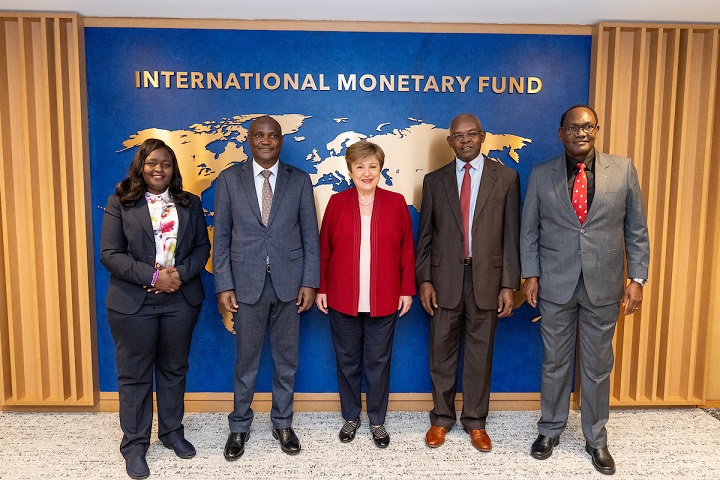
The latest projection by the International Monetary Fund (IMF) shows that the country’s gross domestic product (GDP) will slow to 4.5pc this year compared to 4.9pc registered last year.

This year’s projection in lower than 4.9pc IMF had forecast in October last year before the war between the United States/Israel and Iran broke out in February 28 this year leading to disruption in global supply of oil, gas, and fertilizer as well as shipping costs.
“The war in the Middle East has pushed up oil and gas prices, tightening fuel availability in many countries, such as Ethiopia, Kenya, the Democratic Republic of the Congo, Malawi, Sierra Leone, and Zambia, and has led to pump price increases in countries, including Mali, Malawi, Nigeria and Zimbabwe. In some economies, disruptions to fuel supply are affecting electricity generation, transport, and mining,” said IMF in the World Economic Outlook for April.
Kenya which is a hevy petroleum products importer is already feeling the heat with petrol and diesel recording the highest increases since 2020 during the pandemic.
Following the disruptions of oil supply, consumers witnessed the sharpest increase in pump prices which crossed the Ksh 200 mark not seen in three years.
In its initial monthly fuel review on Tuesday, the Energy and Petroleum Regulatory Authority (EPRA) hiked pump prices where a litre of super petrol shot up by Ksh 28.69 and diesel by Ksh 40.30 due to high cost of imported fuels.
This caused uproar forcing the government to take radical measures to reduce Value Added Tax (VAT) on super petrol and diesel by 50pc from 16pc to 8pc for three months.
“While the reduction in VAT will be in operation for 90 days, we have inserted a provision which will enable us to extend the application of the law should the conflict in the Gulf continues to affect oil prices,” said President William Ruto on his official X account after assenting to the Value Added Tax Amendment Act.
According to the IMF, oil-importing countries such as Kenya which has been importing petroleum products and government-to-government agreement with some Gulf countries face a deterioration in trade balance and higher cost of living due to the war.
“Increased commodity price volatility and a reversal in market sentiment would pose near-term material risks. Moreover, intensification of the war in the Middle East would increase oil, fertilizer, and food prices further, weighing down on growth, particularly for oil-importing countries, and push up inflation across the region,” said the lender.
The Central Bank of Kenya (CBK) already expects the inflation to peak to 6.2pc by July from 4.4pc recorded last month should the war continue.