The Budget and Appropriations Committee has supported proposals to establish an independent funding framework for the Office of the Auditor-General, as lawmakers pressed for stronger enforcement of audit recommendations, expanded coverage of schools and technical institutions, and tighter controls on public revenue collection.
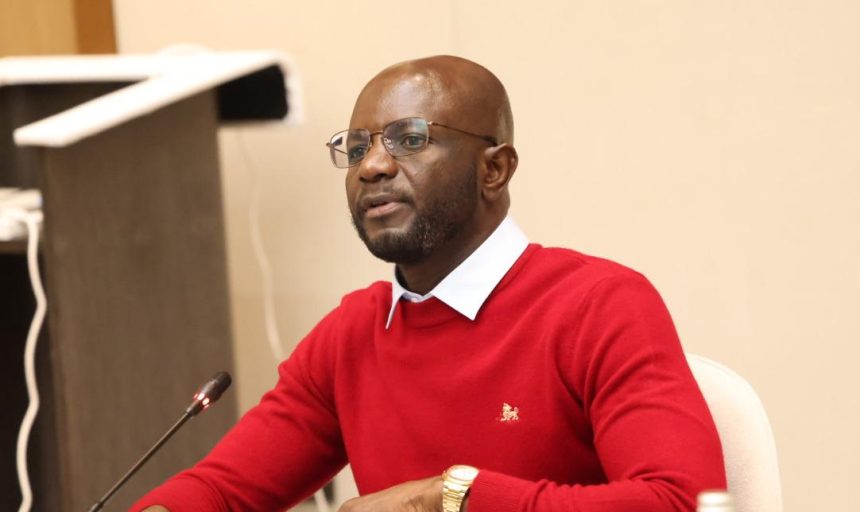
Chaired by Samuel Atandi, the Committee engaged Deputy Auditor-General for Corporate Services Isaac Ng’ang’a and senior officials from the OAG during scrutiny of the 2026/27 Budget Estimates, where concerns over audit delays, revenue leakages in counties, and widening audit backlogs dominated the session.

Atandi backed calls for institutional independence in financing the audit office, noting that the current arrangement exposes the Auditor-General to competition for resources with the same entities it is mandated to audit.
“The fact that you have to fight for resources within Sector Working Groups alongside the very agencies you are supposed to audit is fundamentally incorrect,” he said.
He indicated that the Committee would explore a structured financing model anchored on a fixed proportion of audited national revenue to strengthen the independence and effectiveness of the audit function.
The Office of the Auditor-General warned that insufficient funding continues to constrain its constitutional mandate, particularly in expanding audit coverage across education institutions, counties, and emerging public entities.
Deputy Auditor-General Isaac Ng’ang’a told MPs that the audit universe has expanded to over 12,000 entities, while the Office is currently grappling with a backlog of more than 8,150 unaudited financial statements.
He further disclosed that although the Office had planned to audit 5,476 financial reports and 88 specialised audits in the current financial year, resource constraints forced a scale-down of operations, especially in the education sector.
The OAG also revealed that it had sought an additional Ksh 420 million to support expanded audits for public secondary schools and in-year reviews, but the request was not factored into the final approved budget.
According to the Office, the shortfall has disrupted audit timelines and contributed to pending audit arrears, with implications for the 2026/27 audit cycle.
On revenue accountability, David Ochieng raised concerns over weak linkages between financial audits and performance outcomes, particularly in county governments where cash-based revenue collection systems continue to pose risks of under-reporting and leakages.
In response, the OAG said it had undertaken systems-based audits on county revenue collection and would deepen its focus on digitisation as a key reform measure.
“We have been pushing for digitisation of revenue systems including parking and water billing systems to improve accuracy and accountability,” the Office noted.
Makali Mulu questioned whether the country has a clear estimate of counties’ revenue potential and why persistent under-collection continues despite audit findings.
The Auditor-General’s Office indicated that the Commission on Revenue Allocation has previously published revenue potential estimates, adding that stronger policy alignment is required to address inefficiencies in own-source revenue mobilisation.
The Office further proposed amendments to the Public Finance Management framework to introduce administrative and legal sanctions against accounting officers who fail to implement audit recommendations.
Regarding the education sector audits, the OAG appealed for a review of reporting timelines for public schools and TVET institutions, proposing alignment with the academic calendar to improve accuracy and reduce reconciliation challenges.
“Aligning reporting timelines to December would significantly improve accountability and reduce pressure on audit cycles,” the Office stated.
The Budget Committee also noted the need for broader structural reforms, including strengthening enforcement of audit recommendations, accelerating consideration of performance audits, and enhancing oversight of public expenditure to curb wastage and recurring audit queries across government institutions.