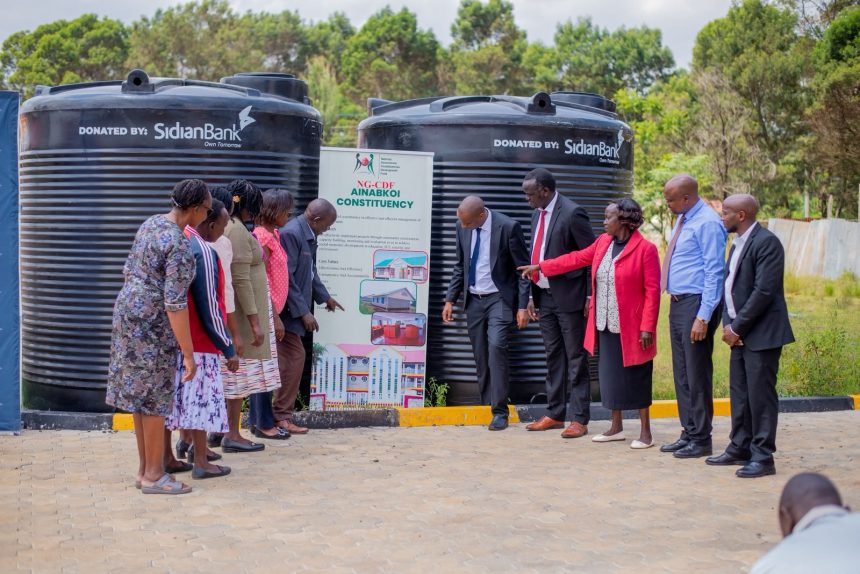
Sidian Bank has kicked off the second phase of its Water, Sanitation and Hygiene (WASH) initiative in schools in three counties to help improve hygiene among learners.
The bank donated 10,000-litre water tanks to schools in Turbo and Ainabkoi Constituencies in Uasin Gishu County, Teso South Constituency in Busia County and Cherangani Constituency in Trans Nzoia County.

Sidian Bank Head of Institutional Banking Simon Mwangi said the programme targets schools due to direct link between clean water, sanitation, and improved learning outcomes.
“Children should not spend hours fetching water instead of learning. With reliable water storage, learners can focus on their books, maintain hygiene and thrive in a clean environment,” he added.
This marks the bank’s continued commitment to improving access to clean water and enhancing hygiene standards in learning institutions across the Western region.
Teso South became the 1st constituency in Busia County to benefit from this phase of the programme.
“We have been struggling with high water bills and unreliable supply. This tank will greatly ease our burden and improve hygiene for our children,” said Kapsoya Comprehensive School in Ainabkoi Subcounty headteacher Bevelline Langat.
Speaking at the event in Teso South legislator Mary Emaase Otucho praised Sidian Bank’s partnership, noting the critical role of water infrastructure in supporting education.
“Water is life. We are moving away from collapsed pit latrines to modern WASH facilities. The tanks from Sidian Bank will complement our efforts in rainwater harvesting and borehole improvements, especially with solar-powered pumps,” she sated.
She highlighted ongoing challenges in the constituency, including schools with unstable structures, children learning under trees, and difficulties accessing reliable water due to the terrain on the slopes of Mount Elgon.
The bank says phase two builds on initial support and signals greater future commitments, including potential boreholes in water-stressed areas.