The County Government of Kirinyaga has partnered with the National Government to map snakebite hotspots across the county to support the development of a locally produced antivenom.
The exercise, being undertaken in collaboration with the Kenya Institute of Primate Research (KIPRE) through the Kenya Snakebite Research and Intervention Centre (K-SRIC), seeks to generate critical data that will strengthen snakebite prevention, improve treatment and support the development of an antivenom tailored to snake species found in Kirinyaga.

It also aims to establish the burden and geographical distribution of snakebite cases across the county.
The findings are expected to guide strategic antivenom distribution, strengthen surveillance and referral systems, identify priority intervention areas, and support the development of an affordable and effective antivenom.
Speaking during the exercise, Kirinyaga County Director of Public Health and Sanitation Peter Irungu said the collaboration marks the first comprehensive study of snakebite burden in the county and will provide reliable data to support evidence-based planning and resource allocation.
“This is the first study of its kind in Kirinyaga. The findings will help us determine the actual burden of snakebites, map out the affected areas and enable the county to plan better for prevention, treatment and procurement of antivenom,” Irungu said.
He noted that snakebite remains a neglected public health challenge despite affecting many residents, adding that the study will generate accurate data on reported cases and enable the county to implement targeted prevention and disease control interventions.
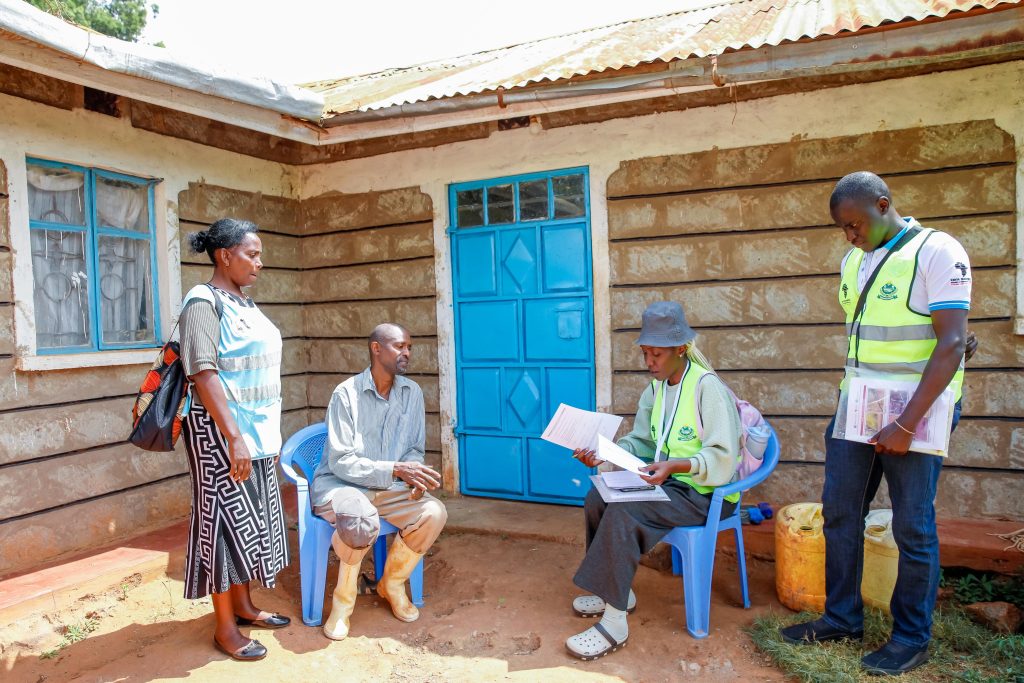
As part of the exercise, Community Health Promoters (CHPs) are undergoing specialized training on snakebite prevention, appropriate first aid, early recognition of envenoming, timely referral and community education to strengthen frontline response and reduce preventable deaths and disabilities associated with snakebites.
Cecilia Ngari, a Public Health Research Scientist representing KIPRE, said the institution is working closely with the County Government’s Department of Health to determine the burden of snakebite at the community level while documenting the challenges Community Health Promoters face when responding to snakebite cases.
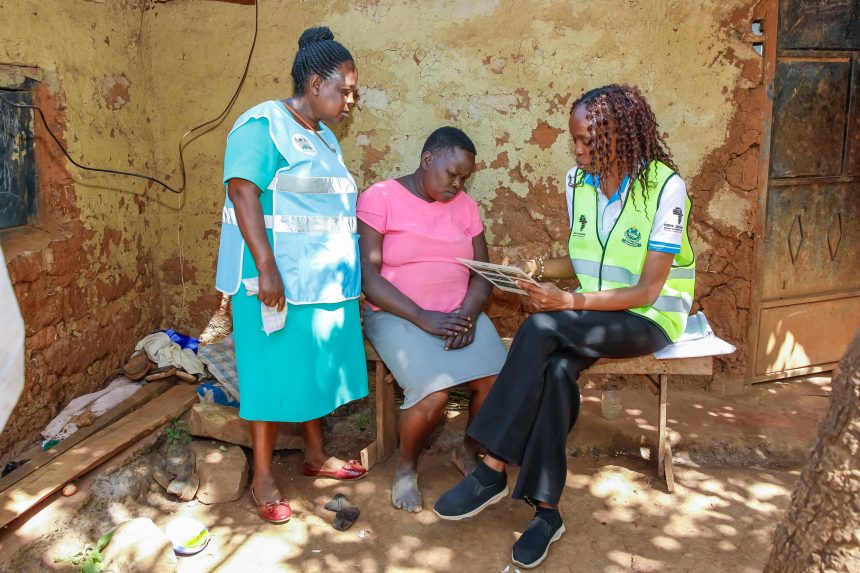
“Working closely with the county, we have been able to map around 600 households over the last two and a half weeks, and we expect to cover all the sub-counties before completing the exercise,” she said.
Ngari said the exercise goes beyond identifying snakebite hotspots, noting that CHPs are being equipped with knowledge and practical skills to identify snakebite cases, administer appropriate first aid, educate communities on prevention measures and facilitate timely referral of victims.
She observed that the County Government has embraced snakebite as a public health priority, creating an enabling environment for stronger surveillance and community reporting. She added that equipping CHPs will improve case identification and reporting, leading to more accurate data to guide interventions.
“Our institution has been mandated to develop a locally available antivenom that works better against the snake species found in Kenya. The mapping exercise will provide the evidence needed to understand where snakebites occur most, focus resources appropriately and support the development of an antivenom that will be affordable and easily accessible,” she added.
The ongoing collaboration underscores Governor Anne Waiguru’s commitment to providing affordable and accessible healthcare services to all county residents.
“We are committed to putting in place sound health systems that ensure our people access affordable and comprehensive care ranging from disease prevention and treatment to rehabilitation,” she said.
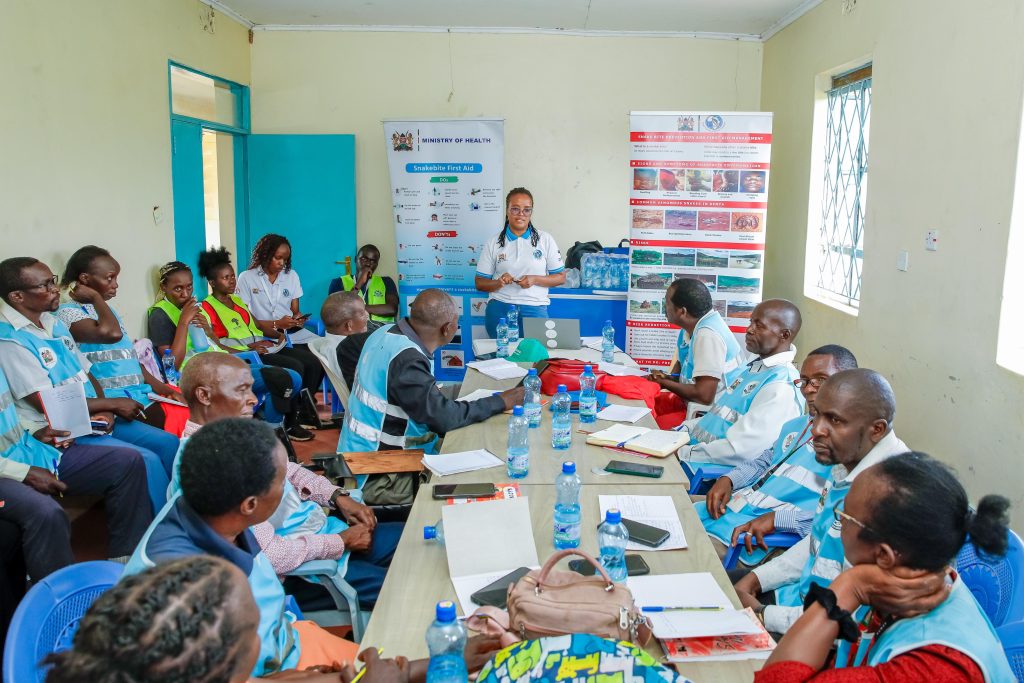
During the training, CHPs were sensitized on the common signs and symptoms of snakebite envenoming, including swelling, bleeding, blisters, wounds, drooping eyelids and physical deformities resulting from delayed treatment. They were also informed that the red spitting cobra and black mamba are among the common venomous snake species found in Kirinyaga.
The trainees were further advised on appropriate emergency response measures, including immediately irrigating the eyes with plenty of clean water or milk where venom has been spat into the eyes, while ensuring victims are referred promptly to the nearest health facility for specialized treatment.
Community Health Promoter Charity Mugo from Kangai Location said the training had equipped her with practical knowledge that will help protect communities from snakebite-related injuries and deaths.
“We have learnt about different snake species, where they hide and how to prevent them from invading our homes. We have also been trained on safe first aid without putting ourselves at risk. We will now educate our communities to keep compounds clean, use torches when walking at night and seek medical attention immediately after a snakebite,” she said.
Her counterpart from Mumo, Charles Waweru, said the training had corrected misconceptions about venomous snakes and strengthened the capacity of CHPs to respond effectively to emergencies.
“The training has opened our eyes. We now know how to respond when someone is bitten or when venom is spat into the eyes, and we will pass this knowledge to our communities to help reduce snakebite cases,” he said.
Residents from snake-prone areas also welcomed the initiative, saying it will contribute to better prevention and improved access to treatment.
Murinduko resident Ephantus Kariuki said brown spitting cobras are common in the area, especially around homes where they search for eggs, chicks and water during hot weather. He noted the importance of strengthening the county’s local response system to snakebite emergencies.
Another resident, Pius Muriithi, recounted surviving a snakebite after being bitten on the leg outside his home at night.
“I did not realize I had been bitten until I started bleeding and later developed severe swelling on my face. I was rushed by ambulance to Kimbimbi Hospital where I received treatment for more than a week,” he recalled.