Children and youth often bear the brunt of risks in today’s information ecosystem and will be most directly affected by the technologies reshaping them.
This according to a new issue brief launched Wednesday by the United Nations Department of Global Communications.

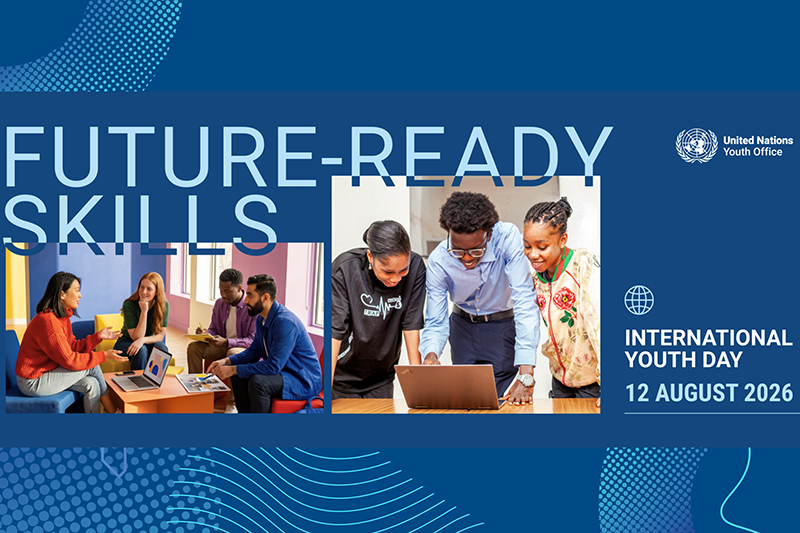
The paper, launched ahead of International Youth Day (12 August), applies the United Nations Global Principles for Information Integrity to children’s rights and youth engagement.
Strengthening Information Integrity: Issue Brief 3 urges governments, technology companies, advertisers, media and researchers to advance protection and participation together.
It follows the United Nations Secretary-General António Guterres’ call last month, at the opening of the inaugural Global Dialogue on Artificial Intelligence Governance, for an AI Child Safety Pledge covering any system a child can reach.
“No child should be a guinea pig for unregulated AI … When a child is harmed, the answer must never be ‘the algorithm did it,'” the Secretary-General told delegates in Geneva.
Governments and UN entities have also launched the Coalition for Children’s Rights and Protection in the Age of Artificial Intelligence to help ensure that children’s rights, safety and well-being are central to AI governance.
More than 82 percent of young people aged 15 to 24 are online worldwide. The harms they face online are not incidental, nor a matter of individual choices or parental oversight.
Rather, they are the product of business models that monetize attention and personal data, and of design features intended to maximize engagement and expenditure.
AI is outpacing regulatory frameworks that were never designed for it, introducing and compounding risks from synthetic content to AI-facilitated exploitation. The moment to write children’s rights into AI governance is while those laws are being developed a window that will not stay open for long.
Children and youth are not only at risk in information spaces. They are creators, advocates and organizers. Yet their perspectives remain underrepresented in the forums where policies are shaped, and in the research that informs them.
The pathways forward identified in the brief include:
- States have responsibilities for establishing clear, rights-respecting regulatory frameworks, and empowering children, parents, guardians and educators.
- Technology companies and AI actors have responsibilities to prioritize child safety and rights in product design and business models.
- Advertisers are uniquely placed to demand change in digital advertising practices.
- News media can invest in journalism that supports the distinct needs of children and youth as key audiences and creators.
- Researchers generate necessary inquiry and actionable evidence for public interest, including on under-studied areas and communities.
- Civil society actors provide expertise, independent oversight and advocacy.
- Children and youth themselves are active contributors and participants across information environments.