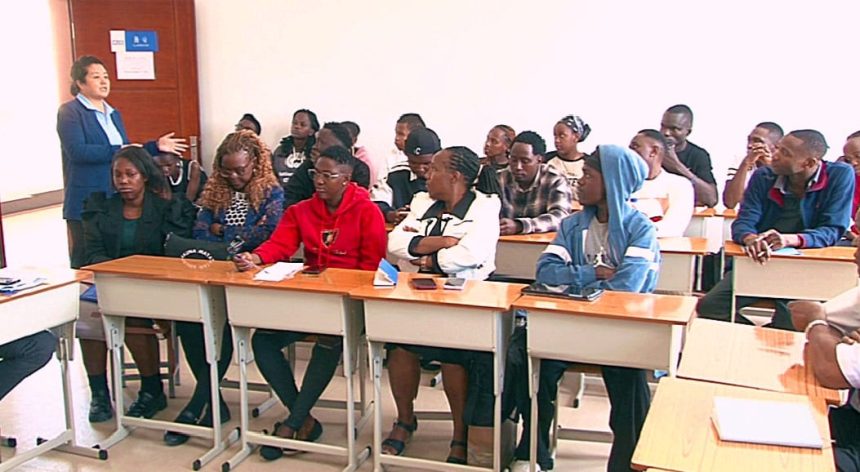
Kenya is actively working to enhance the quality and consistency of Chinese language teaching in response to the rising demand for Chinese language skills across its educational institutions and labour market.
The shift was a central theme at the 2026 Special Training on Enhancing Teachers’ Competence under the Guidance of International Chinese Language Education Standards (Africa), hosted by the Confucius Institute at the University of Nairobi.

The two-day training brought together Chinese language educators and stakeholders from across Africa to deepen understanding of the Chinese Proficiency Grading Standards for International Chinese Language Education and explore how these standards could be integrated into the continent’s diverse educational systems.
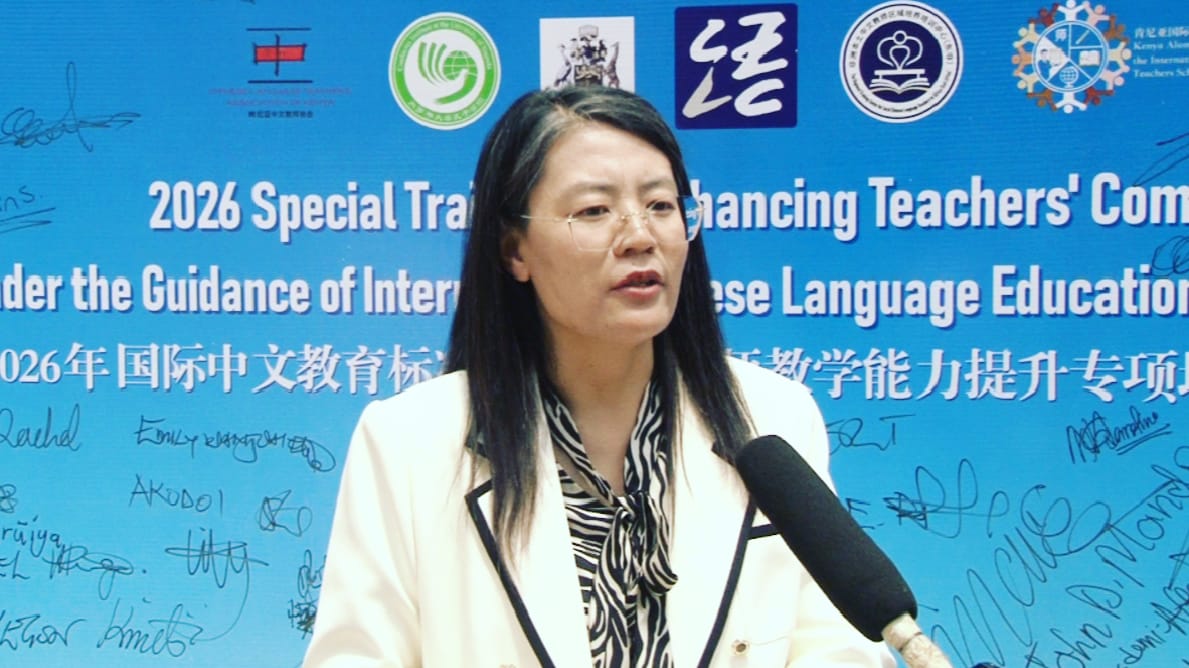
Director of the Confucius Institute at the University of Nairobi, Professor Wang Shangxue, noted that the expansion of Chinese language education in Kenya has created an urgent need for qualified teachers who can operate within internationally recognised standards.
“Chinese language education has been in Kenya for more than 20 years, or even 30 years. We already have some senior Chinese language teachers, but the market is expanding.” Professor Wang stated. She added that the introduction of the Competency-Based Education (CBE) curriculum has ushered in a new phase for the language.
“We now have the first group of students entering high school this year who are choosing Chinese as one of their foreign languages. This means that many more schools now require Chinese language teachers,” she explained.
The training attracted participants from approximately 20 countries, with 120 joining online and 147 attending in person. Professor Wang also emphasised that the new standards would offer employers a clearer method for assessing Chinese language proficiency among job seekers.
“Nowadays, many employers are seeking individuals who can speak proficient Chinese. There is significant demand in the job market for employees with strong Mandarin proficiency,” said Professor Wang.
“Because of this demand, many people wish to study Chinese. However, if more people want to study Chinese, we also need more qualified teachers to instruct them,” she elaborated.
Faith Wanjiku Mworia, Chairperson of the Chinese Teachers Association in Kenya, shares this perspective. She noted that the evolution from HSK 1.0 to 2.0 and now 3.0 has significantly altered the expected mastery levels for learners.
Under the new system, vocabulary requirements have substantially increased, necessitating that teachers upgrade their skills and teaching methods.
“We are not only equipping them to learn the language and that’s it, they need to learn the language and use it in the job market, for scholarships, and so on,” Mworia remarked.
She underscored the particular importance of the training as Chinese is being incorporated into Kenya’s evolving curriculum, including at Grade 10.
The increasing popularity of the Chinese language reflects broader shifts in Kenya-China relations. Beyond infrastructure, trade, and investment, the relationship is increasingly evident in education, scholarships, employment, and cultural exchange.
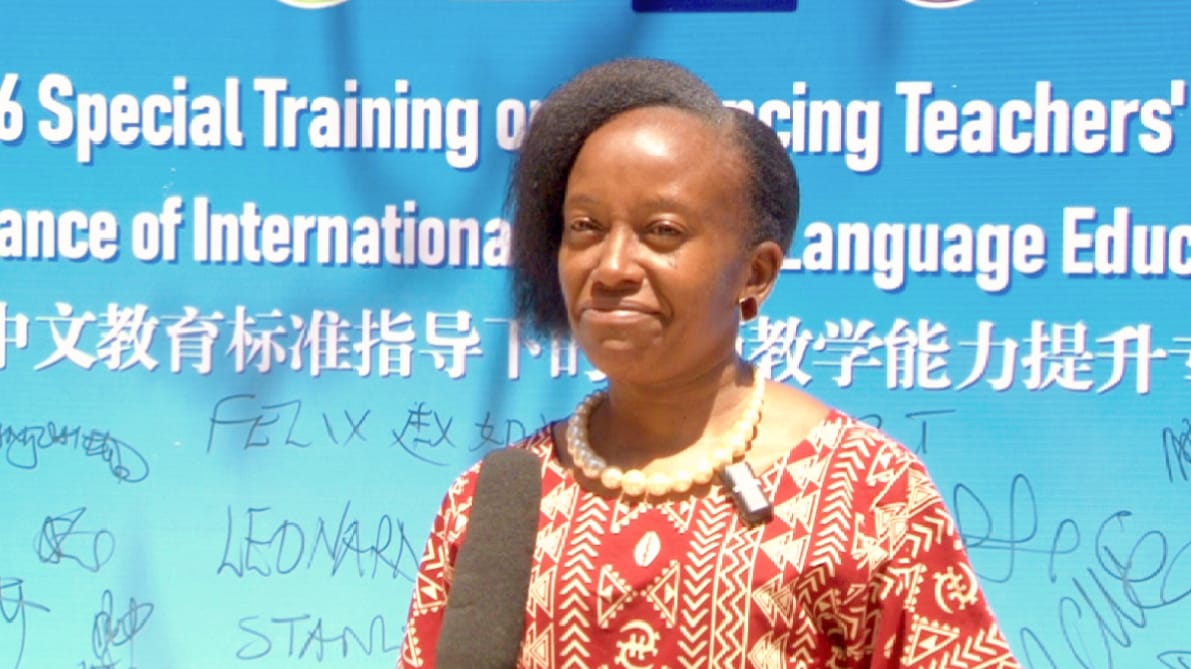
Mworia observed that Chinese language uptake has grown sharply since 2021, with schools transitioning from offering the language as an extracurricular club to teaching it across entire streams. She attributed this growth partly to expanding Chinese business interests in Kenya and increasing opportunities for Kenyan students to study in China.
At the same time, teachers expressed a need for learning materials that reflect Kenyan realities. Mworia stated that localised textbooks should allow learners to encounter familiar places and cultural references, rather than learning exclusively through Chinese settings.
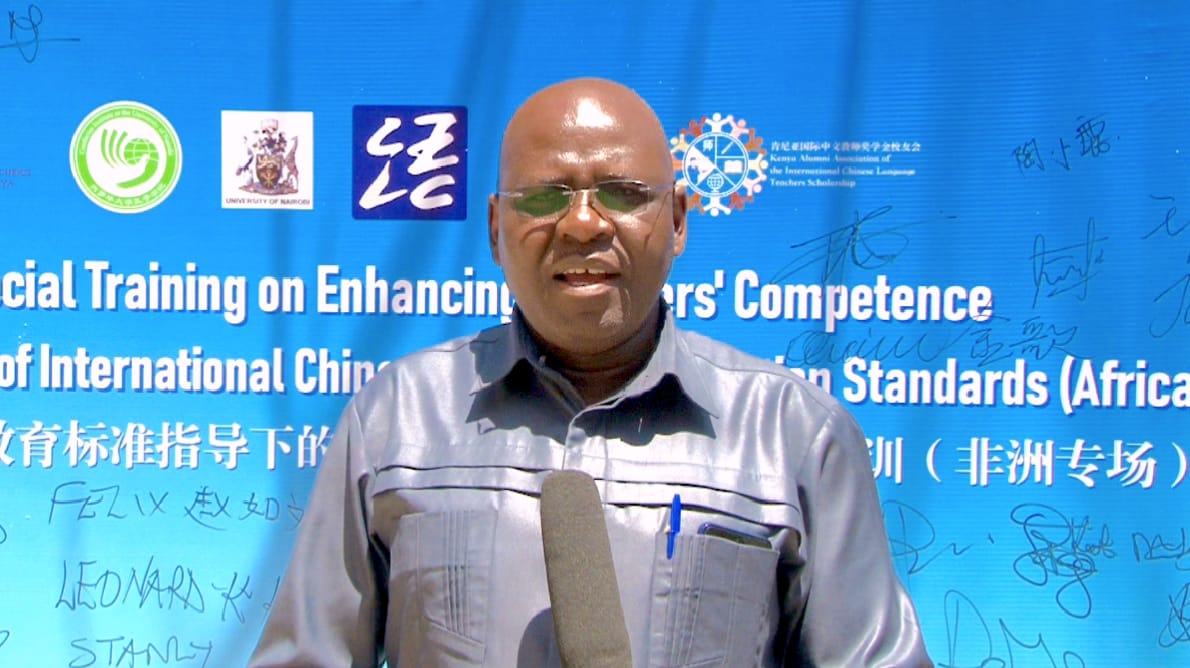
The initiative is also reaching more universities, with Professor James Ontiero of Rongo University indicating that the institution is in the process of establishing a Chinese language institute as foreign language education expands under Competency-Based Education.
“Where we are heading now, especially with the CBE, we are having more and more foreign languages being encouraged in this new dispensation. English, of course, is widely used, and we also have French being taught to some of our students. We now want to also have Chinese as one of the foreign languages that will be taught to our students,” he said.
He added that the training had broadened his understanding of language teaching by introducing translation and interpretation as additional core skills. He described it as an “eye-opener,” noting that beyond listening, speaking, reading, and writing, language training now incorporates translation and interpretation.
“It’s about the enrichment of our curriculum, the enrichment of our programmes, so that they become more market-driven. When we expose our students to Chinese, they will also have more opportunities, even in China, to practise and also do many other things that align with competence-based education,” he stated.
For university student Shedrack Bundi, who has completed HSK 3 and is progressing towards HSK 4, learning Mandarin is both an academic and career investment.
“Chinese is one of the emerging languages that is really growing,” he said, highlighting the need for translators and interpreters as Chinese companies and institutions expand their presence in Kenya.
The Confucius Institute asserts that this training signals a new stage in Kenya-China relations, where language is becoming a practical bridge connecting education, culture, employment, and people-to-people exchanges. The Institute’s leadership states that the immediate task is to ensure that the rapid growth in Chinese language learning is matched by qualified teachers, appropriate learning materials, and clear proficiency benchmarks.