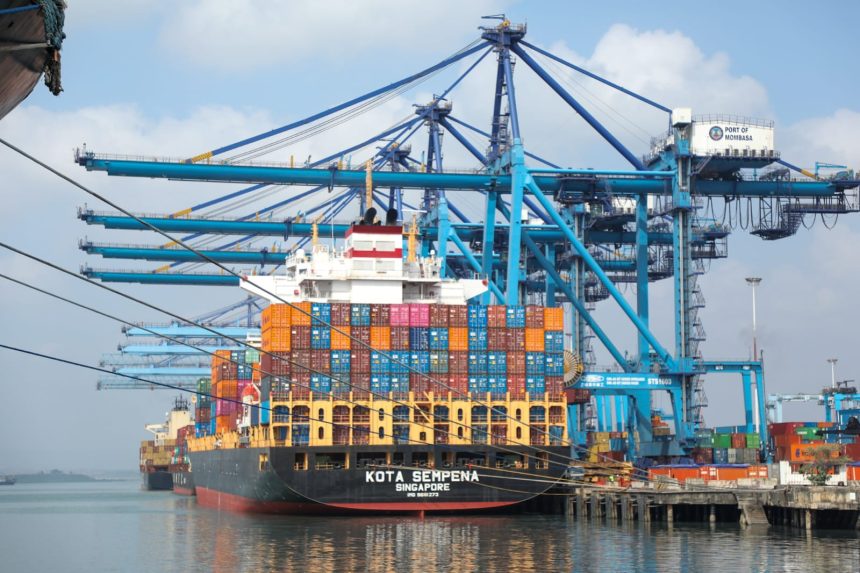
Small traders have come out to strongly contest the new threshold for containerized cargo announced by the Kenya Revenue Authority (KRA) on Tuesday.
The traders held demonstrations in Nairobi over the new limit introduced for consolidated cargo, which increased from Ksh 2.5 million to Ksh 3.2 million for a 40ft shipping container.

According to KRA Commissioner for Customs and Border Control Dr Lilian Nyawanda, the move was initiated following cases of underdeclaration and undervaluation of cargo which has led to unfair trading practices and loss of revenue.
“If a trader or an importer believes the Ksh 3.2 million is not accurate for the goods, its ok. We will verify the goods to determine the actual content, the actual classification and the actual taxes payable. It is important to clarify that the figure could be lower or much higher but the Ksh 3.2 million is a reference point and it is not an imposed amount,” said Nyawanda following a meeting held Thursday with traders.
KRA said the most affected goods in cargo undervaluation and under-declaration are high-value electronics such as high-end smartphones which traders declare as lower-value models in an attempt to reduce the customs value and taxes payable.
Traders have also been advised to deconsolidate their consignments where they feel the new limit is not applicable in order to allow KRA to identify specific items which are then evaluated and payable taxes applied.
“Deconsolidation is very important because it also helps the trader to be able to have their own import declaration documents, their invoices and be able to even claim input Value Added AT from domestic tax perspective,” she added.
On Friday, hundreds of small business owners held demonstrations, leading to closure of some shops within Nairobi Central Business District.
The traders called the new measure punitive and have petition the authority to retain the previous Ksh 2.5 million benchmark.
“We will continue to demonstrate until we sit down and agree with KRA on the way forward,” one of the traders said.
Cargo consolidation arrangement was introduced six years ago, in a bid to cushion small traders from high shipping costs and customs taxes associated with importation of goods. The arrangement was also meant to ensure small traders enjoy faster cargo clearance process.