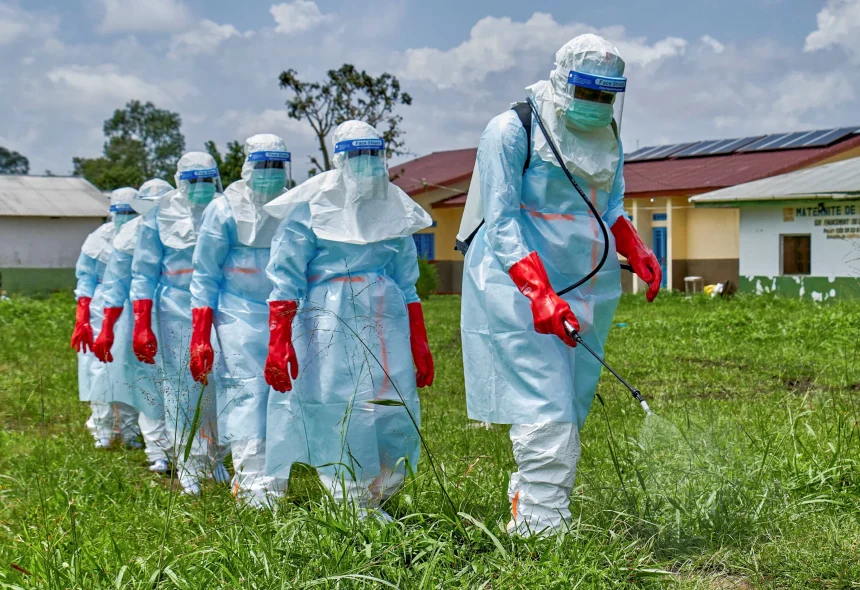
The government has enhanced surveillance at informal border crossings, truck-driver stopovers and other high-volume points as part of ongoing measures to detect and contain Ebola and other infectious diseases.
Multi-agency teams drawn from the Kenya Defence Forces, National Police Service and National Government Administration Officers have been trained to support surveillance beyond formal points of entry.

The teams are also supporting heightened screening at official Points of Entry, where travellers and conveyances are screened and border communities sensitised on public health measures.
In a statement, the Ministry of Interior and National Administration says the measures are part of ongoing preparedness for Ebola Virus Disease, even as no case has been confirmed in the country.
“No case of Ebola Virus Disease (EVD) has been reported in Kenya, with all the suspected cases tested so far returning negative results,” the statement reads.
Four laboratories have been designated to test for Ebola, including the National Public Health Laboratory, KEMRI Nairobi, KEMRI Kisumu and a mobile laboratory covering Busia and Bungoma.
Additionally, healthcare workers continue to receive training, while simulation exercises, stakeholder sensitisation and the operationalisation of isolation facilities are ongoing.
The preparedness measures come as the government responds to other public health emergencies, including Mpox, Dengue fever and Measles.
Mpox cases have been reported in 40 counties, with Mombasa, Nairobi and Busia recording the highest numbers.
Dengue fever cases have mainly been reported in Garissa and Wajir, where suspected deaths are under investigation, while Baringo, Marsabit, Wajir, Mandera and Garissa are among the counties reporting measles cases.
The government says surveillance, laboratory testing, case management, infection prevention and control, and community engagement remain in place to manage the health threats.
Members of the public have been urged to remain vigilant, follow verified public health guidance and promptly report suspected cases to the nearest health facility or relevant authorities.