The Government of Kenya through the Ministry of Agriculture and Livestock Development in partnership with the German Agency for International Cooperation (GIZ) and AKADEMIYA2063 have prepared the Financing Agri-Food Systems Sustainably (FINAS) programme.
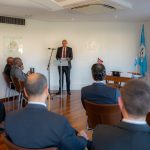
Agriculture Principal Secretary Dr. Paul Kiprono Rono in his speech during the National Awareness and sensitization workshop on the developed Kenya’s National Agri-food Systems Investment Plan (NASIP) 2025–2029 and domestication of the Kampala Comprehensive Africa Agriculture Development Programme (CAADP) Commitments said the workshop facilitates effective implementation in alignment with the commitments.

“NASIP is not merely an investment framework, it is a transformative blueprint designed to integrate production, processing, logistics, finance, technology, and trade into a unified agri-food system,” said PS Rono.
He added that through its flagship investment programmes, the Plan seeks to mobilize over Ksh 1 trillion in strategic investments while promoting climate resilience, digital agriculture, youth and women empowerment, food safety, and institutional strengthening.
PS Rono noted that the workshop ensures that NASIP implementation is embedded within national planning, budgeting, review, and dialogue processes as well as improving shared understanding of NASIP priorities and their alignment with the Kampala Declaration.
The workshop aligns stronger coordination among national and county stakeholders with clear priority actions and next steps to support coordinated implementation, monitoring, and accountability for agri-food systems transformation in Kenya.
PS Rono said this will enhance understanding of the Kampala diagnostics developed by AKADEMIYA2063 and their role in informing NASIP design.
The programme will target to intensify sustainable food production, agro-industrialization, and trade, boosting investment and financing for agri-food system transformation, ensuring food and nutrition security, promoting inclusivity and equitable livelihoods, building resilient agri-food systems and strengthening agri-food system governance.
In January 2026, the Kampala CAADP Declaration on Building Resilient and Sustainable Agri-food Systems came into force to accelerate agri-food systems transformation across the continent.
The Declaration reframes the CAADP, shifting from a narrow focus on agricultural growth to a comprehensive agri-food systems transformation agenda that recognizes the critical linkages among agriculture, food, nutrition, health, and the environment.
PS commended the representation at the workshop noting that it demonstrated collective commitment to transforming Kenya’s agri-food systems into a modern, resilient, inclusive, and competitive engine for sustainable economic growth.
Dr. Rono reiterated that agriculture remains the backbone of Kenya’s economy, contributing significantly to national GDP, supporting millions of livelihoods, ensuring food and nutrition security, and driving export earnings.
Despite its central role, the PS regreted that the sector continues to face persistent challenges, including low productivity, weak value-chain integration, limited private investment, and increasing vulnerability to climate change and market shocks.
He was optimistic that the realities call for bold, coordinated, and evidence-driven interventions capable of unlocking the full potential of the agrifood economy.
The National Agri-food Systems Investment Plan represents Kenya’s strategic response to these challenges developed under the leadership of the Ministry of Agriculture and Livestock Development through the Agricultural Transformation Office.
NASIP operationalizes key national and continental commitments, including the Comprehensive Africa Agriculture Development Programme, the Malabo Declaration, and the Kampala Declaration. It aligns closely with Kenya’s Agricultural Sector Transformation and Growth Strategy, the Bottom-Up Economic Transformation Agenda, and Vision 2030.
The anticipated outcomes are ambitious yet achievable accelerated agricultural GDP growth, enhanced food security, expanded value addition, increased private sector participation, creation of decent jobs, and strengthened climate resilience.
PS Rono observed that achieving these goals, however, will require strong partnerships, accountable institutions, innovative financing mechanisms, and unwavering commitment from all stakeholders.
Together, he said, there is an opportunity to shape a resilient and prosperous agri-food future that delivers sustainable benefits for all Kenyans.
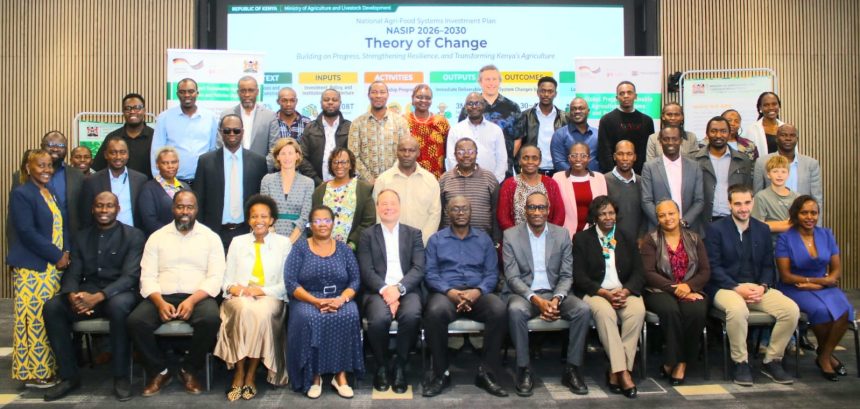
Participants included state and non-state actors, such as representatives from government ministries, departments and agencies, county governments, development partners, farmers’ groups, civil society, the private sector, research, academic institutions among other stakeholders in the agri-food sectors.
The workshop will help build momentum for FINAS conference 2026 by highlighting investment and financing priorities for the NASIP.